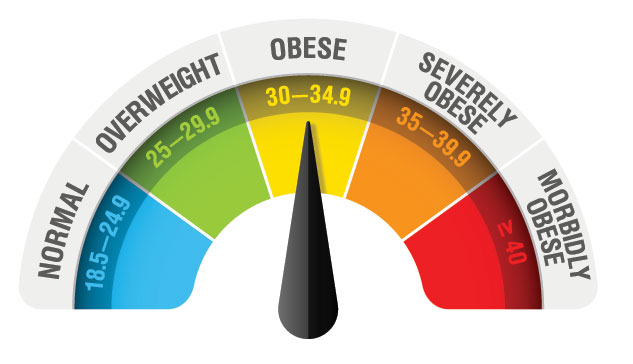








 Evidence shows that a high proportion of U.S. adults with normal body mass index (BMI) still have obesity which highlights the inadequacy of BMI as the gold standard measure of metabolic health.
To better understand drivers for cardio-metabolic disease, new research highlighted the need to better understand what percentage of the body is fat, muscle, bone, and water, and how much fat is in the abdomen vs. the thighs.
Racial/ethnic differences in body fat, BMI, and body fat distribution may provide evidence for future studies to further determine if these differences are possible drivers of the racial disparities seen in cardio-metabolic diseases, explained Aayush Visaria, MD, MPH, an internal medicine resident at the Rutgers Robert Wood Johnson Medical School in New Brunswick, NJ.
Visaria and colleagues identified non-pregnant US adults aged 20-59 years from the 2011-2018 National Health and Nutrition Examination Survey (NHANES) with whole body DEXA scan data. Their BMI was categorized by ethnicity (non-Asian: underweight <18.5, normal=18.5-24.9, overweight=25-29.9, obese≥30 kg/m2; Asian: <18.5, 18.5-22.9, 23-27.4, 27.5+).
The researchers estimated odds of obesity among adults as normal/overweight based on BMI or total body fat percentage (BF%) as ≥25% in male and ≥32% in female, by race (non-Hispanic White [NHW], non-Hispanic Black [NHB], Asian, Hispanic, and other). They also estimated mean DEXA adiposity measures by race.
They found that nearly 36% had BMI≥30 (the traditional definition of obesity) but 74% had obesity per BF%. Among normal BMI adults, 44% of NHW, 27% of NHB, 49% of Hispanic, and 49% of Asians had obesity as per BF%. Among normal BMI adults, the mean android-to-gynoid fat ratio (the pattern of body fat distribution associated with increased risk for metabolic syndrome) was 0.84 for NHW, 0.85 for NHB, 0.89 for Hispanics, and 0.91 for Asians.
Nearly 3 in 4 young-to-middle-aged US adults were considered to have obesity according to BF% from DEXA scans. Asian Americans and Hispanics with seemingly normal BMI were more likely to have obesity, and more likely to have a greater proportion of abdominal fat than NHW. Non-Hispanic Blacks had significantly lower chances of obesity at normal/overweight BMI ranges, and a lower proportion of abdominal fat.
“We hope this research will add to the idea of weight-inclusive care and allow clinicians to 1) routinely use supplementary measures of body fat such as waist circumference or bioimpedance-based body fat measurements (eg, smart scales) in addition to BMI, 2) engage in practices to prevent unconscious biases that may occur when caring for a patient with obese BMI, and 3) engage in clinical decision-making that is not solely dependent on a BMI calculation but rather an overall idea of body composition and body fat distribution,” Visaria said.
Source: Visaria A, Sindhu T, Dharamdasani T. Discordance Between Body Mass Index and Dual-energy X-ray Absorptiometry Based Adiposity Measures Among United States Adults. Presented June 16 at Endo 2023.