March 2025
Click on image to download the issue in PDF format
Cover Story
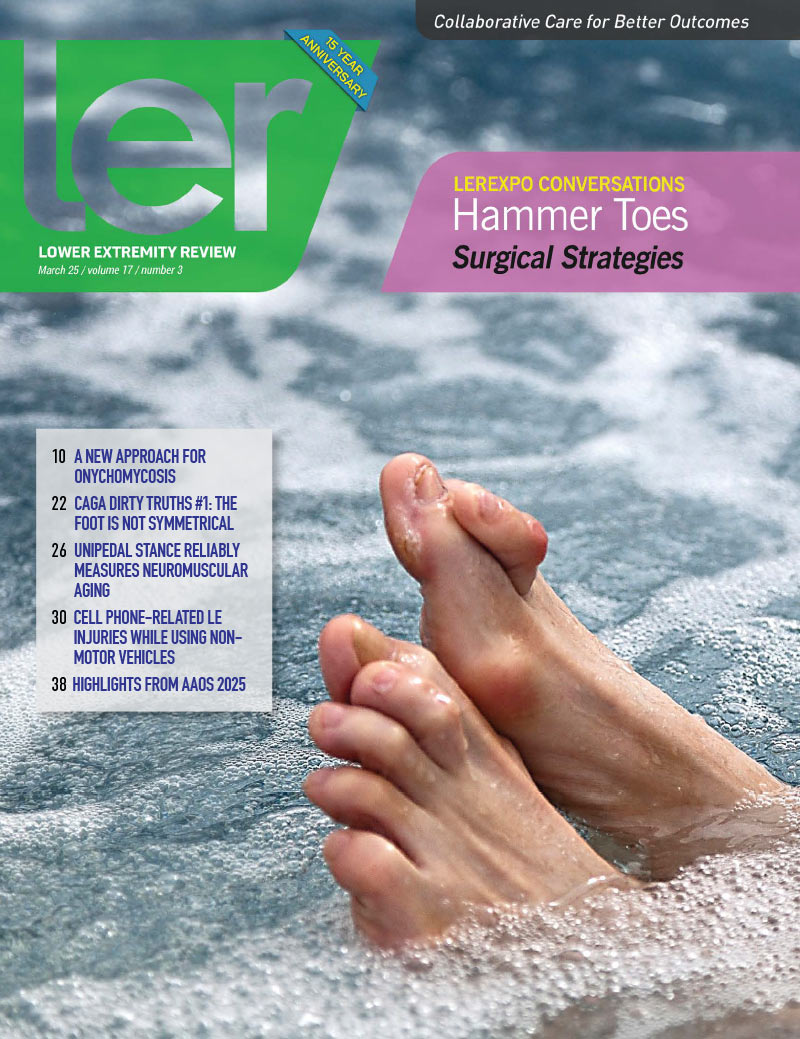
Hammer toe deformities are common foot pathologies and lead to a high proportion of podiatry office visits. This talk provides a comprehensive perspective on the challenges and strategies associated with recurrent digital deformities and metatarsophalangeal joint (MPJ) pain following hammer toe surgeries.
An overview of the talk by Adrienne M. Estes, DPM, MS, FACFAS, DABPM, FAPWHc
Expert Opinion
Toenail onychomycosis has long been difficult to treat because many factors affect the treatment outcome: aging patients, long-standing infection, slow growth of thickened nails, co-morbidities, limitations of the treatment (eg, treatment length, side effects, toxicity, physical limitations of the patient).
By Tracey C. Vlahovic, DPM, and Lewis H. Freed, DPM
Features
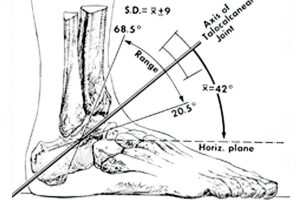
In the introductory article on the dirty truth of biomechanics, we presented a playbook laying out 12 particularly concerning issues as they relate to human weight-bearing and locomotion. In this installment, we will delve into dirty truth number one, problematic anatomy, laying out the “whats” and the “whys”, and how computer-aided gait analysis (CAGA) can make this dirty truth a bit cleaner and more digestible.
By Jay Segel, DPM; Sally Crawford, MS
Adequate muscle strength, efficient gait, and good balance, which decline with age, are crucial contributors to independence and well-being. Aging is often associated with disability and multiple health concerns. To address these challenges, effective interventions are essential. This study investigated potential age-related declines in gait, balance, and...
By Asghar Rezaei, Sandesh G. Bhat, Chih-Hsiu Cheng, Robert J. Pignolo, Lichun Lu, and Kenton R. Kaufman
A portion of people use or carry cell phones while using bicycles and other non-motor vehicles (eg, scooters, skateboards, skates). This can increase the risk of injury. This study described cell phone-related lower extremity injuries while using non-motor vehicles that were treated at United States (US) hospital emergency departments (EDs).
By Mathias B. Forrester, BS
ShortTakes From the Literature
Knee extensor and flexor muscle (ie, thigh) weaknesses are well-established consequences of anterior cruciate ligament (ACL) tears treated with ACL reconstruction (ACLR). To learn more, Canadian researchers assessed bilateral knee extensor and flexor concentric isokinetic peak torque at 90° per second semiannually in 186 youth (106 injured, 80 controls) for 2 years.
Sarcopenia is characterized by the progressive loss of skeletal muscle mass and poses a significant health challenge for older adults by increasing the risk of disability and decreasing quality of life. With the increasing number of older adults, sarcopenia has the potential to become a major public health burden across the globe. Yoga is considered a low-risk and beneficial exercise for older adults.
Getting at least 30 minutes of daily summer sun in the first year of life may mean a lower relapse risk for children who are diagnosed with multiple sclerosis (MS) later, according to a study published in Neurology Neuroimmunology & Neuroinflammation. The study also found if a child’s biological mother had at least 30 minutes of daily sun during the second trimester of pregnancy, the child had a lower risk of MS relapses.
In this secondary analysis, there was no difference between morning (AM) and afternoon/early evening (PM) exercisers in blood glucose, insulin, body composition, or muscular strength following 12 wk of supervised exercise. However, examining within-group changes, glucose area under the curve (AUC) was significantly reduced in PM exercisers, but not in AM exercisers.
Reductions in balance performance, hip strength, and ankle function along with increases in disablement and injury-related fear are among the many motor-behavioral and sensory-perceptual impairments associated with chronic ankle instability (CAI). Both balance training (BAL) and hip strengthening (HIP) can improve balance, but how do the 2 modalities compare?
2025 AAOS Meeting Highlights

March 10–14, San Diego, California
The American Academy of Orthopaedic Surgeons (AAOS) Registry Program released the American Joint Replacement Registry (AJRR) 2024 Annual Report Supplement during the AAOS 2025 Annual Meeting in San Diego.
Prior authorization (PA) has been implemented by payors in an effort to reduce unnecessary healthcare utilization. However, obtaining PA has been shown to increase the administrative burden and delay access to care. To our knowledge, the financial burden and cost-effectiveness of PA in total hip arthroplasty (THA) is yet to be determined.
Glucagon-like peptide-1 receptor agonists (GLP-1A) have advanced the treatment of type 2 diabetes and obesity. Given the prevalence of these conditions among candidates for total joint arthroplasty (TJA), managing GLP-1A in the perioperative period is crucial to minimize complications.
Hip and knee arthritis is debilitating for patients but the decreased activity level and independence may also affect spouses. Spouses of individuals who have undergone THA or TKA often assume caregiving roles during the postoperative rehabilitation period but may benefit in the long term from increased patient activity levels.
Soccer is one of the most popular youth sports in the United States and worldwide. Due to growing concerns regarding repeated head trauma, in 2015 the United States Soccer Federation (USSF) banned headers for athletes age 10 and under and limited athletes age 11 to 13 to practicing headers for 30 minutes per week.
Industry News & Updates
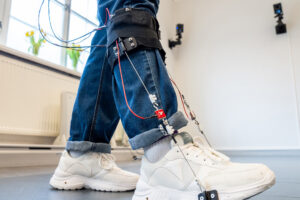
A team of researchers from KTH Royal Institute of Technology (KTH) and Karolinska Institutet, both located in Stockholm, Sweden, have developed a soft, robotic ankle exoskeleton consisting of actuation and transmission systems to assist 2 degrees of freedom simultaneously: dorsiflexion and eversion, then performed several proof-of-concept experiments on non-disabled persons.
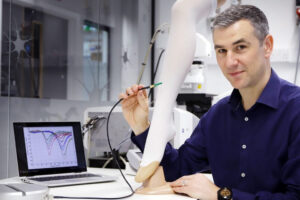
Scottish scientists have developed a low-cost, flexible device that can help prevent blood clots for patients after an operation. Their polymer-based sensor fits underneath bandages and compression stockings like a sticking plaster, and a handheld reader measures whether the bandage is exerting the correct pressure on the body.
When physicians debride a wound, such as a diabetic foot ulcer, they remove as much bacteria as possible. However, they face a key limitation—not all bacteria can be seen by the human eye, and some may be missed during the debridement. Now, Keck Medicine of University of Southern California research suggests there may be a more effective method to detect bacteria during wound debridement.
Hanger, Austin, TX, announced that its 12th annual Partner Awards honored 4 companies that provide exceptional products and services that advance the field of orthotics and prosthetics and improve patient care and outcomes, as follows...
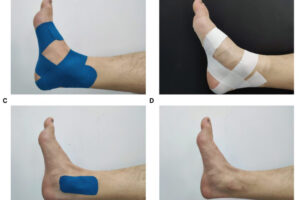
Bridges Consumer Healthcare, Chattanooga, TN, a consumer healthcare platform comprised of 9 over-the-counter (OTC) and personal care brands, has acquired KT® Tape, American Fork, UT, a kinesiology tape brand designed to provide drug-free pain relief and support for muscles, tendons, and ligaments.
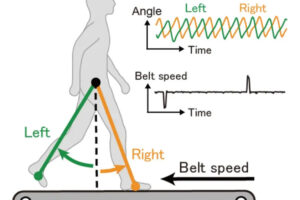
Researchers at Osaka University, Japan, have used experimental data and Bayesian inference to study the control of leg motion during walking, and find that intervention occurs only when discoordination exceeds a certain threshold, which may improve rehabilitation methods.
Featured Products