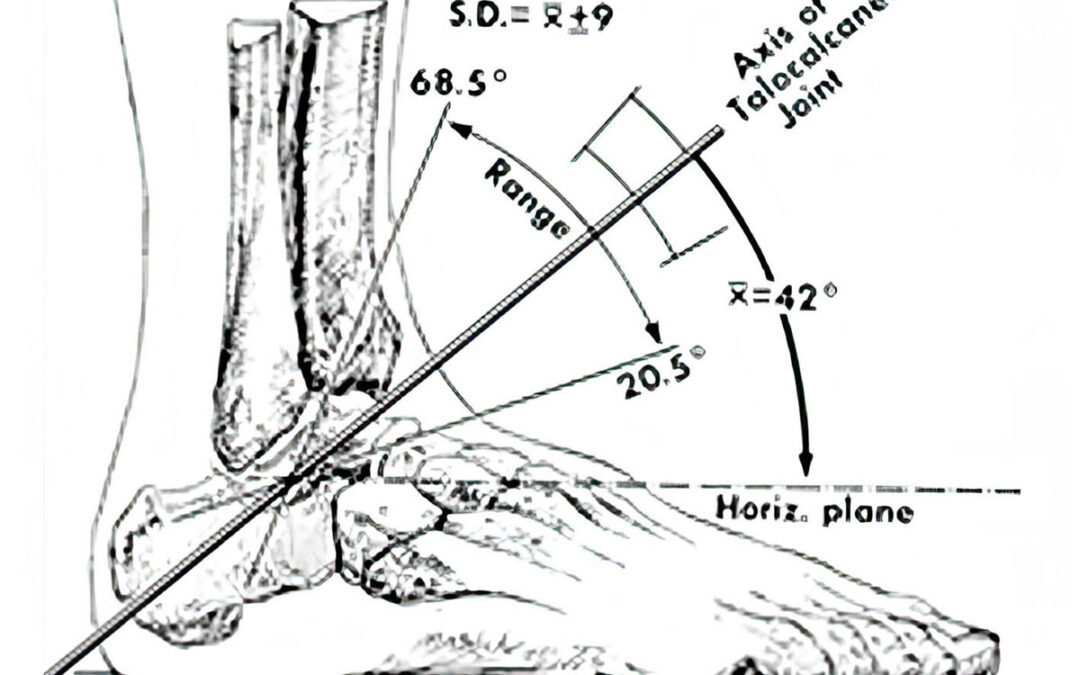








Figure 1: Our 3-dimensional feet, all 26+ bones in each one, deform, or subluxated in all 3 planes of motion L/M, Do/Pl, P/Di(A/P).
Dirty Truth #1: The Foot Is Not Symmetrical
By Jay Segel, DPM; Sally Crawford, MS
In the introductory article on the dirty truth of biomechanics, we presented a playbook laying out 12 particularly concerning issues as they relate to human weight-bearing and locomotion. In this installment, we will delve into dirty truth number one, problematic anatomy, laying out the “whats” and the “whys”, and how computer-aided gait analysis (CAGA) can make this dirty truth a bit cleaner and more digestible.
More specifically, this is a discussion about the three “S’s” of problematic anatomy: shape, structure, and symmetry—with a focus on our bony building blocks and how CAGA can capture these very specific characteristics and how they play out through movement. To start, we know of course that each foot has 26 bones (or 28 if we include the sesamoids) with over 100 tendons, ligaments, and muscles; however, our largest concerns are over the 33 joints in each foot, all with 3 different axes of motion (Figure 1).
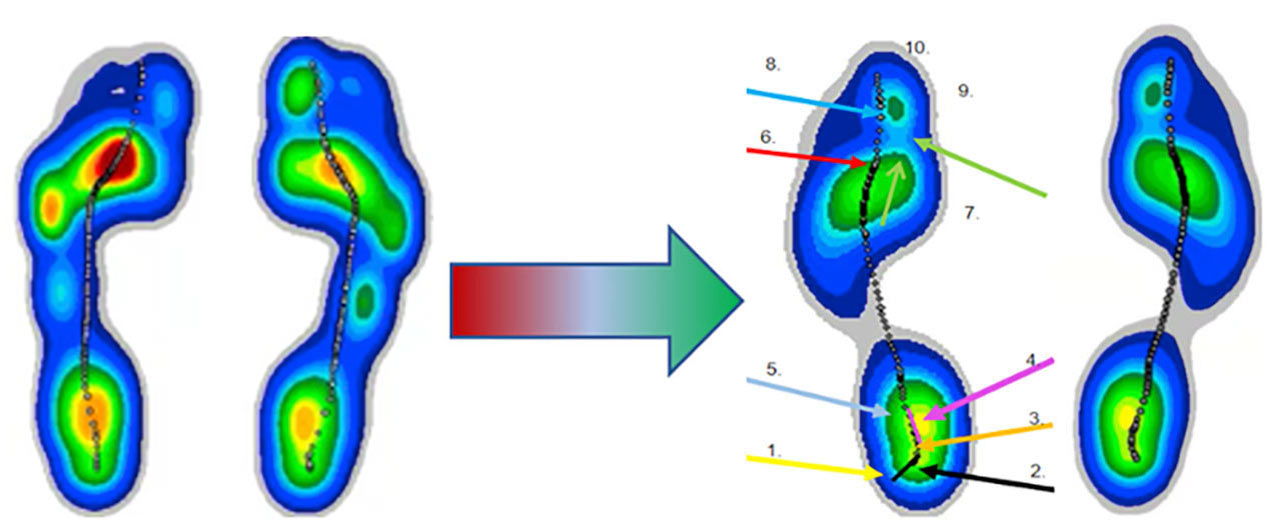
Figure 2: On the left, we see average peaking pressures with collapsing arches, characterized by caving center of pressure (COP) gait lines through midfoot. Asymmetrical areas left to right are also visible, plus medial shifted COP gait line overlays. On the right a more ideal gait line with more optimal shape, structure, and symmetry.
What is of concern anatomically comes down to the 3 “S’s” and in CAGA we can highlight each – the “shape” of the gait line, the “structure” of the peak pressures and area, as well as the changes side to side – “symmetry.” But first, consider the aggregate of bones by design. The normal foot has a modified semiflexible, 3-dimensional pyramidal shape. Any structure with these characteristics will collapse under a load, which in the case of human beings is body weight and gravity. Now, one might argue that this “loose bag of bones” allows for adaptation to a support surface, which is true, but at what cost and for how long? The 2 main costs are structural integrity and local microtrauma.
More specifically, when 2 bones that comprise a joint complex are subject to deformation, the subluxation causes a loss of joint space neutrality, which in turn leads the 2 adjacent articular surfaces to impact one another and begin the process of joint scarring. This set of events, quantified visually in Figure 2, then causes imbalances in the muscular agonist/antagonist relationship and an asymmetric and progressive loosening and contralateral tightening of the ligamentous joint complex. As to the question of how long, this foot deformation and return to a rigid lever for propulsion relies on soft tissue durability, which has a limited time frame (as will be discussed more thoroughly in a later “Dirty Truth”).
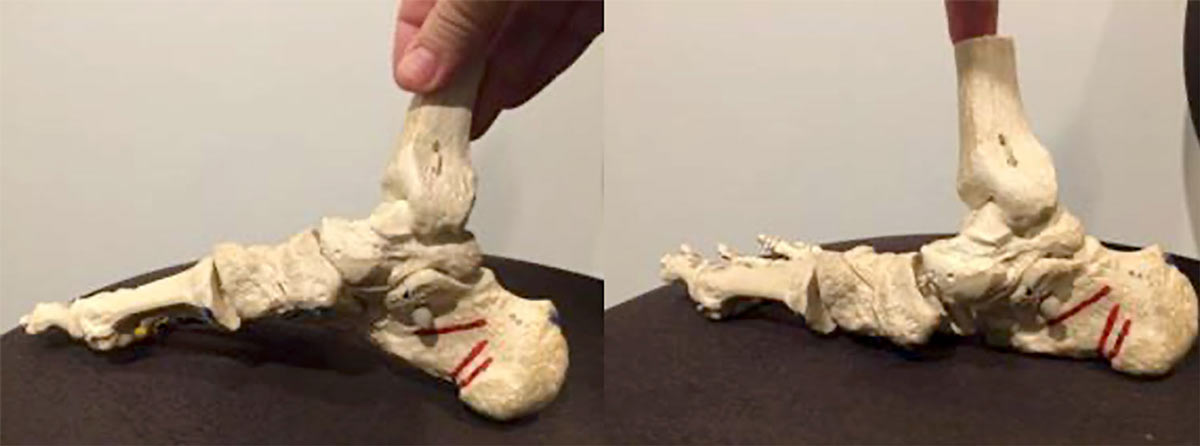
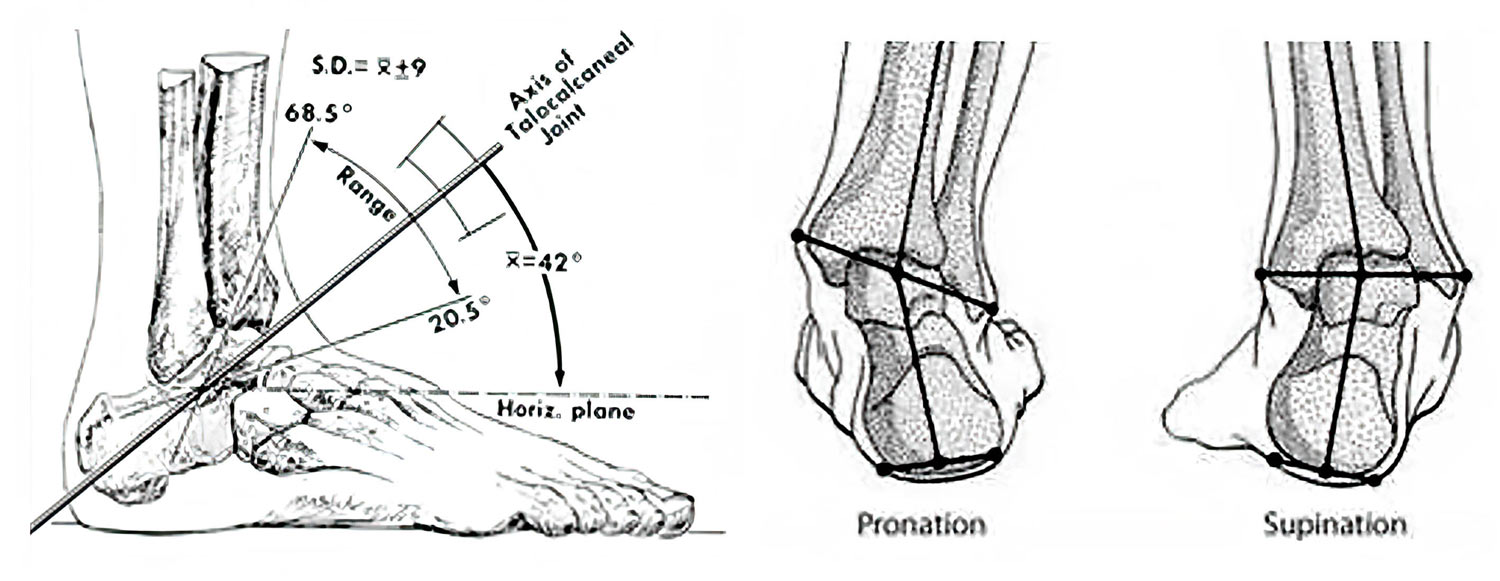
Figure 3: Pronation and supination are required for normal gait. With computer-aided gait analysis we can see these events in the Center Of Pressure gait lines and the resulting pressure that results from such repetitive micro-trauma and potential degenerative joint disease.
The foot is not symmetrical rearfoot to forefoot, medial to lateral, top to bottom, or left to right. Our patients often think because they have 2 feet that they are the same, but that is not the case. We see differences congenitally, during growth, and through acquired means such as single-sided traumas and muscular differences because of “footedness,” just like differences that occur with say, arm strength secondary to “handedness.”
Acknowledgment of these dirty truths allows us a deeper understanding of how to combat these physics problems in human stance and locomotion.
Jay Segel, DPM, is a Podiatrist, Biomechanist, Orthotic and Gait Analysis Specialist, in Martha’s Vineyard, MA.
Sally Crawford, MS, is a Biomedical Engineer, IT director, and data manager.
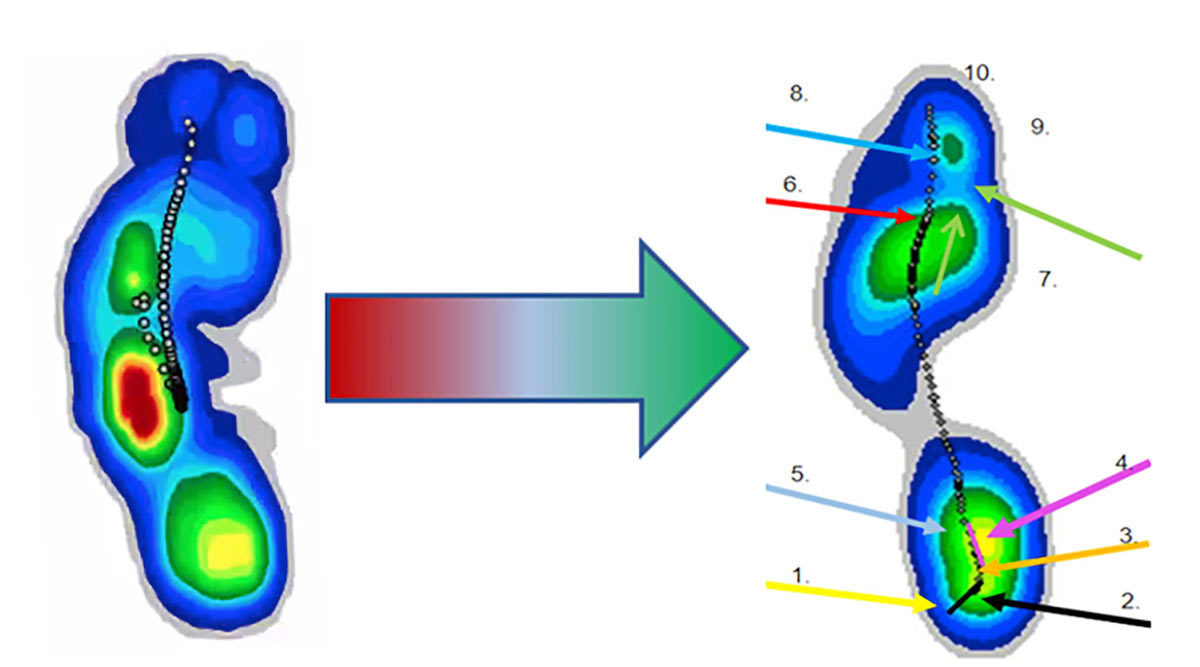
Figure 4: In CAGA you see the events representing the motions through anatomical complications, or sometimes you see what is missing. On the left, we have a clear picture of where Center of Pressure gait line events are missing and care can be improved. On the right side, we see each COP gait line event needed to move forward.
Part 1 of this 12-part series, CAGA 101: The 12 Dirty Truths Of Foot Mechanics, which appeared in the February issue, can be accessed https://tinyurl.com/y78kj5s3.