







 An overview of the talk by Adrienne M. Estes, DPM, MS, FACFAS, DABPM, FAPWHc
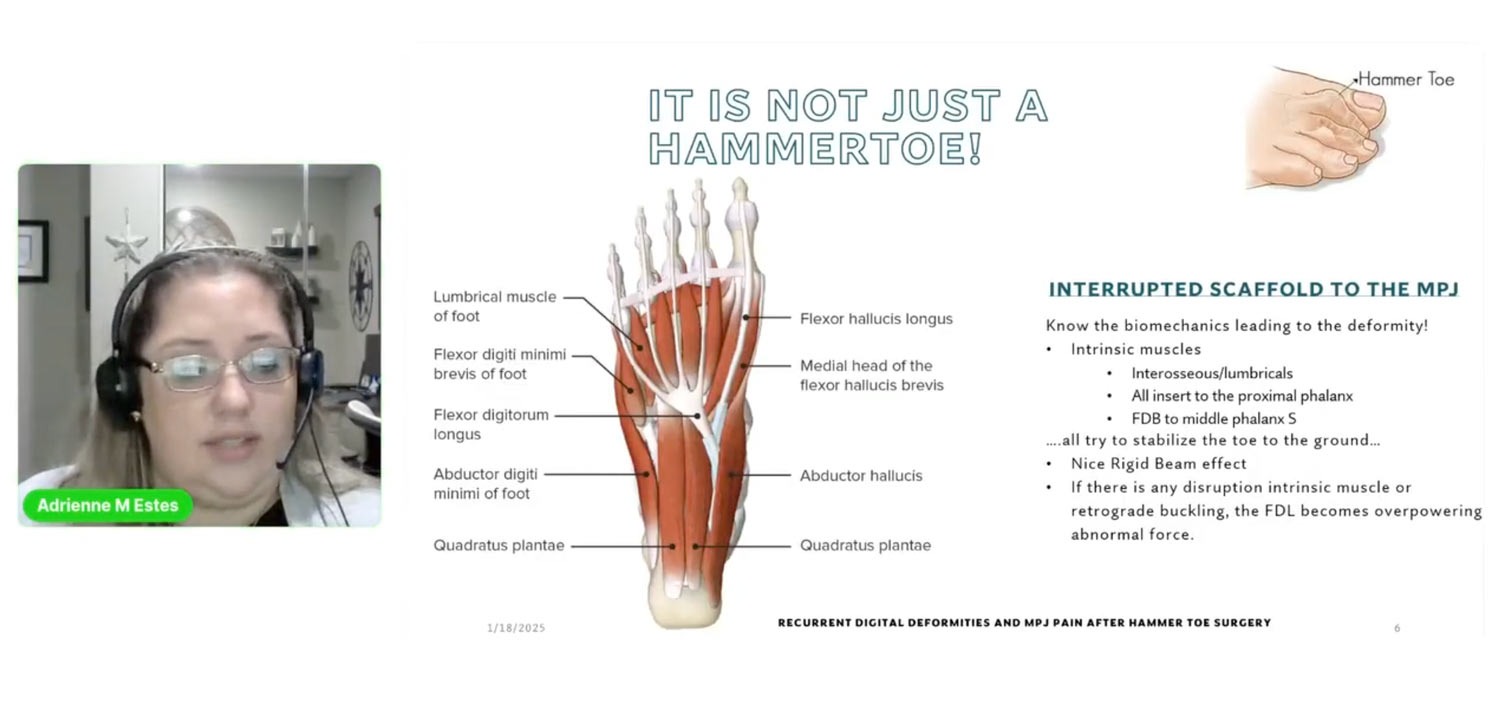
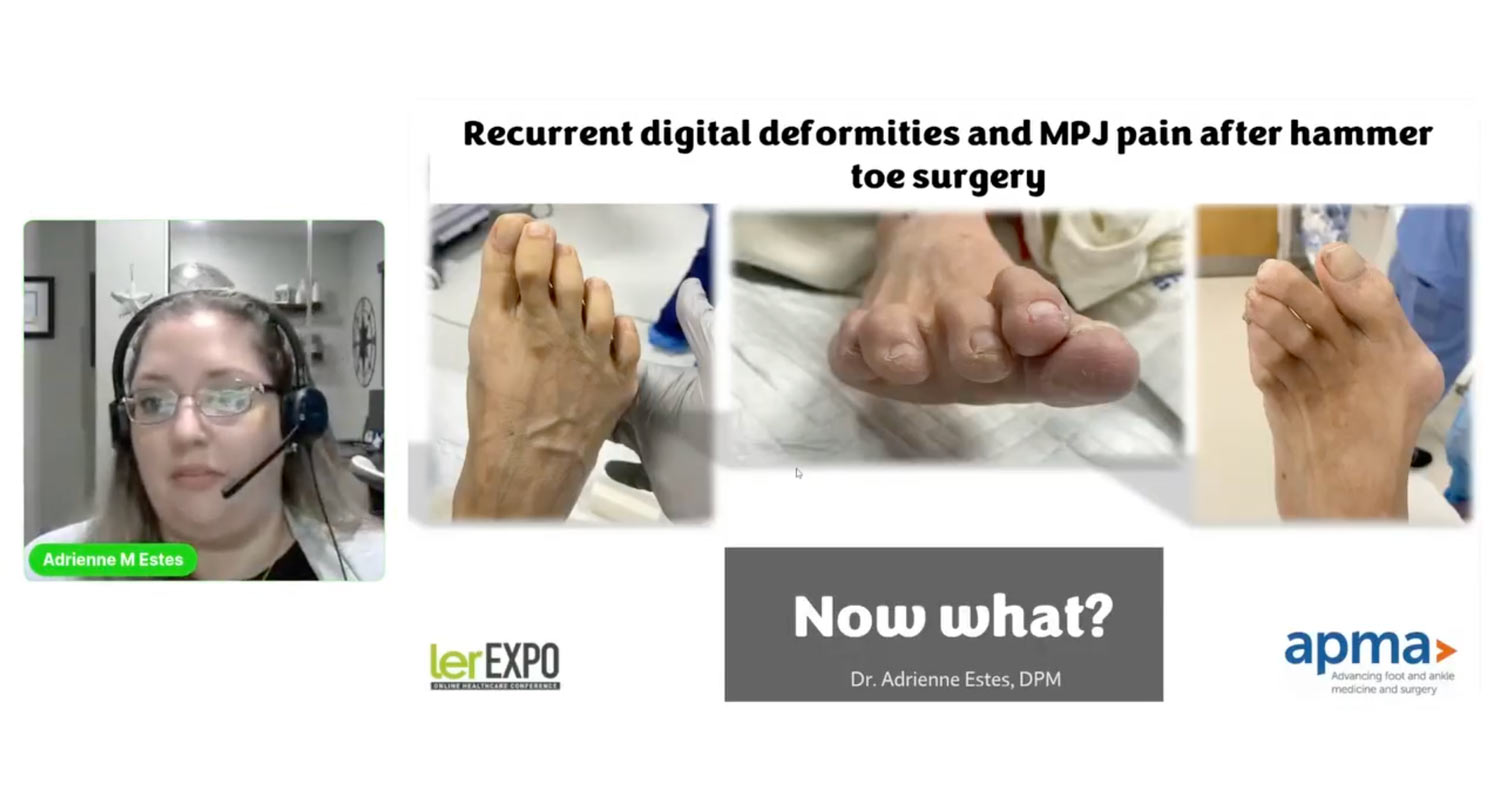
Hammer toe deformities are common foot pathologies and lead to a high proportion of podiatry office visits. This talk provides a comprehensive perspective on the challenges and strategies associated with recurrent digital deformities and metatarsophalangeal joint (MPJ) pain following hammer toe surgeries.
The learning objectives are to: understand the pathophysiology of hammer toe deformities including recognition of underlying causes; to understand the indications, advantages, and limitations of various hammer toe techniques; to recognize common complications associated with the surgery; and to learn how to manage and treat complications or failures of surgery including options for revision surgery and pearls to consider for index surgery.
Hammer toe correction surgery is perhaps the most common elective surgery performed in foot and ankle care, yet the rates of symptomatic recurrence and revision surgery can be high. This observation highlights the complexity of these procedures and the necessity for a detailed, patient-specific approach.
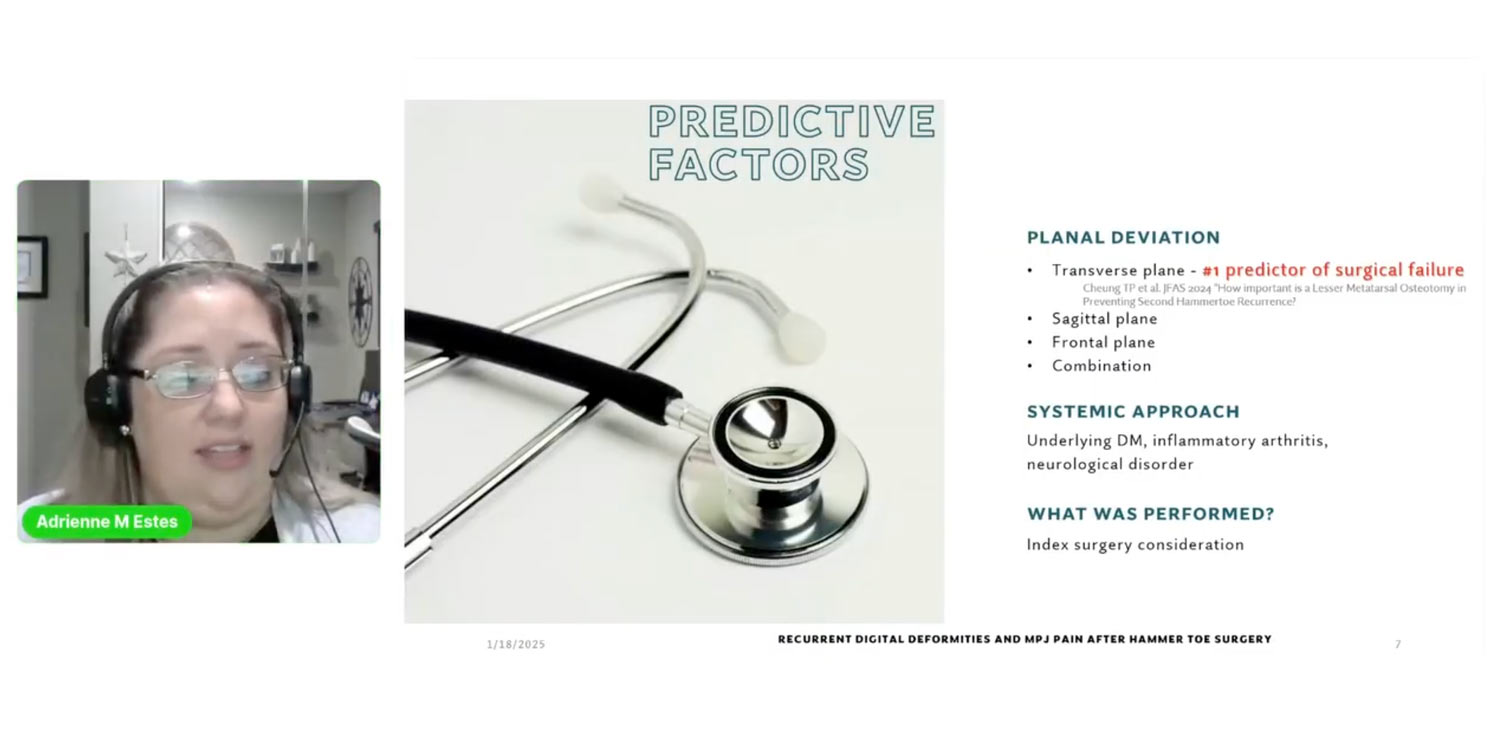
The importance of recognizing the multiplanar deformities inherent in hammer toe cases is critical to understanding the clinical landscape. These deformities often complicate both the initial surgical reduction and the long-term maintenance of the correction. The issue extends beyond a simple MTPJ contracture and often involves additional complications at the metatarsal phalangeal joints or transverse plane deviations.
The transverse plane is the number one predictor of surgical failure when it comes to hammer toe recurrence. This insight is critical for practitioners seeking to enhance surgical outcomes and patient satisfaction, urging them to adopt a more comprehensive diagnostic and treatment strategy.
Pathways to Successful Revision
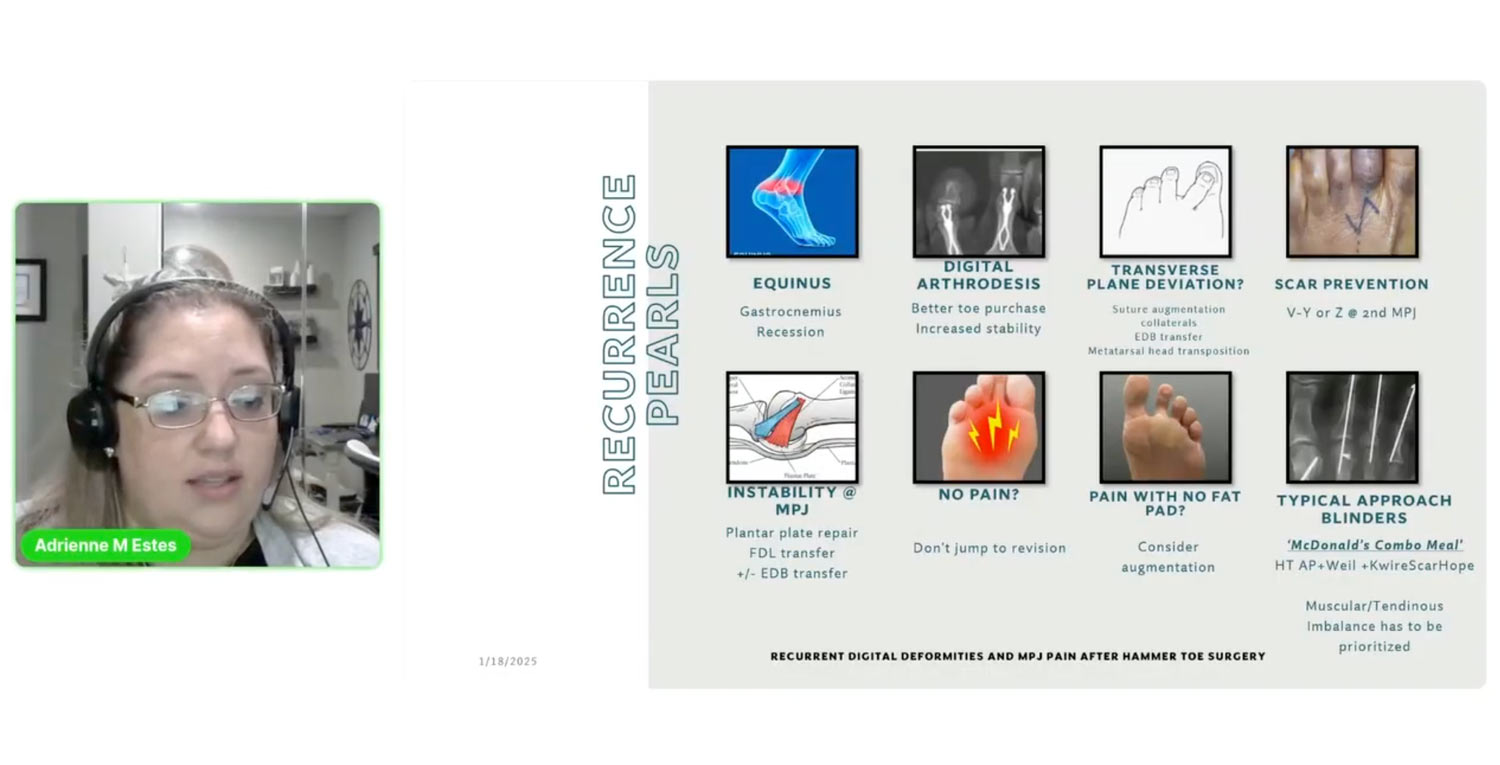
For surgeons facing the challenge of revision surgery, the series of clinical pearls laid out here are the direct outcome of multiple surgeries, some successes, some otherwise. While the primary goal is to alleviate pain and restore normal digit alignment, achieving a perfect outcome is not always feasible and the importance of establishing realistic expectations with patients is critical for success. This transparent communication is essential in managing patient expectations and fostering a collaborative treatment environment.
Embracing Clinical Innovation and Collaboration
Final advice? Focus on understanding the complexities of the deformities and avoid the stereotypical approach to hammer toe surgeries. Be sure to set realistic expectations for the patient regarding revisions and be clear to address all aspects of the deforming force. Consider clinical innovations to the revisions including soft tissue augmentation and podoplastic techniques for success.
Adrienne M. Estes, DPM, MS, FACFAS, DABPM, FAPWHc, is a podiatric surgeon in Southern California, an Associate assistant professor at the Western University of Health Sciences, and Chief of Podiatry at Riverside University Health System.
This article is a summary of Dr. Estes’ presentation from the APMA Surgical Complications Virtual Seminar, January 18, 2025. To view the 20-minute slide presentation with questions and answers, visit https://apmasurgical.lerexpo.com. All I have is the google drive link. Continuing education credits are available for many of our programs.