 Cover Story
Studies suggest that ankle foot orthoses can improve balance in some individuals, so it might seem logical that they would also help prevent falls. But the medical literature has yet to reveal a direct connection between AFOs and falls risk, and as a result the issue has become a magnet for debate.
By Cary Groner
Editor Message

Images from the London Olympics were everywhere in late July and early August—on our televisions, our radios, our computer screens, and our smart phones. Flags were flown, national anthems played, and countries ranked by medal count. In so many ways, the Olympics are about the achievements of individual nations. But a closer look reveals a ...
Special Report
CONFERENCE COVERAGE: Orthotics Technology Forum 2012

Click image to download PDF (4mb)
Orthotic laboratory managers, CAD-CAM technology experts, and lower extremity practitioners convened in Manchester, UK, in July to share ideas and experiences related to the automated design and manufacture of foot orthotic devices.
By Jordana Bieze Foster
Sponsored by an educational grant from…

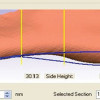
Foot orthotic laboratories have long been the principal players in the computer aided design and computer aided manufacturing (CAD-CAM) of foot orthoses. But practitioners are gradually starting to play a bigger role in the process—a development that dramatically enhances the potential for clinical creativity but also introduces an extra element of uncertainty.
Computer aided manufacturing is anything but a one-size-fits-all proposition. Customers have a range of variables to choose from, and making the right decision in most cases depends on knowing what type of orthotic material the machine will be asked to handle.
The use of technology to improve orthotic design is not limited to CAD-CAM applications, as demonstrated by University of Salford researchers in two presentations at the Orthotics Technology Forum.
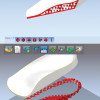
The fledgling field of additive manufacturing is still somewhat fragmented, as evidenced by the fact that the same technology can be described as rapid prototyping or 3D printing. But additive manufacturing’s profile is definitely on the rise, and its advocates are optimistic that lower extremity clinical applications are right around the corner.
Departments
A new technology, the load cell, can be used to assess rollover characteristics of prosthetic feet in a variety of walking environments. Load cell analysis can help identify premature foot-flat and dead spots and determine the effects of energy storage and return designs on amputee gait.
By Edward S. Neumann, PhD, PE, CP, FAAOP; Justin Brink, ...
As researchers explore the possibility that idiopathic toe walking has an underlying neurologic cause, clinicians continue to refine treatment strategies to keep ITW patients off their toes. Orthotic devices play a key role, with lower-profile devices growing in popularity.
By Emily Delzell
Inconsistent findings from laboratory studies have made it difficult to determine which gait alterations are specific to diabetic peripheral neuropathy and which also affect diabetic patients without neuropathy. Body-worn sensor technology may help clarify the distinctions.
By Tahir Khan, DPM, and Ron Guberman, DPM, DABPS
Experts still disagree about whether stretching prior to athletic activity can prevent injury and, if so, whether those benefits offset any negative performance effects. But they do tend to agree that some form of stretching is probably a good idea for most athletes.
By Cary Groner
Dose-response research refutes the common perception that increasing brace wear time leads to muscle atrophy in patients with knee osteoarthritis. In fact, longer bracing duration appears to improve hamstring strength as well as increasing patients’ physical activity levels.
By Cheryl L. Hubley-Kozey, PhD, and Gillian Hatfield Murdock, PT, MSc
News
In the Moment: Footcare
By Emily Delzell
The shift away from aggressive surgery to correct clubfoot in now all but complete, according to research published in July in the Journal of Pediatric Orthopaedics (JPO). The study shows the Ponseti method is now the treatment of choice for the vast majority of practitioners and that increased understanding of the technique has resulted in ...
Korean surgeons have developed an alternative to Achilles tendon lengthening for reducing plantar pressure and promoting wound healing in patients with diabetic foot ulcers.
A subsensory level of mechanical noise delivered directly to the foot soles of healthy older adults during walking has the potential to normalize gait variability and possibly reduce the risk of falls, according to research published in July in Gait & Posture.
Market Mechanics
Products
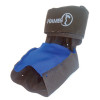
Hames Orthotech introduces the Hames Air Brace for treating plantar fasciitis and Achilles tendinitis. Designed to be worn in a shoe, the brace allows for heel pain treatment during ambulation. With each step, the heel is cushioned by a U-shaped ...
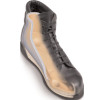
Buffalo Brace and Jerry Miller Shoes introduce an ankle foot orthosis built right into a custom-molded shoe. The AFO component features a padded collar, thermal molded polypropylene frame, and custom removable inserts. The shoe component features include an elongated opening, ...
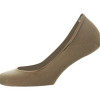
Foot Zen by Doctor Specified introduces Zenvisibles—a no-show liner product designed for people who don’t want to wear socks with loafers or pumps but want to avoid the negative consequences of perspiration that can result from not wearing socks. Zenvisibles ...
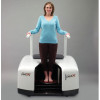
Foot and ankle specialists can now get a 3D, physiological weight-bearing image with the pedCAT diagnostic imaging device from CurveBeam. The compact pedCAT system uses cone beam computed tomography to produce undistorted, unobstructed images of the foot and ankle. It ...
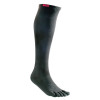
Injinji offers two new performance socks. Performance Midweight Toesocks, Injinji’s most padded toesock, are engineered for sensitive feet and individuals who prefer maximum cushioning. The padded toesocks offer light compression for a snug fit and a honeycomb design for optimal ...
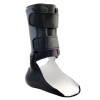
Kevin Orthotics announces the release of the Free Motion G Brace (G200) AFO. The custom-molded leather gauntlet orthosis is designed to stabilize the subtalar, talocalcaneal, and midtarsal joints. The absence of a vamp facilitates fitting into patients’ shoes. The articulating ...
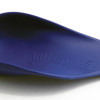
Introducing the littleSteps Gait Plate for children, a semirigid prefabricated orthosis designed to limit in-toeing gait caused by rotational deformities of the lower limb and to address any associated overpronation. The semirigid shell extends laterally beyond the fourth and fifth ...

Total Vein Systems, a Houston-based medical supply company, recently introduced Boost, its new line of Athletic Compression Therapy. Boost socks are designed to increase blood circulation and enhance oxygen delivery to working and recovering muscles to accelerate recuperation and reduce ...
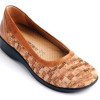
Arcopedico has unveiled a new line of handmade comfort shoes, featuring two recognized styles now with stretch uppers made from Portuguese cork. Springy, light, flexible, sustainable, and water-resistant, cork is a natural fit for the company’s comfort shoe construction. The ...
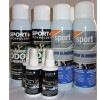
On the heels of last year’s launch of its Ever-Safe sock line, Ever-Safe now offers a safe and permanent odor eliminator to help keep those socks smelling fresh. SportX technology doesn’t just mask unwanted odors, it inhibits growth of the ...