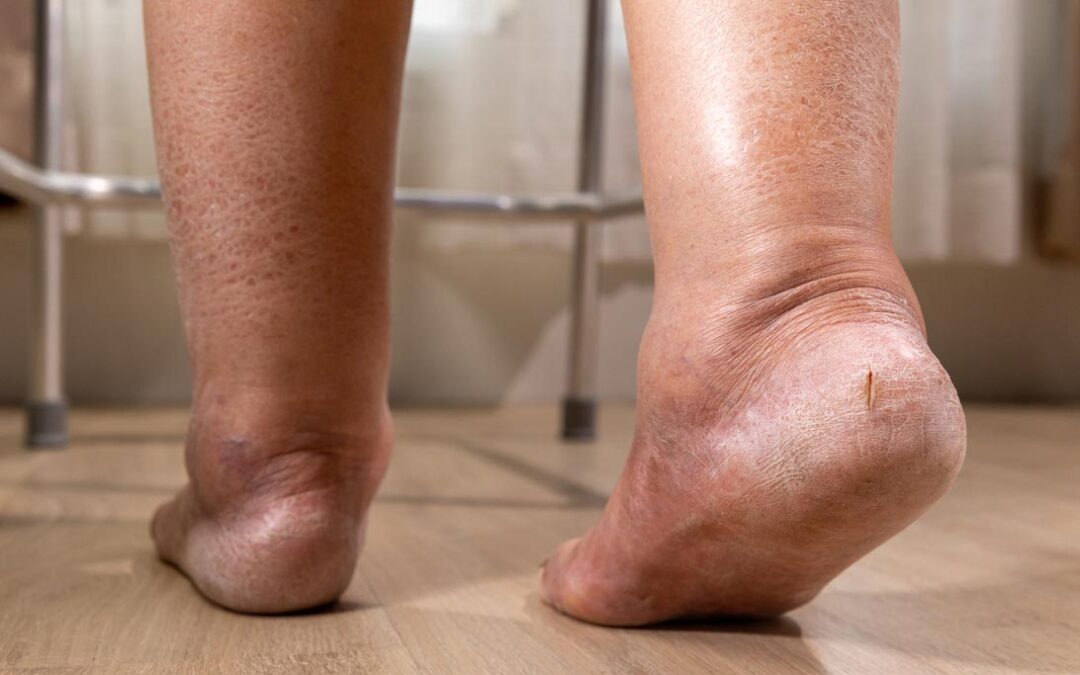








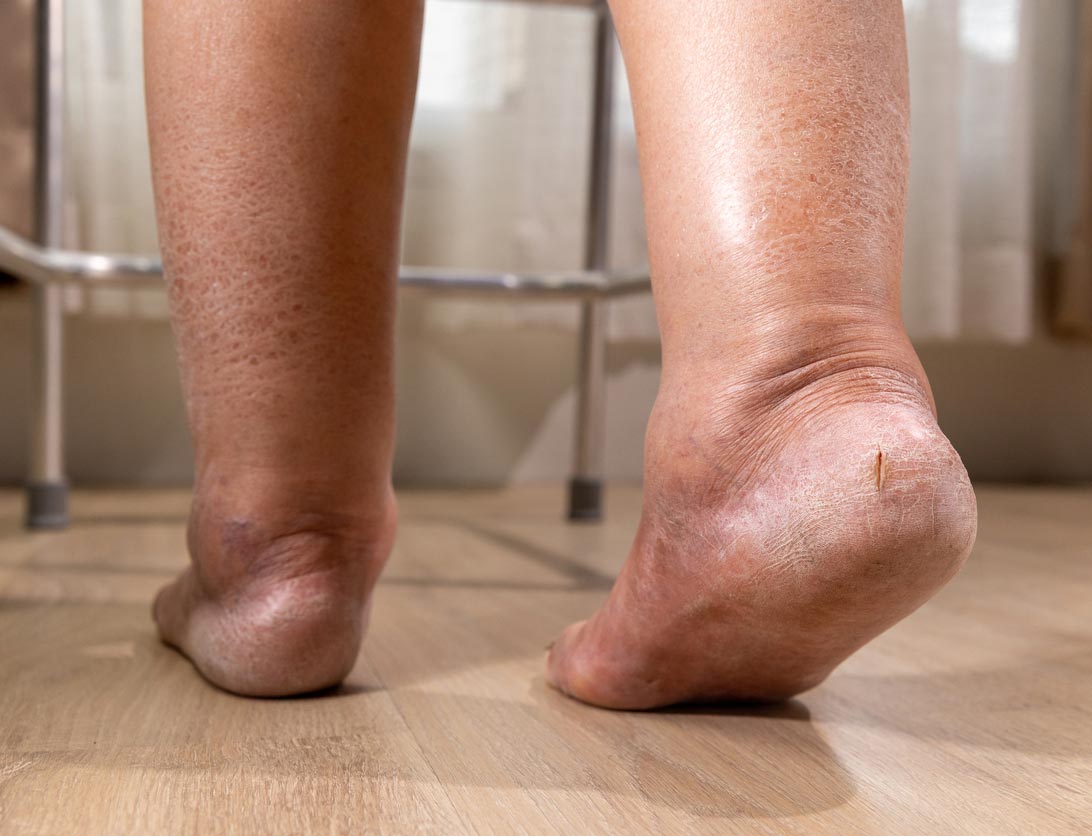
 Diabetic foot ulcers pose a serious threat to people with diabetes, especially the elderly. Both aging and diabetes can lead to structural and compositional changes in the plantar soft tissues which can be seen on ultrasound. With an increasingly aged population and diabetes prevalence expected to increase to nearly 25% among adults age 75-79, this older population is at greater risk for foot ulcers. Indeed, the lifetime incidence rate of foot ulcers is up to 34% among those with diabetes. All this combines to make an elderly population at high risk for diabetic foot ulcers (DFUs). Given that the heel is a known high-risk site for DFUs, it is worthy of research attention.
This study aims to use the texture analysis of ultrasound images to distinguish the features of microchambers (a superficial thinner layer) and macrochambers (a deep thicker layer) in heel pads between the elderly with and without Type 2 diabetes, so as to preliminarily explore whether texture analysis can identify the potential injury characteristics of deep tissue under the influence of diabetes before the obvious injury signs can be detected in clinical management.
Ultrasound images were obtained from the right heel (dominant leg) of 11 elderly people with diabetes (DM group) and 11 elderly people without diabetes (Non-DM group); mean age in both groups was 85 years. The TekScan system was used to measure the peak plantar pressure (PPP) of each participant. Six gray-level co-occurrence matrix (GLCM) features including contrast, correlation, dissimilarity, energy, entropy, and homogeneity were used to quantify texture changes in microchambers and macrochambers of heel pads.
The researchers found significant differences in GLCM features (correlation, energy and entropy) of macrochambers between the 2 groups, while no significant differences in all GLCM features of microchambers were found between the 2 groups. No significant differences in PPP and tissue thickness in the heel region were observed between the 2 groups.
In the elderly with diabetes who showed no significant differences in PPP and plantar tissue thickness compared to those without diabetes, several texture features of ultrasound images were found to be significantly different. This finding, the authors concluded, indicates that texture features (correlation, energy and entropy) of macrochambers could be used for early detection of soft tissue damage associated with diabetes.
Source: Duan Y, Ren W, Xu Y, et al. Texture differences of microchambers and macrochambers in heel pads between the elderly with and without diabetes. J Tissue Viability. 2024:S0965-206X(24)00122-0. doi: 10.1016/j.jtv.2024.07.016. © 2024 Tissue Viability Society / Society of Tissue Viability; all rights reserved.