







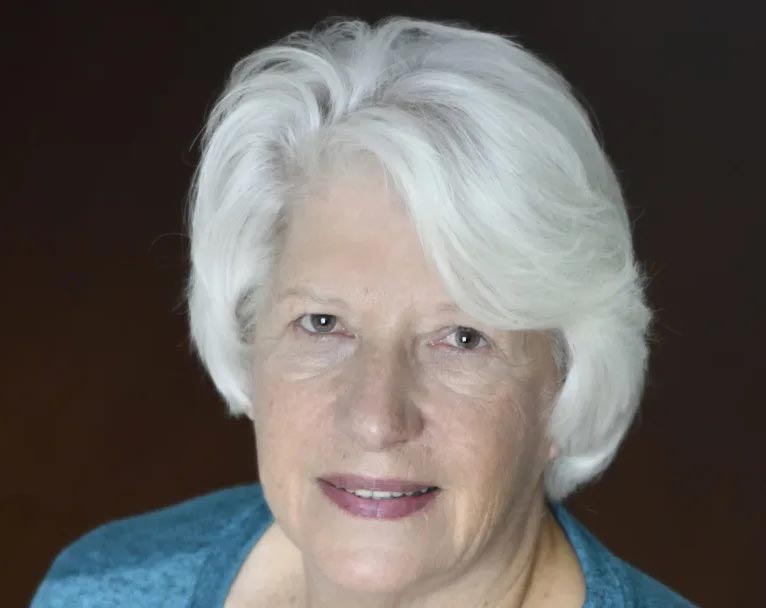
Mary Moore McLean Photography
By Marianna Crane, retired
A month after my 80th birthday, I was doing a lunge. I bent my right knee and stretched out my left leg. My foot slipped. A sharp pain stabbed my knee. My leg buckled underneath me. If there was a popping sound, I didn’t hear it.
The next day, after an X-ray and a physical assessment of my knee, the physician’s assistant at an Ortho Urgent Care declared that I had injured the anterior cruciate ligament (ACL) and the medial collateral ligament (MCL).
Since there had been a rash of surgeries the day before, there was a limited number of knee braces. The technician found a large brace, but if I wanted a medium, which was my size, my husband and I would have to drive to another clinic. After spending 3 hours in the waiting room, I suggested we take the larger brace. Wearing a hinged T-scope knee brace, the straps pulled taut to fit my leg, I lumbered out of Urgent Care with future MRI and orthopedic physician appointments.
I had been a nurse over 40 years, and a geriatric nurse practitioner for the last 20 of those years. Aware of the aging process, I had vowed to keep strong and flexible. Over the next 2 weeks before the appointments, I watched YouTube videos about ACL and MCL care. Performing the simple exercises made me feel in control of my progress while waiting for a definitive diagnosis.
The MRI confirmed my ACL was partially torn and MCL fully torn. The orthopedic physician showed me MRI and X-ray pictures of my injury also pointing out age-related changes. I was to continue wearing the brace and make an appointment with physical therapy.
The minimalist exercises I had done kept my knee flexible, which impressed the physical therapist. Her exercise plan has improved my walking and mental outlook.
The brace seems to be part of my anatomy since I wear it constantly except when in bed. Now that my leg is no longer swollen, it slides down and I’m forever adjusting the straps. I’m close to running out of space to attach the Velcro straps. In retrospect, we should have driven to the other clinic to get the correct size. I’ve been wearing the brace for over 2 months hoping it’ll continue to keep my knee stable until no longer needed.
My knee injury isn’t a death sentence. But as a geriatric NP, I know this type of mishap could make me susceptible to deconditioning, loss of strength, and risk of falling. At each clinic visit, the receptionist puts a yellow “fall risk” bracelet on my wrist, reinforcing this belief. However, I have witnessed tenacity and determination in my elderly patients who overcame a variety of physical setbacks. I’m grateful not to have encountered ageism at any point in my treatment. Each of my healthcare providers has indicated that I should gain back strength and mobility and return to the level of physical capacity I had before the injury.
Marianna Crane trained as a nurse in the 1960’s before becoming a geriatric nurse practitioner in 1981. Since retiring, she has focused on writing; her work has appeared in The New York Times, The Eno River Literary Journal, Examined Life Journal, Hospital Drive, and others. Her book, Stories from the Tenth-Floor Clinic, can be found on IndieBound, Amazon, and Barnes & Noble. She blogs at nursingstories.org.