







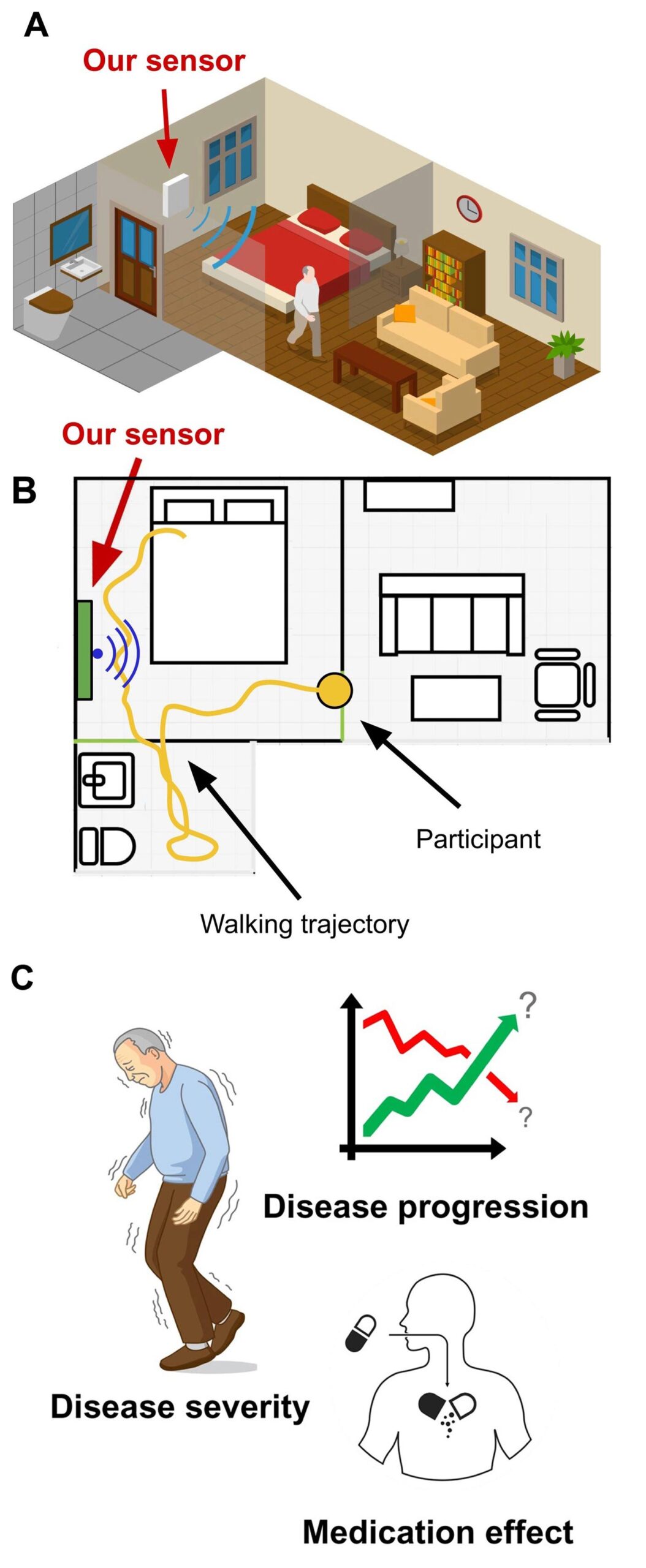
 Researchers from the Massachusetts Institute of Technology (MIT) and elsewhere demonstrated an in-home device that can monitor a patient’s movement and gait speed, which can be used to evaluate Parkinson’s severity, the progression of the disease, and the patient’s response to medication. The device, which is about the size of a Wi-Fi router, gathers data passively using radio signals that reflect off the patient’s body as they move around their home. The patient does not need to wear a gadget or change their behavior. Because the device operates in the background and runs all day, every day, it can collect a massive amount of data.
The researchers used these devices to conduct 2 studies that involved a total of 50 participants; 1 study lasted 2 months and the other was conducted over the course of 2 years. They showed that by using machine-learning algorithms to analyze the data they gathered—more than 200,000 gait speed measurements—a clinician could track Parkinson’s progression more effectively than they would with periodic, in-clinic evaluations.
“By being able to have a device in the home that can monitor a patient and tell the doctor remotely about the progression of the disease, and the patient’s medication response so they can attend to the patient even if the patient can’t come to the clinic—now they have real, reliable information…,” said researcher Dina Katabi, PhD, the Thuan and Nicole Pham Professor in the Department of Electrical Engineering and Computer Science, and a principle investigator in the Computer Science and Artificial Intelligence Laboratory and MIT Jameel Clinic.