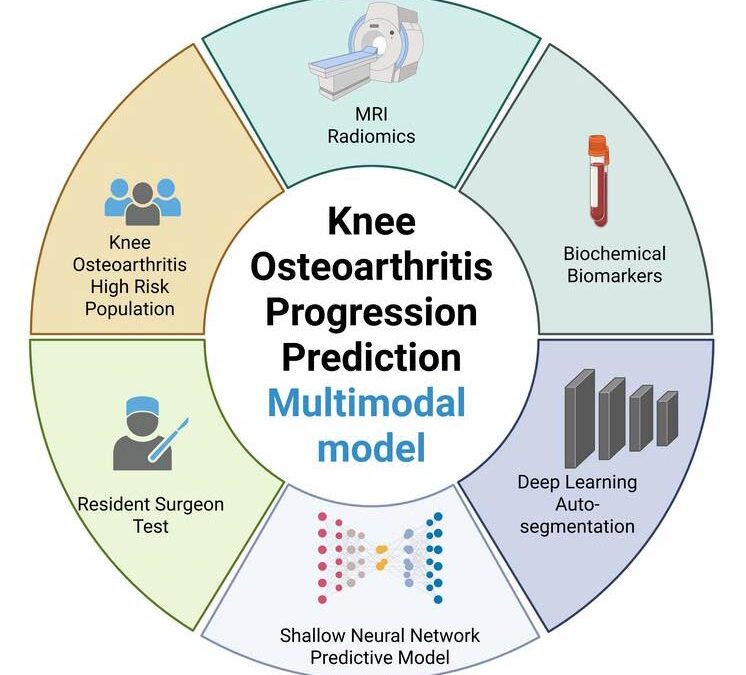








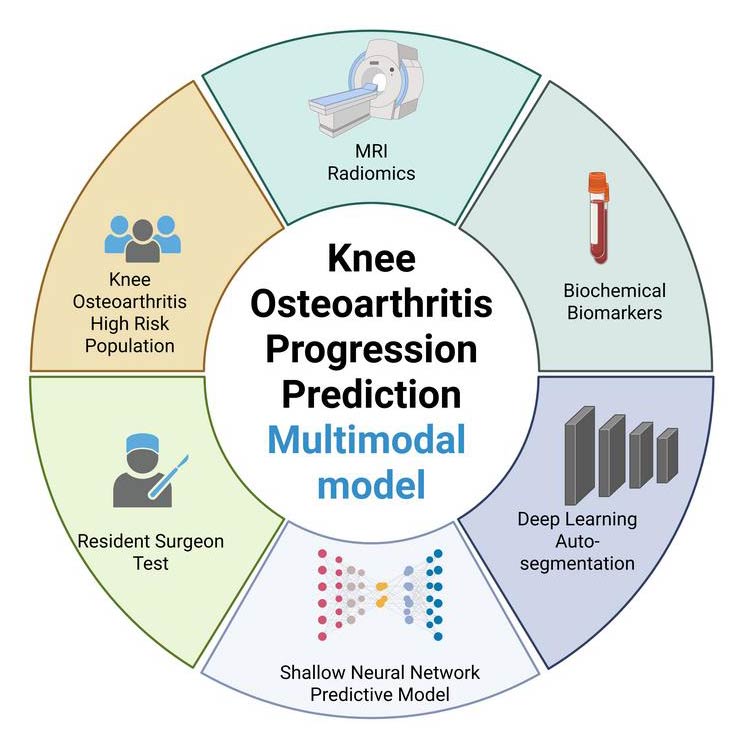
Illustration highlighting the integration of MRI radiomics and biochemical biomarkers for knee osteoarthritis progression prediction. Created with Biorender. Image courtesy of Ting Wang, et al.
An artificial intelligence (AI)-assisted model that combines a patient’s MRI and biochemical and clinical information shows preliminary promise in improving predictions of whether their knee osteoarthritis (OA) may soon worsen. Ting Wang of Chongqing Medical University, China, and colleagues utilized data from the Foundation of the National Institutes of Health Osteoarthritis Biomarkers Consortium on 594 people with knee OA including their biochemical test results, clinical data, and a total of 1,753 knee MRIs captured over a 2–year timespan. With the help of AI tools, the researchers used half of the data to develop a predictive model combining all 3 data types. Then, they used the other half of the data to test the model, which they named the Load-Bearing Tissue Radiomic plus Biochemical biomarker and Clinical variable Model (LBTRBC-M).
In the tests, the LBTRBC-M showed good accuracy in using a patient’s MRI and biochemical and clinical data to predict whether, within the next 2 years, they would experience worsening pain alone, worsening pain alongside joint space narrowing in the knee (an indicator of structural worsening), joint space narrowing alone, or no worsening at all. The researchers also had 7 resident physicians use the model to assist their own predictions of worsening knee OA, finding that it improved their accuracy from 46.9% to 65.4%.
These findings suggest that a model like LBTRBC-M could help enhance knee OA care. However, further model refinement and validation in additional groups of patients is needed.