







 By Dr. Windy Cole, DPM, CWSP, FACCWS, FFPM RCPS (Glasg) with Dr. Loan Lam DPM, FAWPHc, FAPWCA, CWSP, CHWS, CLWT and guest Cam Ayala
1. Introduction: The Body’s Hidden Homeostasis
In traditional medicine, we often treat the vascular, integumentary, and lymphatic systems as separate silos. However, the “Veil Theory,” championed by Dr. Heather Hettrick, reveals that these systems are inextricably linked. At the center of this connection is the endothelial glycocalyx, a microscopic, sieve-like layer within our blood vessels that regulates the movement of fluid and proteins.
When this delicate “sieve” or the vessels themselves are compromised by disease or injury, the burden falls entirely on the lymphatic system. This leads to a paradigm-shifting realization for clinicians and patients alike: All edema is lymphedema. Whether the root cause is venous insufficiency, diabetes, or trauma, the resulting swelling is evidence of an overburdened lymphatic system.
“Think of the lymphatic system as the sewer system of inflammation. It is responsible for clearing the ‘junk’—infection, metabolic waste, and excess fluid. When the sewer system backs up, the entire biological environment suffers.”
When this system fails, it follows a predictable, visible progression. For the “Lymphie” community, understanding this continuum is the first step toward reclaiming their health.
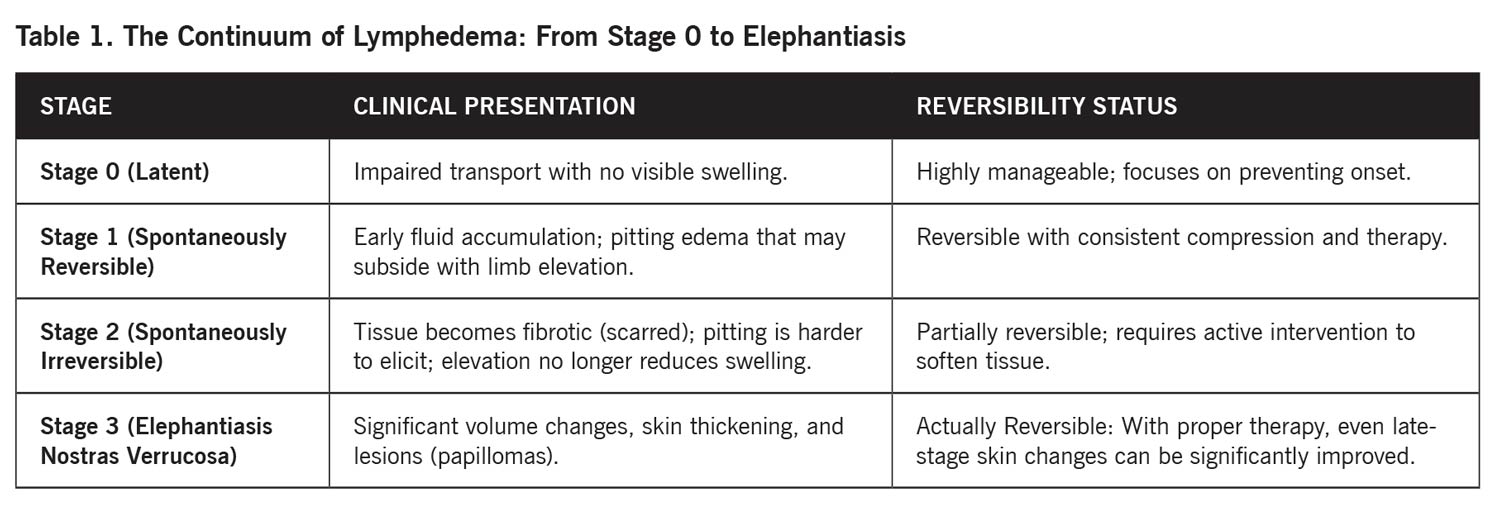
2. The Continuum of Lymphedema: From Stage 0 to Elephantiasis
Lymphedema is a chronic, progressive condition, but it is not a death sentence for your lifestyle. The clinical stages help us determine the level of intervention needed. (see Table 1)
The “So What?” of Empowerment: Do not let a Stage 3 diagnosis steal your hope. While the body replaces fluid with fibrosis (permanent scar tissue), Dr. Lam and other experts emphasize that specialized therapy can reverse many late-stage skin changes. The goal is to move backward on the continuum—from Stage 3 to Stage 2, and eventually to a stable Stage 0.
3. The Clinical Detective: Avoiding the “Antibiotic Trap”
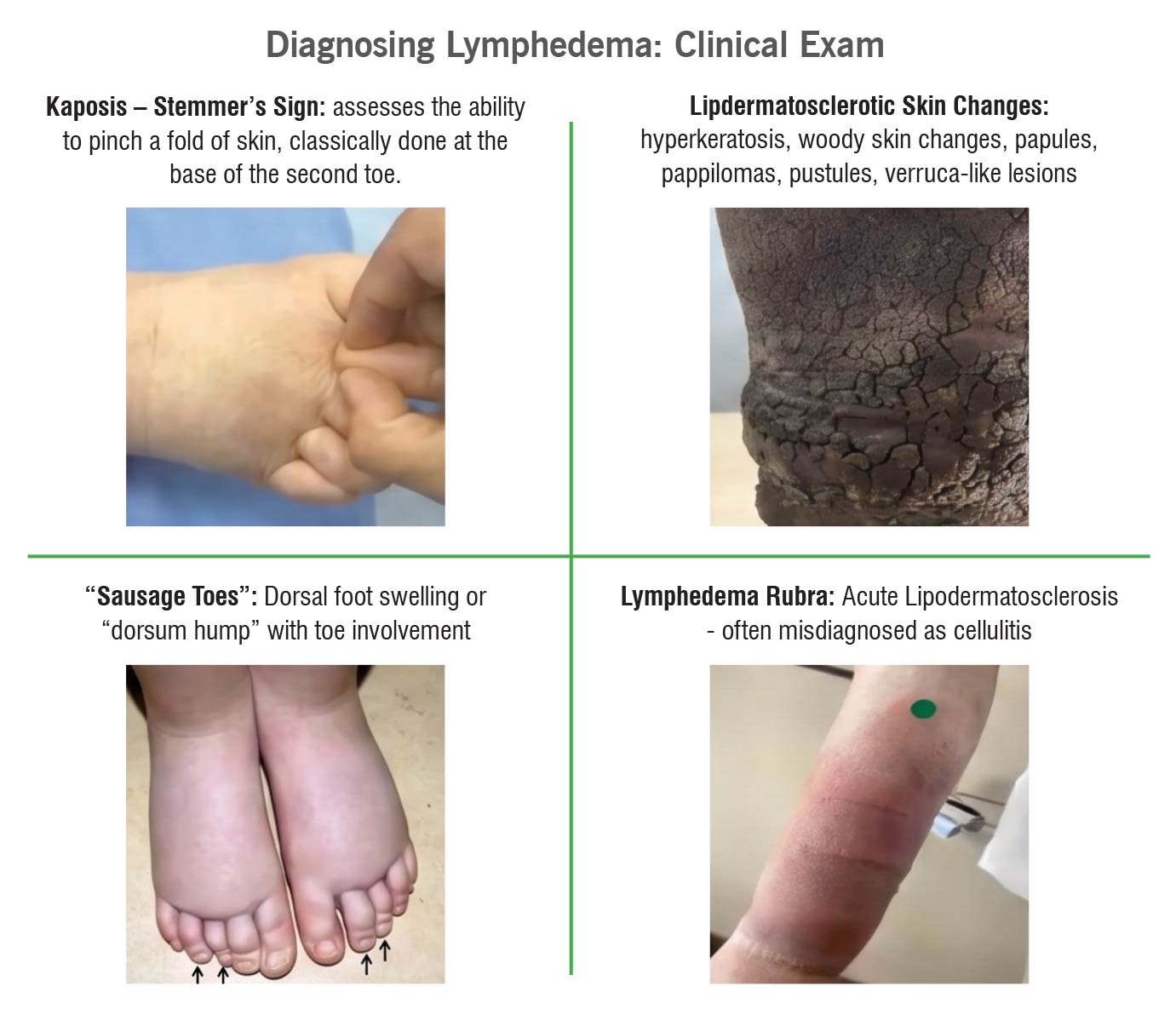
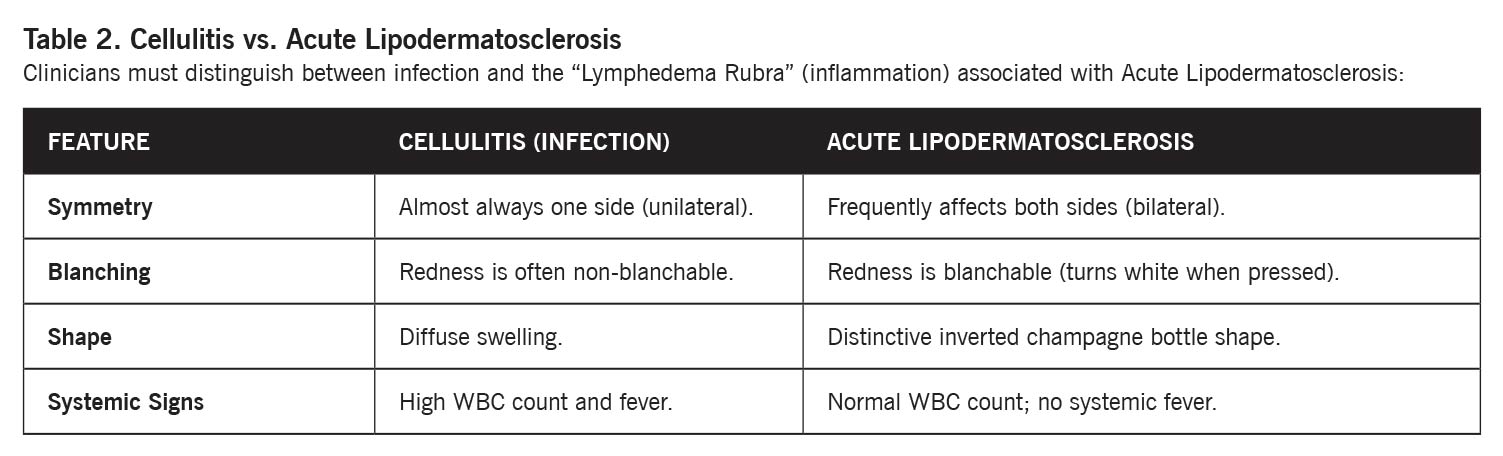
Accurate diagnosis is often delayed because lymphedema is frequently mistaken for infection. This leads to the “antibiotic trap,” where patients are prescribed cycles of drugs that do nothing for the underlying lymphatic failure. (see Table 2)
Red Flags for Diagnosis
- Sausage Toes and Dorsal Humps: Swelling often begins in the distal extremities. Look for sausage-like toes and a hump on the midfoot where fluid traps, unable to pass the ankle’s lymph nodes.
- Kaposi-Stemmer Sign: A gold-standard test. If you cannot pinch and lift the skin at the base of the second toe, the test is positive, indicating significant tissue thickening.
- Lymphorrhea (The Weeping Pore): This occurs when lymphatic vessels essentially burst under pressure. Patients often describe it as milky perspiration that appears after a workout, as if fluid is seeping directly through the skin.
The Medication Warning: Empowerment means checking your med list. Common drugs like Amlodipine (for blood pressure), Gabapentin (for nerve pain), and Prednisone (steroids) are notorious for inducing or worsening edema. If you notice a sudden increase in swelling after starting a new script, advocate for a review with your physician.
 4. The Patient Journey: From Pain to Purpose
The lived reality of a “Lymphie” is defined by the battle between discipline and motivation. Cam Ayala’s story serves as a powerful testament to the grit required for long-term management.
- The Trigger: For Cam, primary lymphedema was dormant until puberty. A bone biopsy for a suspected tumor acted as the triggering event, causing his lymphatic system to fail post-operatively.
- The Surgical Odyssey: Cam endured 24 surgeries in 7 years, including a botched knee replacement. This cycle of infection (osteomyelitis) and surgical fatigue led to a pivotal moment of clarity.
- The Pivot: In 2022, Cam chose an elective transfemoral amputation. Far from a failure, this was a proactive choice to regain mobility. Even as an amputee, he continues lymphedema protocols daily because the condition is systemic.
The Mantra: “Lymphedema and gravity do not take days off.” Cam teaches that while motivation is fleeting, discipline—doing the compression and therapy when you don’t want to—is what prevents the disease from progressing.
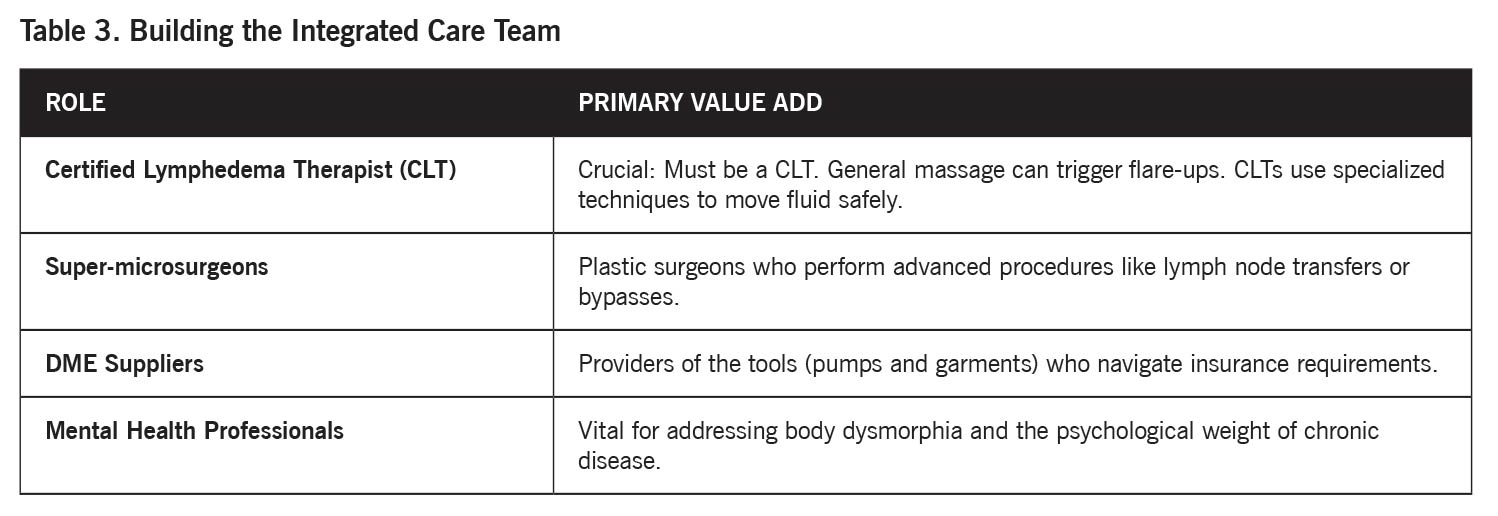
5. Building the Integrated Care Team
You cannot manage lymphedema alone. You need a specialized circle of care that understands the complexities of the lymphatic system. (see Table 3)
Clinical Resource: Every care team should utilize the Stride Guide by Susie Ehmann and Robin Bhork, an essential algorithm for choosing the right compression based on patient-specific tissue texture and mobility.
6. The Modern Toolkit: Management, Technology, and the Law
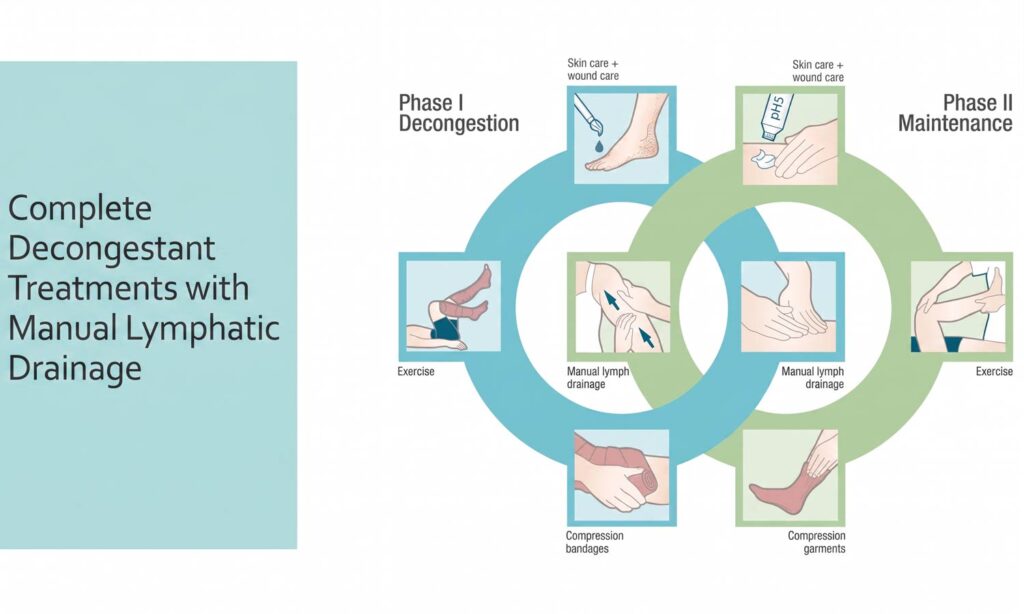
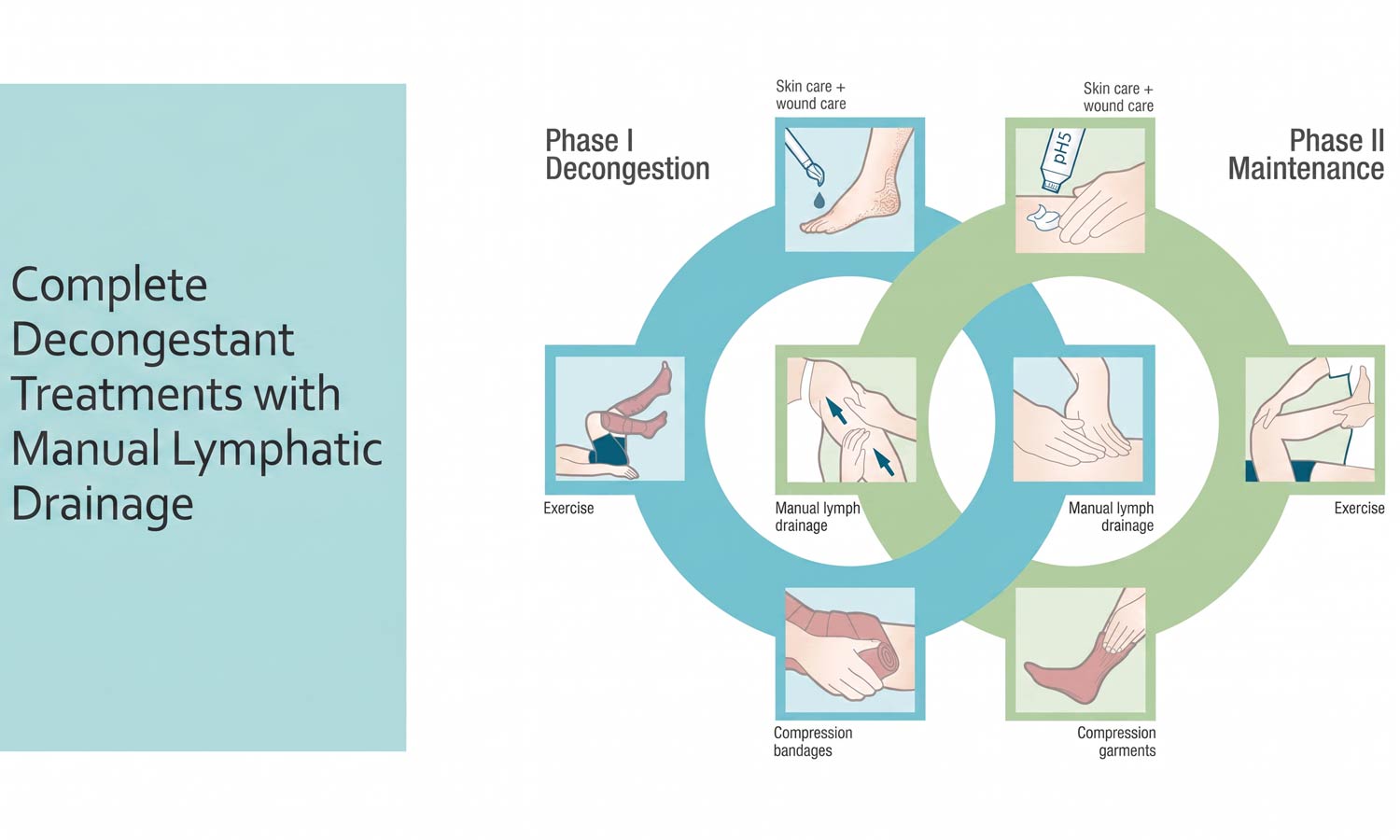
The gold standard of treatment is Complete Decongestive Therapy (CDT). This includes Manual Lymphatic Drainage (MLD)—a light, skin-stretching technique (not deep tissue)—combined with compression and exercise.
The Lymphedema Treatment Act is a landmark legislation that changed the landscape of care. The most empowering change? Medicare and private insurers now provide coverage for compression with or without a wound.
- Daytime Garments: Coverage for 3 garments per affected limb every 6 months.
- Nighttime Garments: Coverage for 2 garments per affected limb every 2 years.
Next-Gen Technology
Management has evolved beyond the hot and itchy elastic stockings of the past:
- Inelastic Compression: Modern tools like the AeroWrap provide stiff support that is 250% more effective at pumping fluid during movement than traditional elastics.
- The Arrow Gauge: This allows for patient-controlled precision. It features a built-in safety valve that automatically blows off excess air, ensuring the patient never over-compresses the limb.
- Pneumatic Pumps: Advanced home pumps now feature zoned chambers that can be deactivated to avoid pressure on painful wounds or sensitive areas.
7. Conclusion: Thriving with Lymphedema
While lymphedema is chronic, it is no longer a barrier to a full, active life. By combining the right technology with personal discipline and legislative support, you can move from pain to purpose.
Empowerment Resources:
- NLN (National Lymphedema Network): For patient conferences and support.
- LEARN Network: For instructional videos on self-MLD and skin care.
- Amputee Coalition: Support for those whose journey includes limb loss.
- Lymphedema Patient Roundtable (YouTube): Monthly discussions on the psychological elements of thriving.
Stay mobile, stay disciplined, and remember you are not just a patient; you are a “Lymphie” with a community and a toolkit designed for your success.
Dr. Windy Cole is a double board-certified podiatric physician and internationally recognized wound care expert with more than 24 years of clinical experience in limb preservation and advanced wound management. She serves as Adjunct Professor and Director of Wound Care Research at Kent State University College of Podiatric Medicine and is Chief Research Officer for Capsicure Clinical Research Organization.
As the founder of Cole Collaborative Consulting, Dr. Cole partners with biotech and medical device companies to develop evidence-generation strategies, strengthen market access pathways, and deliver high-quality scientific and medical communications.
A leader in the integration of emerging technologies into wound care, Dr. Cole has directed numerous clinical trials and contributes her expertise to advisory boards across the biotech and device sectors, providing insight on FDA strategy, clinical trial oversight, medical monitoring and protocol development with real-world implementation.
A sought-after speaker at national and international symposia, she is dedicated to advancing patient outcomes through evidence-based practice, interdisciplinary collaboration, and innovation in the management of complex, hard-to-heal wounds.
Dr. Loan Lam is Medical Director of wound services at United Vein and Vascular Centers. She earned her medical degree from Barry University and completed a podiatric surgical residency at Yale New Haven Health System. Board-certified in wound care, hyperbaric medicine and lymphedema therapy, Dr. Lam has published in peer-reviewed journals, presented at national and international conferences, and serves as PL for multiple clinical trials. She is active in professional societies including AVLS, NLN, WHS, and APWCA, and serves on boards for the American Cancer Society and Save a Leg, Save a Life Foundation.
Cam Ayala is widely recognized for his appearances on ABC’s The Bachelorette and Bachelor in Paradise, brings more than celebrity to this webinar of surgeries before a life-changing above-knee amputation in 2022. His journey from pain to purpose now fuels his work as a product specialist with the U.S. Department of Veterans Affairs, where he supports fellow amputees and patients with chronic wounds.
This article is a summary of Dr. Cole’s presentation, “Giving Lymphedema the Squeeze” from Wound Talk with Dr. Windy Cole on January 8, 2026. To view the full presentation with questions and answers–and see the agenda for the program, visit https://woundtalk.lerexpo.com/ . Continuing education credits are available for this and many of the lerEXPO programs