Knee injury prevention: Hip and ankle strategies

Knee injury prevention: Hip and ankle strategies

Many knee injury prevention programs do not focus on ankle dorsiflexion range of motion and hip adductor activation, but research suggests both distal and proximal variables contribute to alterations in frontal plane knee biomechanics and could affect injury risk.

By Darin A. Padua, PhD, ATC, and Micheal A. Clark, DPT, MS, PES, CES   

read more
Painful hip impingement: Functional implications

Painful hip impingement: Functional implications

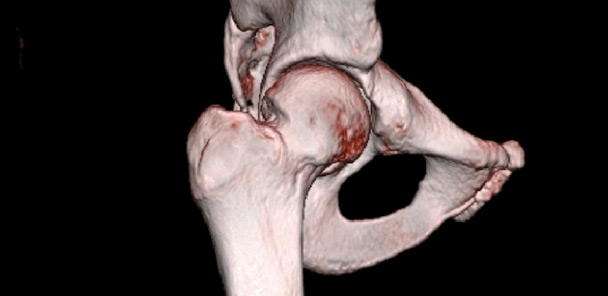
Physical impairments associated with femoroacetabular impingement include limited range of motion, muscle weakness, and altered biomechanics. Attention to these areas during rehabilitation can improve surgical outcomes and may even reduce the risk of osteoarthritis.

By Jerrad R. Guenther, BSc, Michael K. Gilbart MD, FRCS(C), MEd, and Michael A. Hunt PT, PhD

read more
Achilles tendinopathy and body mass index

Achilles tendinopathy and body mass index

Research suggests that obesity influences the development of Achilles tendi­no­pathy to a greater degree than other types of foot and ankle pain. This phenomenon will become increasingly important to lower extremity practitioners as global obesity rates continue to rise.

By Ryan T. Scott, DPM, AACFAS, and Christopher F. Hyer, DPM, MS, FACFAS

read more
Studies examine ways to optimize OA bracing

Studies examine ways to optimize OA bracing

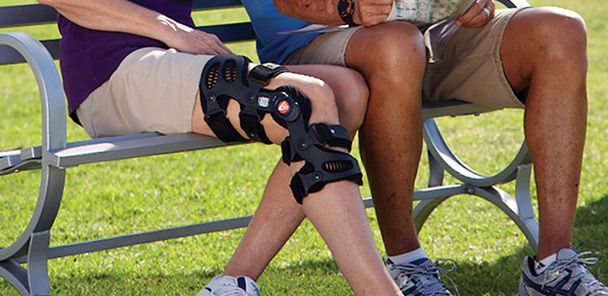
Research continues to suggest that bracing has the ability to improve pain and function in patients with knee osteoarthritis in a controlled setting, but researchers are now working to identify factors that affect bracing outcomes in the real world. Patient expectations are at the top of that list.

By Larry Hand

read more
Hamstring strain: Issues facing collegiate athletes

Hamstring strain: Issues facing collegiate athletes

Collegiate athletes who participate in sports associated with sprinting have an increased risk of hamstring strain. Investigators have identified flexibility, strength, and fatigue as potential contributing factors that can be addressed through sport-specific training and rehabilitation.

By Kevin M. Cross, PhD, ATC, PT, Susan Saliba, PhD, ATC, PT, and Jay Hertel, PhD, ATC

read more
Total hip arthroplasty: Obesity and outcomes

Total hip arthroplasty: Obesity and outcomes

Total hip arthroplasty can significantly improve quality of life in obese patients, but high body mass index is also associated with higher rates of complications and re­admissions than in normal-weight patients. The emerging subgroup of super-obese patients poses additional challenges.

By Raghav Rajgopal, MD, and James L. Howard, MD, MSc, FRCSC

read more

Join

Subscribe For Updates

Stay in the loop with the latest news and updates! Subscribe now to receive exclusive content, special offers, and important announcements straight to your inbox. Don’t miss out – join our community today for all the latest updates delivered directly to you.