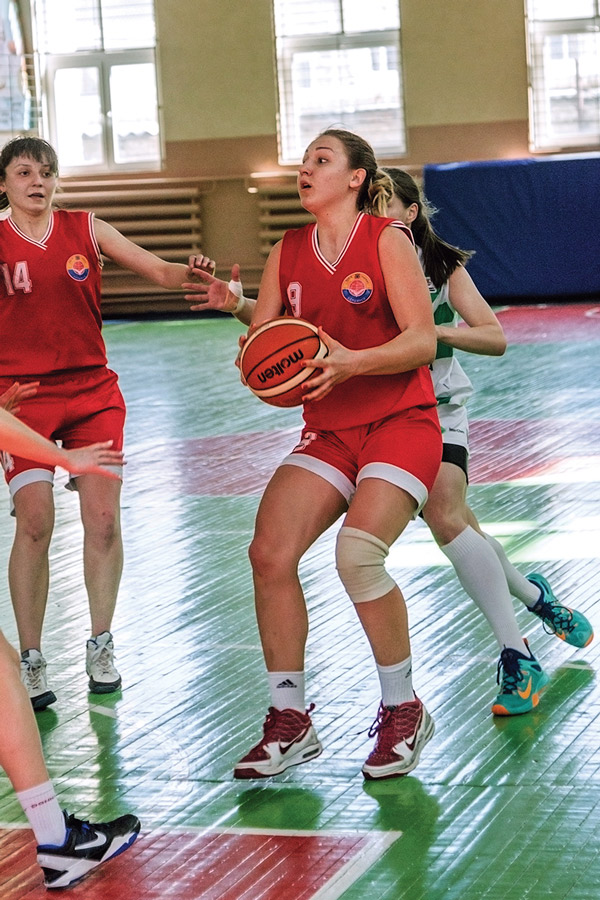
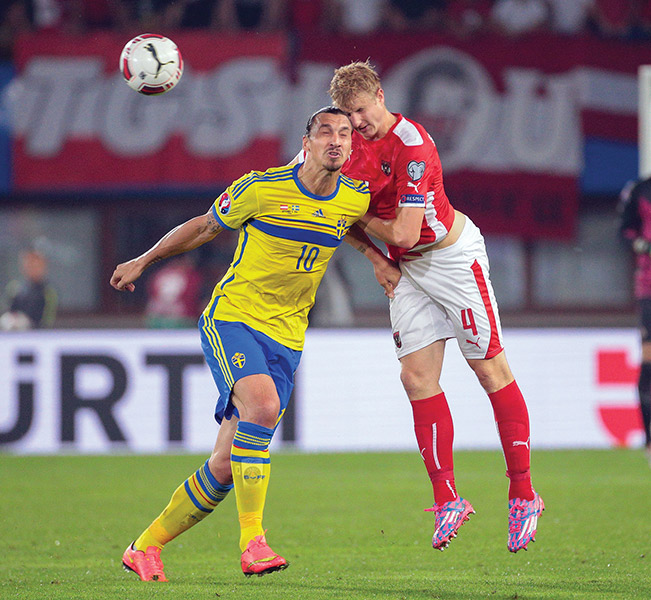
The American Orthopaedic Society for Sports Medicine (AOSSM) in April epublished a consensus statement concluding there is no evidence that young children will benefit from early sport specialization in the majority of sports, and that they are subject to overuse injury and burnout from concentrated activity.
Lower Extremity Review
Sigvaris buys BiaCare to build product line
Winterthur, Switzerland-based Sigvaris announced April 29 that it has completed a definitive agreement to purchase BiaCare, located in Zeeland, MI. BiaCare designs and produces short stretch wraps, compression…
A Finer Pointe: Visualizing the ankle’s response to ballet’s toughest task
The use of detailed orthopedic imaging to examine dancers’ ankles while in the en pointe position offers insight into the biomechanical demands associated with a position that, although highly unnatural, is nevertheless essential to a ballerina’s performance.
By Jeffrey A. Russell, PhD, AT, FIADMS
Golf swing biomechanics: Footwear considerations
With the rise of a new crop of young stars and the anticipation of its Olympic debut this year, golf continues to be immensely popular for players and spectators alike. Golfing is a highly coordinated sport that, by its nature, is associated with risk of…
By Patricia Pande, MClScPT, CSCS, CPed
When knee OA research becomes legal testimony
In worker’s compensation cases, including those involving knee osteoarthritis, an expert witness often will be asked to use his or her knowledge of biomechanics to provide an opinion supporting or refuting a causal relationship between work conditions and an overuse injury.
By Steven T. McCaw, PhD
Stroke rehab: Strategies to improve gait velocity
Multiple techniques can help improve gait speed after stroke, from therapeutic exercise to task-specific training to orthotic devices. Despite a growing body of research in this area, however, it is still not clear which intervention is most appropriate for which patients.
By Hank Black
Posture-specific strength and landing mechanics
Recent research suggests that training designed to maximize strength at deeper knee flexion angles during landing may be warranted, especially in female athletes, to help reduce the risk of anterior cruciate ligament injury without inadvertently compromising jump height.
By Boyi Dai, PhD; Jacob S. Layer; and Taylour J. Hinshaw
Treatment of distal toe calluses and ulcerations
When calluses or ulcers develop on the distal aspect of the lesser toes, offloading pressure from the distal end of the digit is essential for healing to occur. Research suggests that toe crest pads offer an inexpensive but effective means of offloading and healing these distal wounds.
By Monica Melo, DNP, RN, ACNS-BC, CWOCN, CFCN
Concussion repercussions: Studies explore lower extremity effects
The adverse biomechanical effects of concussion can persist for up to two years, but short-term visual deficits may help identify athletes who are most at risk for gait-related effects, according to multiple studies presented in…
By Jordana Bieze Foster
Preseason hip weakness contributes to ankle sprain risk in soccer players
Preseason hip abductor strength is associated with risk of lateral noncontact ankle sprain in soccer players, according to research presented in early June at the annual ACSM meeting in Boston.
By Jordana Bieze Foster
Gluteal muscle fatigue affects shoulder kinematics during throwing in softball
Gluteal muscle fatigue is associated with altered upper extremity kinematics in collegiate softball players, according to findings from the University of Auburn in Alabama that add to the body of research supporting the importance of the lower body in throwing athletes.
By Jordana Bieze Foster
Gait and THA outcomes: Hip mechanics have predictive value
Preoperative hip mechanics during gait can enhance clinical scores for identifying patients who are less likely to have an adequate clinical response after total hip arthroplasty (THA), according to…
By Katie Bell
ACL bracing study suggests subgroup of athletes most likely to be responsive
Preliminary findings presented in early June at the 2016 American College of Sports Medicine (ACSM) meeting in Boston suggest there may be a subgroup of athletes who are most likely to respond positively to knee bracing after anterior cruciate ligament (ACL) reconstruction.
By Jordana Bieze Foster
Runners’ baseline may determine effect of barefoot switch on loading symmetry
Among habitually shod runners with a recent history of injury, those with the greatest magnitudes of loading asymmetry are those who are most likely to become more symmetrical after switching to barefoot running, according to…
By Jordana Bieze Foster
Out on a limb: Subjectivity & sensitivity
Listening to what patients have to say is an important part of healthcare. But, as research continues to demonstrate, it’s no substitute for objective measurements.
By Jordana Bieze Foster
Join
Subscribe For Updates
Stay in the loop with the latest news and updates! Subscribe now to receive exclusive content, special offers, and important announcements straight to your inbox. Don’t miss out – join our community today for all the latest updates delivered directly to you.