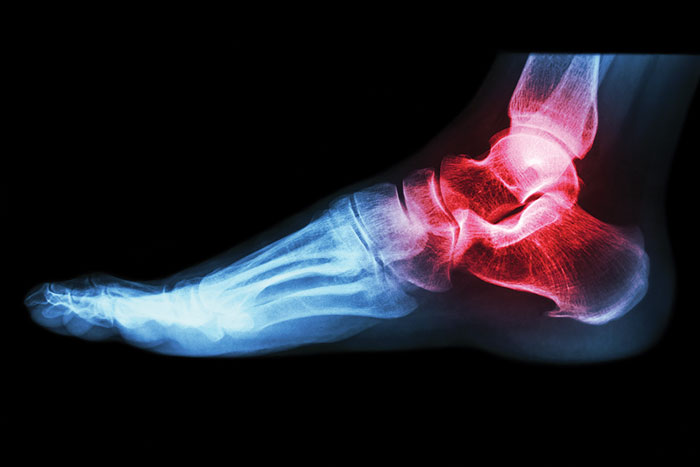
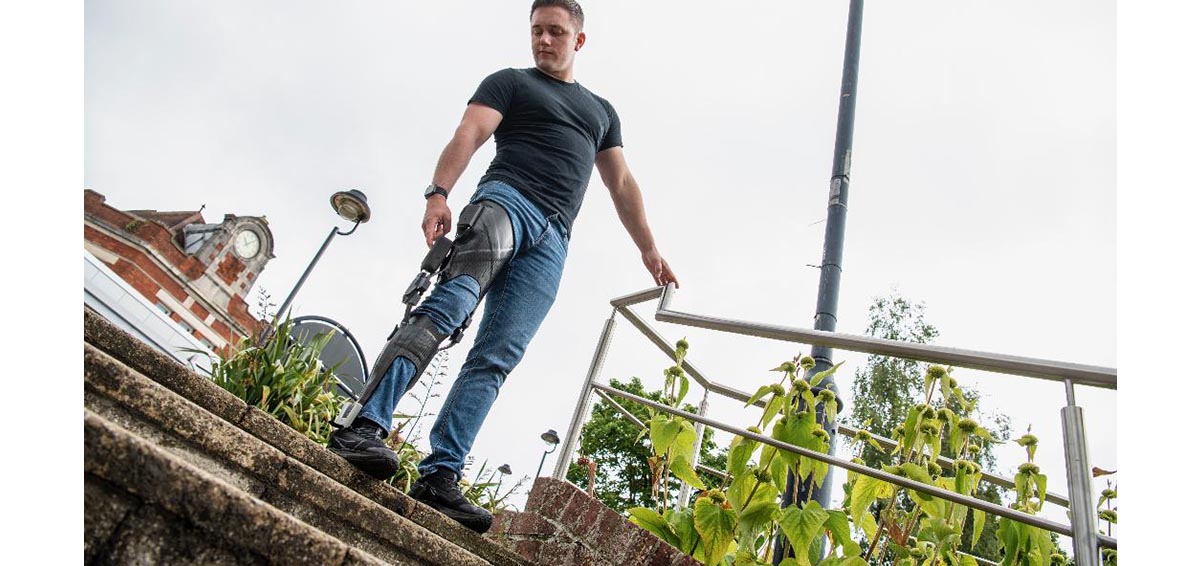
Canadian researchers have demonstrated that that arm exercises—specifically, cycling the arms—improves post-stroke gait. The authors said this is the first study to test the effect of arm training on post-stroke leg function, even years after the event. The results appear in the Journal of Neurophysiology.
Lower Extremity Review
TJA patients discharged home alone do well
Patients who live alone had a safe and manageable recovery when discharged directly home after total joint arthroplasty (TJA), according to a prospective study published in The Journal of Bone & Joint Surgery.
Researchers target prevention of posttraumatic osteoarthritis
Reducing oxidative stress in mitochondria shortly after joint injury may prevent posttraumatic osteoarthritis (PTOA), according to a study published in Science Translational Journal. This discovery is compelling because young, active patients are more likely than older patients to experience these injuries, yet are not…
Strength drives survival: But benefits of training appear complex
Lower extremity strength appears to be a key variable in the relationship between mortality and compliance with national resistance exercise guidelines, according to research from the University of Mississippi in University, MS.
By Keith Loria
Return to activity after Achilles repair parallels heel-rise performance recovery
Recovery of triceps surae muscle strength, as indicated by heel-rise test performance, is associated with the ability to return to jogging and other athletic activities after an Achilles tendon repair, according to research from Teikyo University School of Medicine in Tokyo, Japan.
By Jordana Bieze Foster
Pathomechanics in patients with hip OA suggest need for gait retraining
Altered hip mechanics during gait in patients with hip osteoarthritis (OA) suggest a role for rehabilitation interventions focused on more than hip abductor strengthening alone, accord- ing to research from the University of Leuven in Belgium.
By Jordana Bieze Foster
Protecting hip implants: Gait patterns help predict wear rates
Patient-specific implant wear rates following total hip arthroplasty (THA) are more strongly associated with gait patterns than component positioning, according to research from Chicago that suggests implant wear could be reduced with the use of predictive wear models.
By Katie Bell
Hallux valgus angle and pain improve after year of custom toe separator use
A custom-molded silicone toe separator can help reduce hallux valgus angle and pain in patients with hallux valgus, according to research from Thailand.
By Jordana Bieze Foster
Even in older women, mechanical loading leads to Achilles adaptation
Fourteen weeks of mechanical loading is associated with Achilles tendon adaptations in senior women, according to German findings suggesting older age should not exclude patients from exercise-based Achilles rehabilitation.
By Jordana Bieze Foster
Sex and BFR: Too many studies exclude young women
The problematic trend of physiological studies in which young women are underrepresented now extends to research on blood flow restriction (BFR) training, according to a paper epublished in October by Clinical Physiology and Functional Imaging.
By Cary Groner
Foot-specific training in older adults helps improve strength and balance
Foot-focused progressive resistance training helps improve toe flexor strength and balance in older adults, which may help reduce the risk of falls, according to research from the University of Wollongong in Australia.
By Jordana Bieze Foster
Foam rolling outperforms stretching for quadriceps, hamstring flexibility
Foam rolling is associated with greater acute improvement in quadriceps and hamstrings flexibility compared with static or dynamic stretching, according to research from Taiwan.
By Jordana Bieze Foster
Gait and THA outcomes: Hip mechanics have predictive value
Preoperative hip mechanics during gait can enhance clinical scores for identifying patients who are less likely to have an adequate clinical response after total hip arthroplasty (THA), according to…
By Katie Bell
ACL bracing study suggests subgroup of athletes most likely to be responsive
Preliminary findings presented in early June at the 2016 American College of Sports Medicine (ACSM) meeting in Boston suggest there may be a subgroup of athletes who are most likely to respond positively to knee bracing after anterior cruciate ligament (ACL) reconstruction.
By Jordana Bieze Foster
Runners’ baseline may determine effect of barefoot switch on loading symmetry
Among habitually shod runners with a recent history of injury, those with the greatest magnitudes of loading asymmetry are those who are most likely to become more symmetrical after switching to barefoot running, according to…
By Jordana Bieze Foster
Join
Subscribe For Updates
Stay in the loop with the latest news and updates! Subscribe now to receive exclusive content, special offers, and important announcements straight to your inbox. Don’t miss out – join our community today for all the latest updates delivered directly to you.