Meniscal allograft transplantation can help high-level athletes return to sports—but it might take a while, according to research from Rush University Medical Center in Chicago presented in March at the AAOS meeting.
Lower Extremity Review
Postoperative femoral nerve blocks sap quadriceps strength, increase risk of falls
Femoral nerve blocks significantly impair quadriceps strength when used for postoperative analgesia after total knee arthroplasty (TKA) and anterior cruciate ligament (ACL) reconstruction, according to separate studies presented in March at the annual meeting of the American Academy of Orthopaedic Surgeons (AAOS).
Replacement revisited: Positive outcomes include younger patients
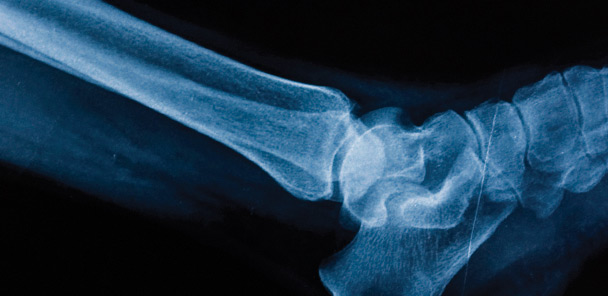
Total ankle replacement (TAR) is growing in popularity, as an increasing number of studies suggest that the procedure’s outcomes rival those of ankle fusion—perhaps even in patients previously thought to be poor candidates for TAR.
As in football, Achilles rupture means end of career for many NBA athletes
Fewer than half of National Basketball Association (NBA) players who suffer a complete Achilles tendon tear return to play for more than one season, and 39% never return to play at all, according to research presented in March at the AAOS meeting.
AFOs affect plantar flexion strength in some high-level volleyball players
Volleyball players without ankle instability who wear hinged stirrup ankle foot orthoses (AFOs) may experience decreased plantar flexion strength as a result, according to research from Loyola University in Maywood, IL.
Out on a limb: Ode to The Ogler
The best mentors have so much to teach us that sometimes it takes years for us to realize just how much we’ve learned. I’m reminded of that every time I sit down to write this column, but it’s hitting home especially hard right now.
Jordana Bieze Foster, Editor
Frazier Healthcare Acquires Orthotic Holdings Inc.
Ronkonkoma, NY, April 4, 2013 – Frazier Healthcare is pleased to announce the acquisition of Orthotic Holdings Inc. (“OHI”), holding company of Langer Biomechanics, Arizona AFO and The Orthotic Group. Through these three brands, OHI is the leading North American...
Ready Patient One: Exer-gaming for rehabilitation
Video gaming technology is finding its way into clinical practice, and research supports its effectiveness for improving balance, strength, and function. But studies also suggest some patient populations may be more responsive to exer-gaming than others.
By Samantha Rosenblum
Microfracture surprises tarnish the experience
US orthopedic surgeons perform more than 25,000 microfractures annually, making the procedure the most common marrow-stimulating technique used for repair of the cartilage defects that often affect active individuals.1 Although microfracture is a single-stage, low-cost intervention that requires only surgical time and common surgical tools, it requires…
By Emily Delzell
Orthosis use in children with Down syndrome
The literature on preschool-aged and older children with Down syndrome tends to be consistent with conventional understanding of orthotic principles, but in very young children clinical decision-making about orthoses must also encompass neuromotor implications.
By Julia Looper, PT, PhD
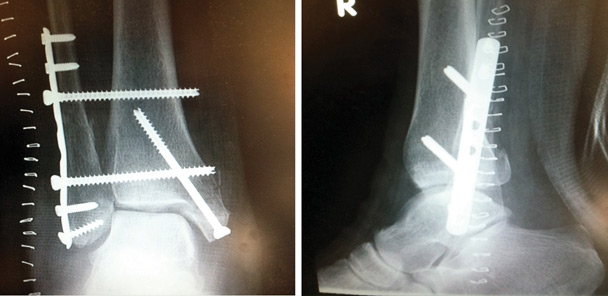
Diabetic ankle fractures: Surgical considerations
Pittsburgh researchers found that patients with diabetes have higher complication rates than nondiabetic patients following open surgical management of ankle fractures, but also that the rate of major complications in the diabetic patients was relatively low.
By Robert W. Mendicino, DPM, FACFAS; Alan R. Catanzariti, DPM, FACFAS; Brian Dix, DPM; and Phillip Richardson, DPM
Bone bruises and risk of knee osteoarthritis
Bone bruises are commonly associated with anterior cruciate ligament (ACL) tears, but researchers are only beginning to understand the potential clinical significance of these chondral lesions with regard to knee osteoarthritis (OA) and preventing ACL injury recurrence.
By Cary Groner
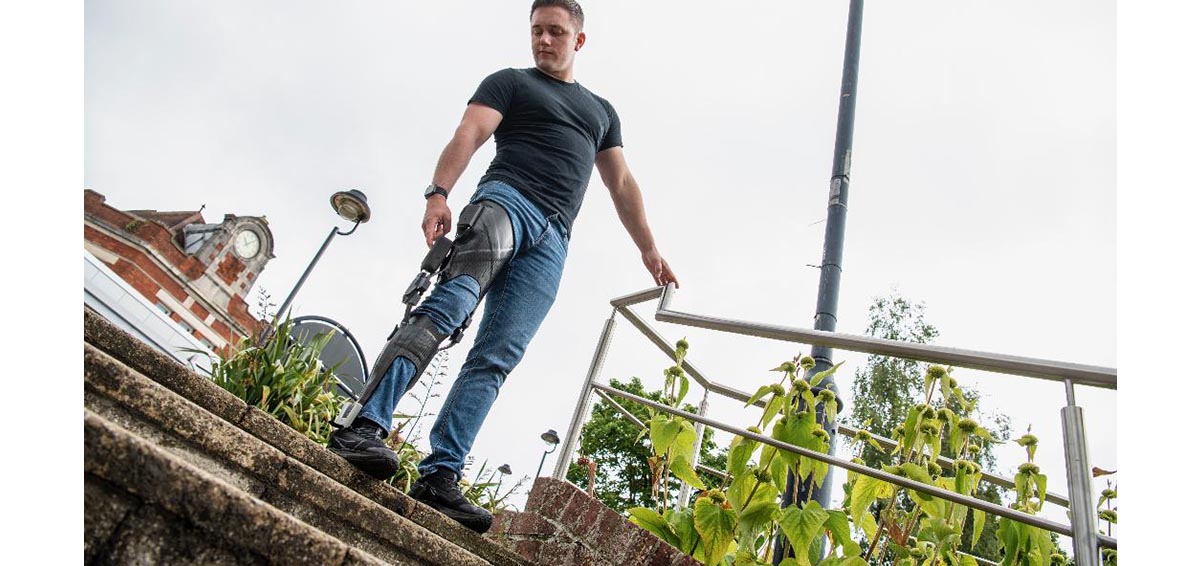
Poststroke bone changes in patients who use AFOs
The medical literature suggests that changes in bone density and other bone characteristics after stroke persist after patients have regained ambulatorystatus. Whether ankle foot orthoses have a shielding effect on bone remodeling, however, remains unclear.
By Kyle Sherk, MS, CPO
CEREBRAL PALSY: Dynamic devices facilitate compliance, outcomes in children with cerebral palsy
Brace wear time, not torque, is key – Dynamic orthoses offer an effective alternative to static devices for management of tip-toe gait and knee flexion contracture in children with cerebral palsy (CP), particularly because the dynamic devices are associated with greater compliance, according to separate studies from Sweden and France.
OSTEOARTHRITIS: Knee braces and wedged insoles both alter gait in patients with knee OA
A Taiwanese study offers more evidence that offloading knee braces and wedged foot orthoses are both associated with significant biomechanical improvements in patients with knee osteoarthritis (OA).
Join
Subscribe For Updates
Stay in the loop with the latest news and updates! Subscribe now to receive exclusive content, special offers, and important announcements straight to your inbox. Don’t miss out – join our community today for all the latest updates delivered directly to you.