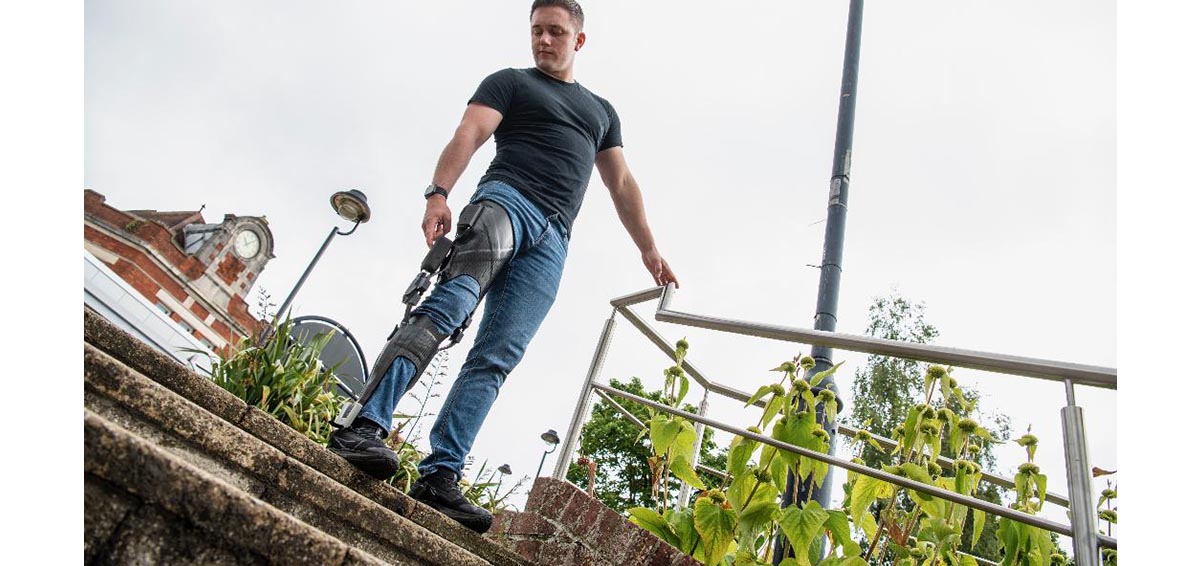
Knee osteoarthritis researchers are taking a closer look at the factors that influence knee adduction moment (KAM) and also considering the contributions of sagittal plane variables, as illustrated by studies presented in September at the American Society of Biomechanics (ASB) annual meeting in Omaha, NE.
Lower Extremity Review
Altered landings suggest link between neurocognitive scores, ACL injury risk
Female athletes with low neurocognitive scores are more likely than those with higher scores to demonstrate altered landing mechanics consistent with elevated anterior cruciate ligament (ACL) injury risk, according to findings that could have implications for concussion management.
Limited arch excursion characterizes individuals with patellofemoral pain
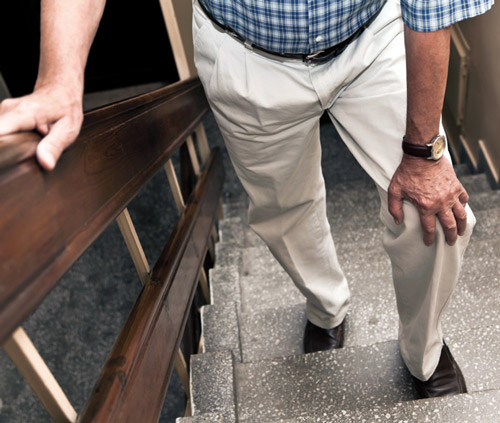
Patients with patellofemoral pain (PFP) have less medial longitudinal arch excursion during stair descent than healthy individuals, according to a Brazilian study that may help explain the effects of foot orthoses in patients with PFP.
Positives for PFP: Benefits of six-week rehab are retained
Six weeks of lower extremity strengthening in runners with patellofemoral pain (PFP) leads to improvements in pain and function that are retained six months later, regardless of whether the rehabilitation focuses on the knee or the hip, according to research presented in late June at the National Athletic Trainers Association (NATA) annual meeting in Las Vegas.
Self-reported function corresponds to bone bruise radiographic severity
Self-reported functional scores in patients with bone bruise lesions associated with anterior cruciate ligament (ACL) injury are consistent with severity classifications based on radiographic presentation, according to findings presented in late June at the NATA meeting.
Knee brace use alters lower extremity muscle activation during jump landing
Wearing a functional knee brace significantly alters activation characteristics in several lower extremity muscles, according to research from the University of Virginia in Charlottesville presented in late June at the NATA meeting.
BMI and TKA: Obese patients do benefit from surgery
Reluctance to perform total knee arthroplasty (TKA) in obese patients may be unwarranted, at least when it comes to functional outcomes, according to multiple studies presented in March at the annual meeting of the American Academy of Orthopaedic Surgeons (AAOS).
Improvement in knee OA symptoms persists two years after PRP injection
Platelet rich plasma (PRP) injection in patients with mild to moderate knee osteoarthritis is associated with significant improvement in pain and function, according to research from Milan, Italy, presented in March at the AAOS meeting.
Some athletes take years to come back from meniscal allograft transplantation
Meniscal allograft transplantation can help high-level athletes return to sports—but it might take a while, according to research from Rush University Medical Center in Chicago presented in March at the AAOS meeting.
Postoperative femoral nerve blocks sap quadriceps strength, increase risk of falls
Femoral nerve blocks significantly impair quadriceps strength when used for postoperative analgesia after total knee arthroplasty (TKA) and anterior cruciate ligament (ACL) reconstruction, according to separate studies presented in March at the annual meeting of the American Academy of Orthopaedic Surgeons (AAOS).
Join
Subscribe For Updates
Stay in the loop with the latest news and updates! Subscribe now to receive exclusive content, special offers, and important announcements straight to your inbox. Don’t miss out – join our community today for all the latest updates delivered directly to you.