Orthotic therapy in patients with diabetes and a history of foot ulcers was associated with dramatic decreases in reulceration and amputation rates, according to data from Spanish researchers at the Universidad Complutense de Madrid.
Lower Extremity Review
Removable plug insoles significantly reduce pressure, as do arch supports
Researchers from Taiwan confirmed that insoles with removable plugs reduce forefoot plantar pressures in patients with diabetic neuropathy, and those pressures are further reduced by adding arch support.
Stress management: Landing mechanics predict fracture risk
Landing biomechanics have long been a focus of anterior cruciate ligament (ACL) injury research, but they may also be predictive of lower extremity stress fracture, according to a study presented in July at the American Orthopaedic Society for Sports Medicine (AOSSM) meeting in Chicago.
Two studies explore contributions of core muscles to ACL injury risk
Two recent studies underscore the association between core muscle function and risk factors for anterior cruciate ligament injury.
Customizing stochastic resonance boosts balance effects in FAI patients
Stochastic resonance stimulation (SRS) more effectively improves balance in patients with functional ankle instability (FAI) when optimized based on each patient’s sensory threshold than when all patients receive the same treatment, according to research from Virginia Commonwealth University in Richmond.
Out on a limb: Might as well jump
One of the biggest challenges in sports injury prevention is that the sheer number of potential injuries makes it prohibitive to screen for all of them. But what if there was a single test that could be used to screen for all lower extremity injuries? It’s not as farfetched as you might think.
Digging in to prevent ACL injuries in volleyball
Landing and change of direction in volleyball can put players at risk of anterior cruciate ligament (ACL) injury. Few ACL prevention studies have focused on volleyball, but players can benefit from screening and intervention programs that have been shown to be effective in other sports.
By Joanne L. Parsons, MSc, PT, CAT(C)
Plantar fasciitis: Unique challenges in basketball
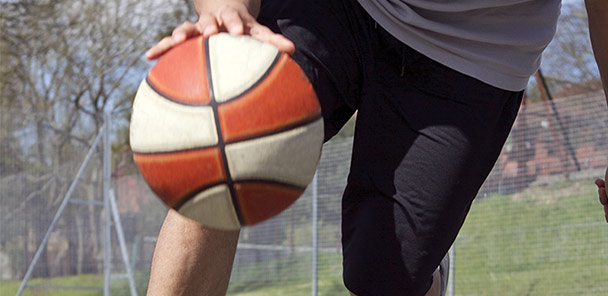
Not only do basketball players have many of the same risk factors for plantar fasciitis as the general population, they also have the added challenge of a grueling season and very little opportunity to rest. That means practitioners have had to be creative when it comes to treatment.
By P.K. Daniel
Gait retraining improves symptoms of knee OA
A number of different gait modifications have been demonstrated to significantly reduce the knee adduction moment in patients with knee osteoarthritis (OA). Now research suggests gait retraining can also help reduce the pain associated with knee OA and improve function.
By Pete B. Shull, PhD
Diabetic limb salvage: Surgeon’s perspective
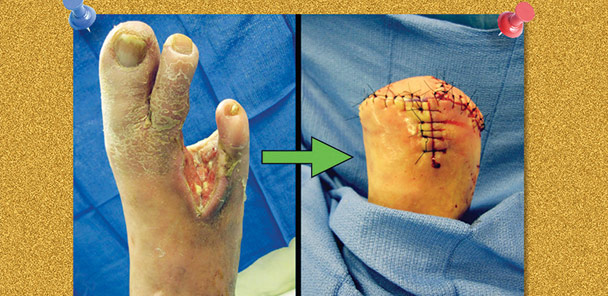
When preventive measures have been exhausted, various surgical approaches can be employed to provide each diabetic patient with a functional, biomechanically sound foot that is free of infection, while minimizing the risk of future lower limb complications.
By Gabriel V. Gambardella, DPM, and Peter A. Blume, DPM, FACFAS
MS and gait: Assessment facilitates opportunity
Significant progress has been made in quantifying gait impairment in patients with multiple sclerosis, but clinician-friendly assessment techniques that are sensitive to mild levels of impairment are needed to facilitate early intervention and in turn improve patient outcomes.
By Douglas A. Wajda and Jacob J. Sosnoff, PhD
Gel Pediatric Suspension Sleeve
Silipos’ Gel Pediatric Suspension Sleeve is designed to work with pediatric below-knee sockets as well as pediatric and adult upper extremity sockets. The sleeve is fully lined with medical grade mineral oil gel to maximize comfort and skin protection. The gel is...
Glycemic control and postoperative healing
Researchers have established that elevated levels of glycated hemoglobin in patients with diabetes are associated with poor outcomes after foot and ankle surgery. Now the challenge is to identify an “acceptable” glycated hemoglobin level below which the benefits of surgery outweigh the risk of complications.
By Naohiro Shibuya, DPM, MS, FACFAS, Jon M. Humphers, DPM, and Daniel C. Jupiter, PhD
High-tech path leads to the future of improved orthotic prescription
One of the most-talked-about images from the 2013 Orthotics Technology Forum (OTF) depicted 11 custom foot orthoses made by 11 experienced orthotists and podiatrists for a single patient. All 11 practitioners had been given the same information about the patient’s condition, yet all 11 orthoses were distinctly different.
3D printing: The shape of things to come
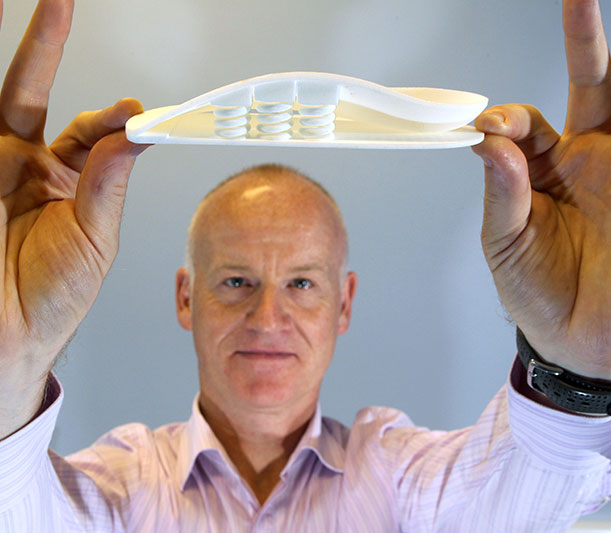
The Orthotics Technology Forum presentation given by Ben Boyer, CPed, was as much about what the speaker was wearing as what he was saying. Boyer, who is the lab manager at Kintec in Vancouver, Canada, wore a product he thinks may represent part of the future of orthotic design and manufacture—orthoses he’d printed with a hobbyist-level desktop 3D printer.
Join
Subscribe For Updates
Stay in the loop with the latest news and updates! Subscribe now to receive exclusive content, special offers, and important announcements straight to your inbox. Don’t miss out – join our community today for all the latest updates delivered directly to you.