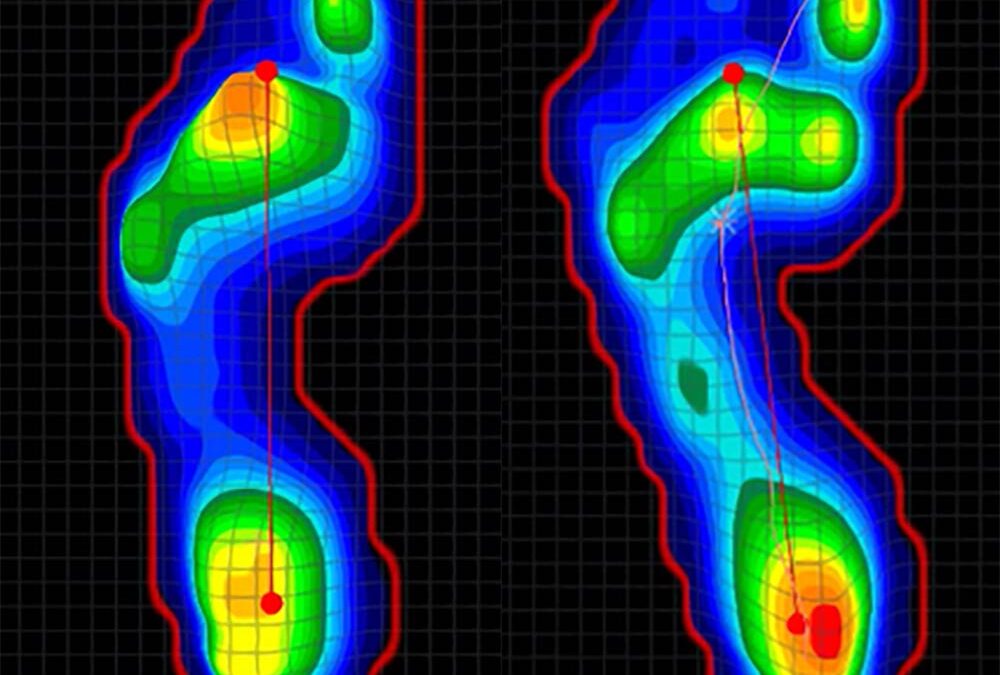








Dirty Truth #9: Fashion and Idiocy–Feet Need to Find Their Footing
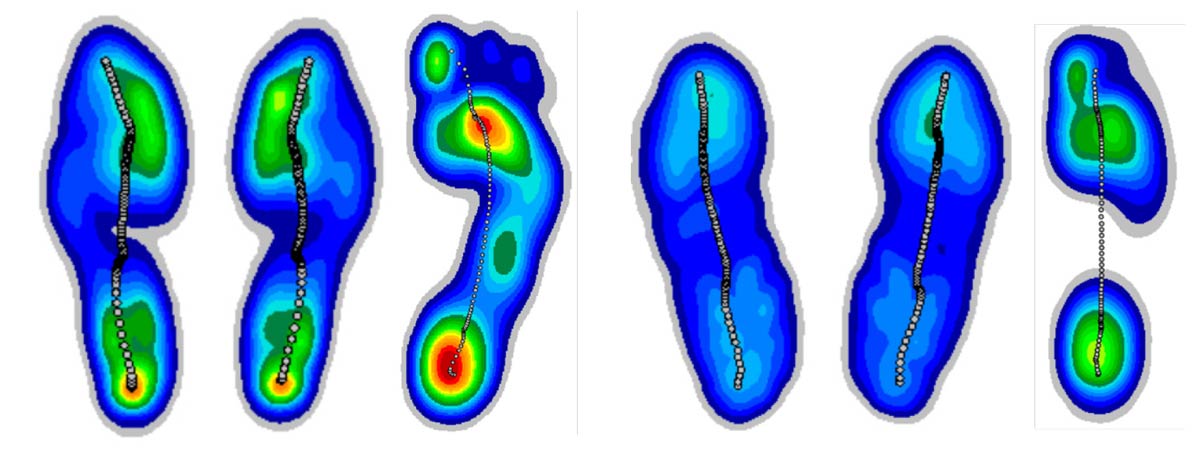
Figure 1. An iron grip is uncomfortable, like the CAGA hot spots on the examples of left heels and forefoot, and the polar opposite feels disconnected, laissez-faire, even aloof, like the CAGA straight-lasted minimized shock-absorbing characteristics on the right. Use visuals like this to connect what patients feel (comfort) to what’s happening mechanically (loading, stability, and gait-line patterns) so “fashion” decisions don’t override “function.”
By Jay Segel, DPM; Sally Crawford, MS
If you have been following our articles, you may have noticed a trend in how computer-aided gait analysis (CAGA) data can help characterize unavoidable and avoidable truths about your 2 feet and the long-term consequences. When it comes to footwear, even research supports the fact that improper footwear and “wear and tear” over time will have negative impacts on foot health1. In this article, we highlight one of the sadder dirty truths and the one most directly under our own control; “looks good” does not mean “is good,” also known as fashion doesn’t equal function.
Consumer comfort through retail therapy often reverses the priorities of making healthy choices first, followed by taste and style. This dirty truth comes in number 1 for absurdity, when understanding that there are patients requesting that their doctor remove a lesser toe so they can fit into a particular shoe of their fancy. They often additionally remark, but they make me look so good. At that point, we change the focus to the clinical consequences of footwear-driven deformity.
Let’s identify and address perhaps the core of this dirty truth: mental fit versus physical fit, and the need for foot splay–the natural widening and lengthening of the foot under loads. Take the example of shaking hands, a solid, firm but not “too firm” grasp is very satisfying. Our handshake preferences often carry over to the way we judge footwear fit.
During intake with a patient, even before CAGA testing, often the first sign of footwear misjudgment includes comments about–pressure, rubbing, “my toes feel crowded”–and that’s the moment to intervene. The next question is usually “How long have you had this problem?” And, frequently, patients will respond that they have had the issue for a while.
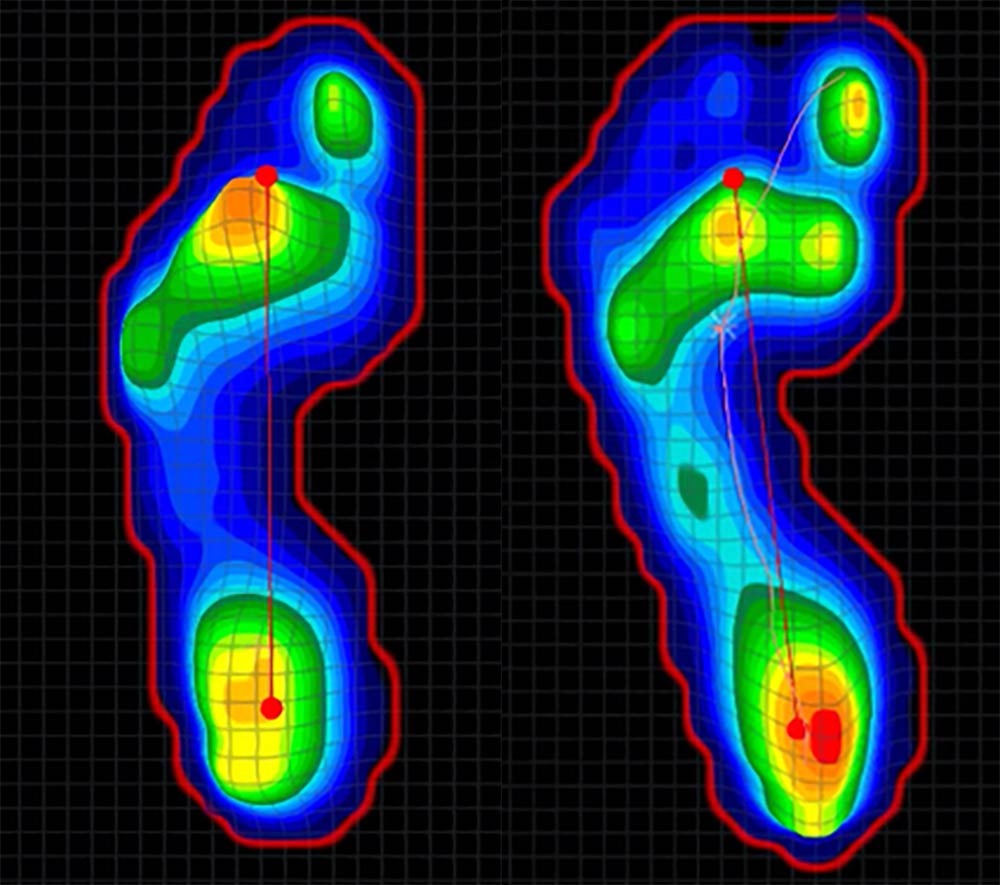
Figure 2. When our feet are not weight-bearing, like our hands, they occupy a smaller regional volume, but when our feet are loaded during weight-bearing, they splay, and we want this to happen to accommodate impact, ground reaction forces, directed motion, and balance. Simply put, our feet need to find their footing. When trying to satisfy the mental itch of that firm hold, we deny the feet the ability to meet the challenges of weight-bearing and locomotion. So, all this explanation to say, give your feet room in shoes to reach their ideal weight-bearing structure.
Upon further query, “Have you sought help for this before?” we often hear, “No, I thought it would get better, before it didn’t look right, but now it’s hideous and painful.” This is a great moment for patient education, not just for them, but perhaps for their children, other family members, and/or circle of friends. If we can help people to seek our advice when first noticed, their issues would not likely progress to the presenting level of deformity or pain. Simply stated, one clear thing is that early intervention can slow, arrest, or reverse deformity and perhaps prevent pain. Henceforth, waiting is idiocy, not logic.
So, to end with a little CAGA logic: systematic reviews and critical/scoping reviews consistently point to the value of biomechanical assessment, individualized recommendations like personalized fitting, and preventive care for protecting long-term foot health and mobility2,3,4. The point is not that style and comfort are irrelevant–it’s that, without quantifying function, “feels good” and “looks good” can still create small triggers that snowball into chronic and preventable issues, altered gait patterns, and even visible deformity.
What CAGA adds that subjective comfort can’t is data–objective proof of function, so your footwear choices are based on biomechanics, not just look and feel.
- Menz HB, Bonanno DR. Footwear comfort: a systematic search and narrative synthesis of the literature. J Foot and Ankle Res. 2021 Dec 7;14(1):63. doi: 10.1186/s13047-021-00500-9
- Sánchez-Gómez R. Advances in foot biomechanics and gait analysis. Applied Sciences. 2025; 15(3):1299. https://doi.org/10.3390/app15031299
- Mai P, Robertz L, Robbin J, Bill K, et al. Towards functionally individualised designed footwear recommendation for overuse injury prevention: a scoping review. BMC Sports Sci Med Rehabil. 2023 Nov 11;15(1):152. doi: 10.1186/s13102-023-00760-x
- D’Août K, Elnaggar O, Mason L, Rowlatt A, Willems C. footwear choice and locomotor health throughout the life course: a critical review. Healthcare (Basel). 2025 Feb 28;13(5):527. doi: 10.3390/healthcare13050527
- Francis G, Sasirekha A. A study on the factors influencing footwear preference among young adults. J Emerg Technol Inno Res. 2025;12(7):d140-d151.