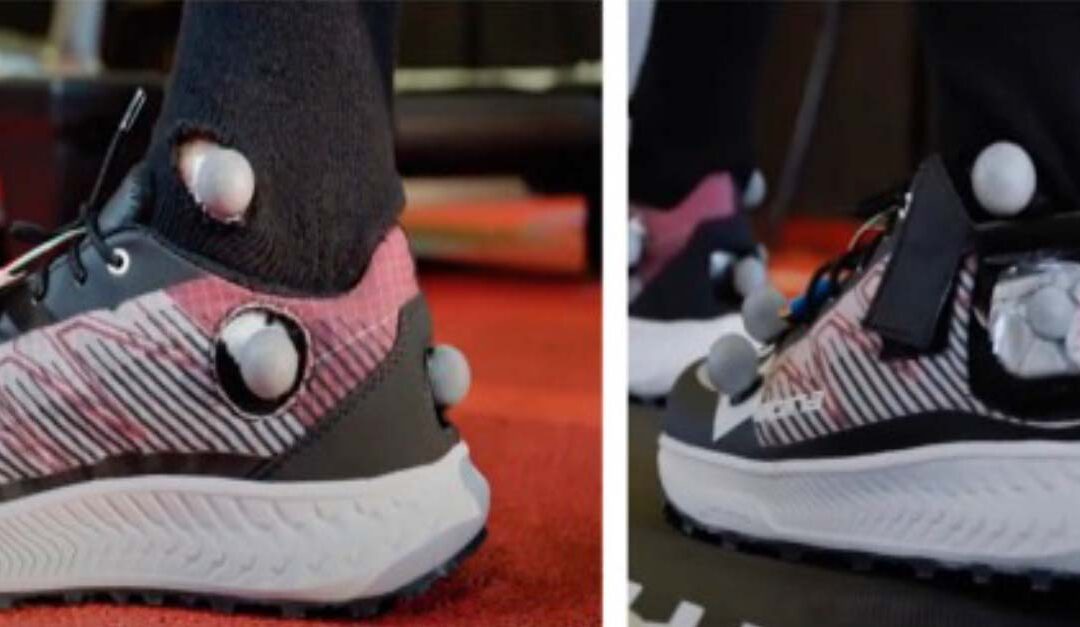








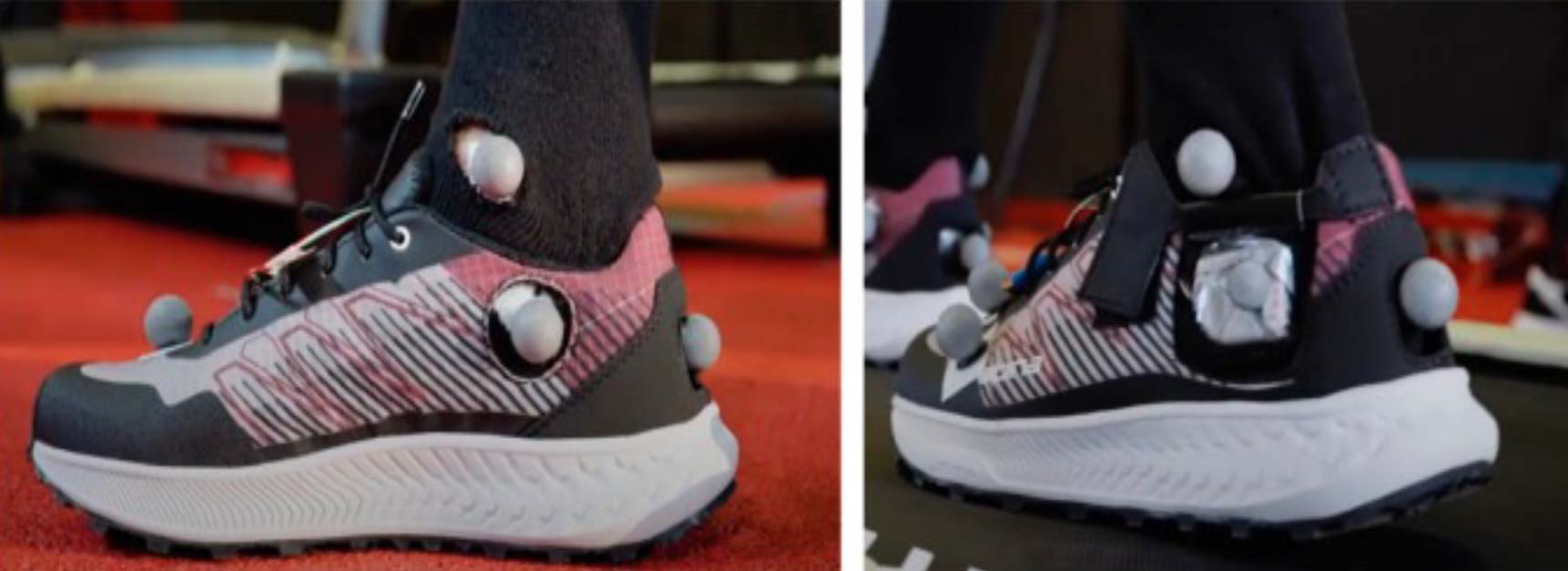
Figure 1. Adapted running shoes with modifications for attaching markers, with openings under the medial malleoli and the heel.
Running is a popular form of physical activity with significant health benefits, but improper technique can lead to running-related injuries. Understanding the risk factors associated with these injuries is crucial for mitigating their negative effects as such injuries can compel individuals to reduce their physical activity, further burdening healthcare systems. This study investigates the influence of running speed, incline, and fatigue on calcaneus eversion/inversion angle at heel strike, maximum eversion angle, and range of motion, factors associated with lower limb injuries. 15 injury-free female runners participated in this study. Kinematic data were collected using a 3D motion capture system with reflective markers placed directly on the skin through specially modified running shoes. The runners performed treadmill trials at varying speeds (10, 12, and 14 km/h) and inclines (0°, 5°, and 10°), both before and after a fatigue-
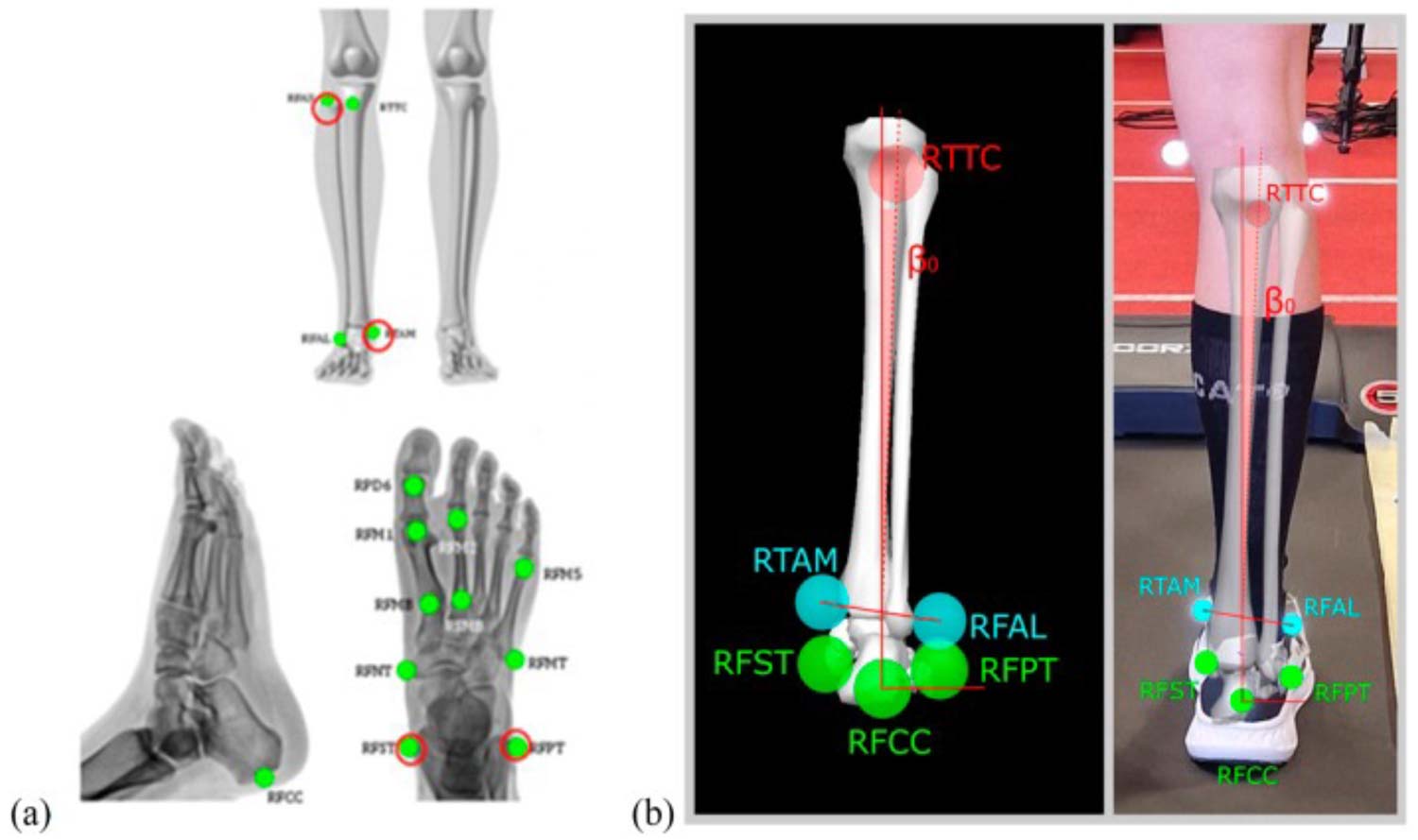
Figure 2. Placement of “IORFoot Model” passive markers, (B) passive markers and presentation of eversion angle.
inducing 30-min run. The results indicate that higher speeds were associated with an increase in inversion angle at heel strike (P = 0.05) and range of motion (P = 0.02 before fatigue), both of which are linked to chronic ankle instability and Achilles tendinopathy. Running at an incline reduced both maximum eversion angle (P = 0.002 after fatigue) and range of motion (P = 0.003 after fatigue), suggesting a protective effect against excessive eversion. Fatigue increased range of motion (P = 0.05), which is a risk factor for instability and overuse injuries. These findings suggest that running at higher speeds and in a fatigued state may increase the likelihood of injuries due to increased range of motion, whereas incline running may mitigate this risk by reducing excessive eversion and range of motion. Understanding these biomechanical changes can inform injury prevention strategies for runners.
Source: Verdel N, Nograšek N, Drobnič M, Papuga I, Strojnik V, Supej M. Influence of running speed, inclination, and fatigue on calcaneus angle in female runners. Front Physiol. 2025 9;16:1505263. doi: 10.3389/fphys.2025.1505263. Use is per CC BY.