









 Uninsured patients with diabetes are at high risk for amputations. This case series illustrates that the medical and specialty services provided by a free interprofessional student clinic were of a vital necessity in healing diabetic foot ulcers and preventing amputations in an uninsured population.
Methods: This case series includes uninsured patients seen by podiatry services at the Interprofessional Community Clinic (ICC), a suburban student-led free clinic at the Rosalind Franklin University Health Clinics (RFUHC) in Illinois. Patients were screened from the ICC’s inception in 2014 through June 2021. Inclusion criteria included females or males age 18 and over with a diabetic foot ulcer. Patients were excluded if they were lost to care (n=2), which was defined as a gap in care lasting over six months. Information on medical and social history, wound characteristics, glycemic control, local wound care, and offloading modalities were recorded.
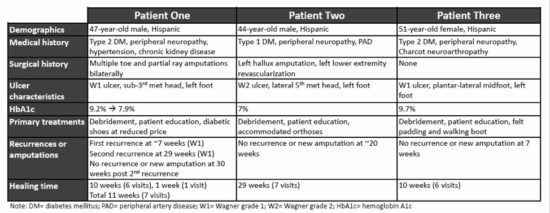
Results: Three patients, one female and two males, met the criteria. Average age was 47. All patients had a history of diabetes mellitus and peripheral neuropathy, and two had peripheral artery disease. No amputations were necessitated following initiation of care at the ICC. Patient 1’s Wagner grade 1 ulcer healed in 10 weeks (6 visits). Patient 2’s Wagner grade 2 ulcer healed in 21 weeks (7 visits). Patient 3’s Wagner grade 1 ulcer recurred twice but most recently healed 60 weeks (12 visits) after first initiating treatment at the ICC. Wound care included regular wound debridement (via sharp and chemical techniques), home dressing changes, and offloading. The importance of glucose control was discussed with each patient. Offloading modalities included felt padding, surgical shoes, and therapeutic shoes. All patients lived in Waukegan, a low-income community in close proximity to RFUHC. Patients received primary care and other specialty services outside of the ICC.
Conclusions: Podiatry clinics offer the essential preventative and specialty services needed for limb salvage for uninsured individuals. When such clinics are housed in interprofessional settings, patients are likely to benefit from greater coordination in care. Policy makers should support and encourage development of free limb preservation services in high need areas.
Source: Tong KP, Garcia A, Jones C, et al. Limb Preservation Success Stories from a Student-Led Free Clinic. Available at
https://www.dfcon.com/posters/.