







 It is well known that muscle mass is lost following anterior cruciate ligament reconstruction (ACLR) surgery. These researchers sought to compare muscle strength gain in the quadriceps and hamstring muscles in patients following ACLR surgery using exercises with and without blood flow restriction.
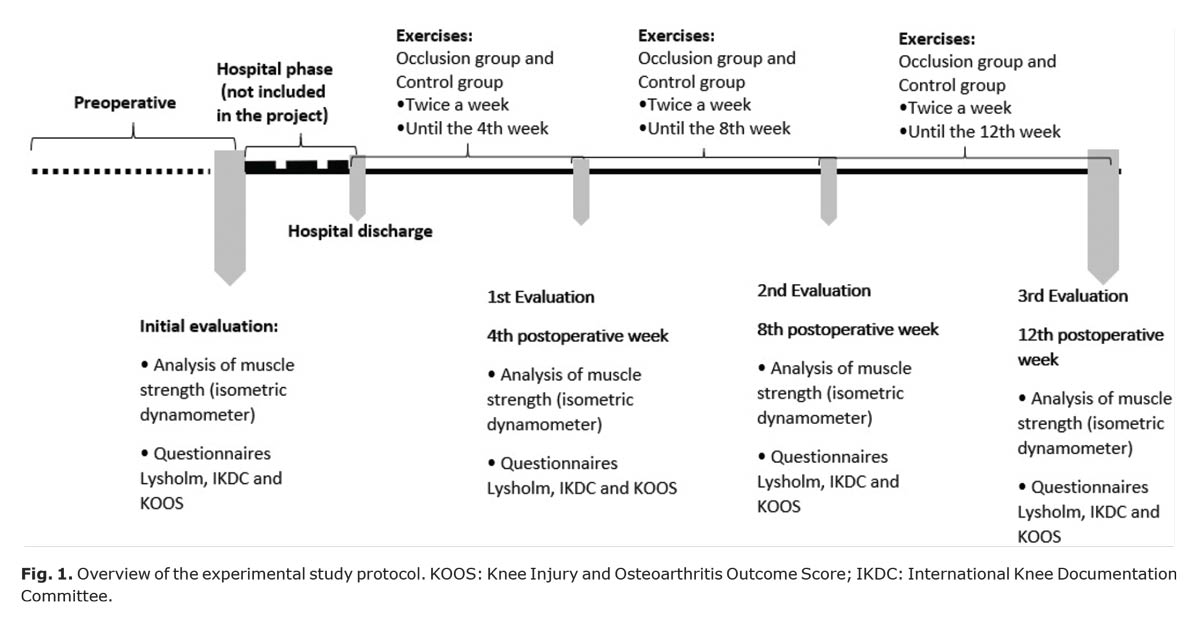
Following a randomized controlled trial protocol (Figure 1), 50% (n = 14) of participants were allocated to the intervention group and 50% (n = 14) to the control group. All participants were post-ACLR patients. Exercises included leg press and flexor chair. The intervention group used pressure gauges measuring 10 × 80 cm in width and a 7 × 52 cm pneumatic bag (Cuff Scientific Leg® – WCS, Curitiba, Paraná, Brazil) in the region close to the inguinal ligament of the right and left leg. The control group performed the same proposed exercises without any occlusion material.
At the end of rehabilitation of the groups, the researchers saw a statistical difference in the quadriceps with an increase in muscle strength (P < 0.01) after 12 weeks and an increase in hamstring muscle strength (P < 0.01) after 8 and 12 weeks in the injured legs of the intervention group compared to the control. In the analysis of the participants’ physical function, there was a significant increase difference in the Lysholm questionnaire (P < 0.01) after 8 and 12 weeks; in the KOOS pain questionnaire (P < 0.01) after 4 weeks a decrease was observed; symptoms and daily activities (P < 0.01) after 8 and 12 weeks, quality of life (P < 0.01) after 12 weeks, and in the IKDC questionnaire (P < 0.01) after 8 and 12 weeks there was a significant increase difference of the intervention group compared to the control.
The team concluded that after anterior cruciate ligament surgery, exercises with blood flow restriction proved more efficient for improving the muscle strength of the quadriceps and hamstrings, and the physical function of the knee than the same exercises without blood flow restriction.
Source: Shuman BR, Totah D, Gates DH, et al. Comparison of five different methodologies for evaluating ankle–foot orthosis stiffness. J NeuroEngineering Rehabil. 2023;20:11. https://doi.org/10.1186/s12984-023-01126-7