
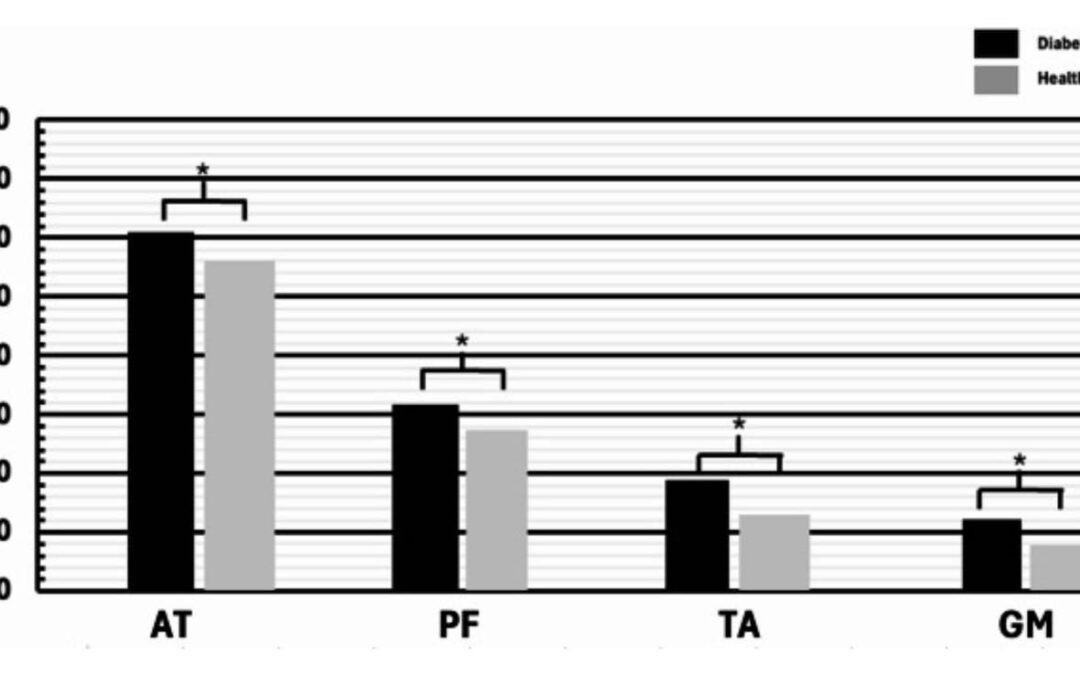








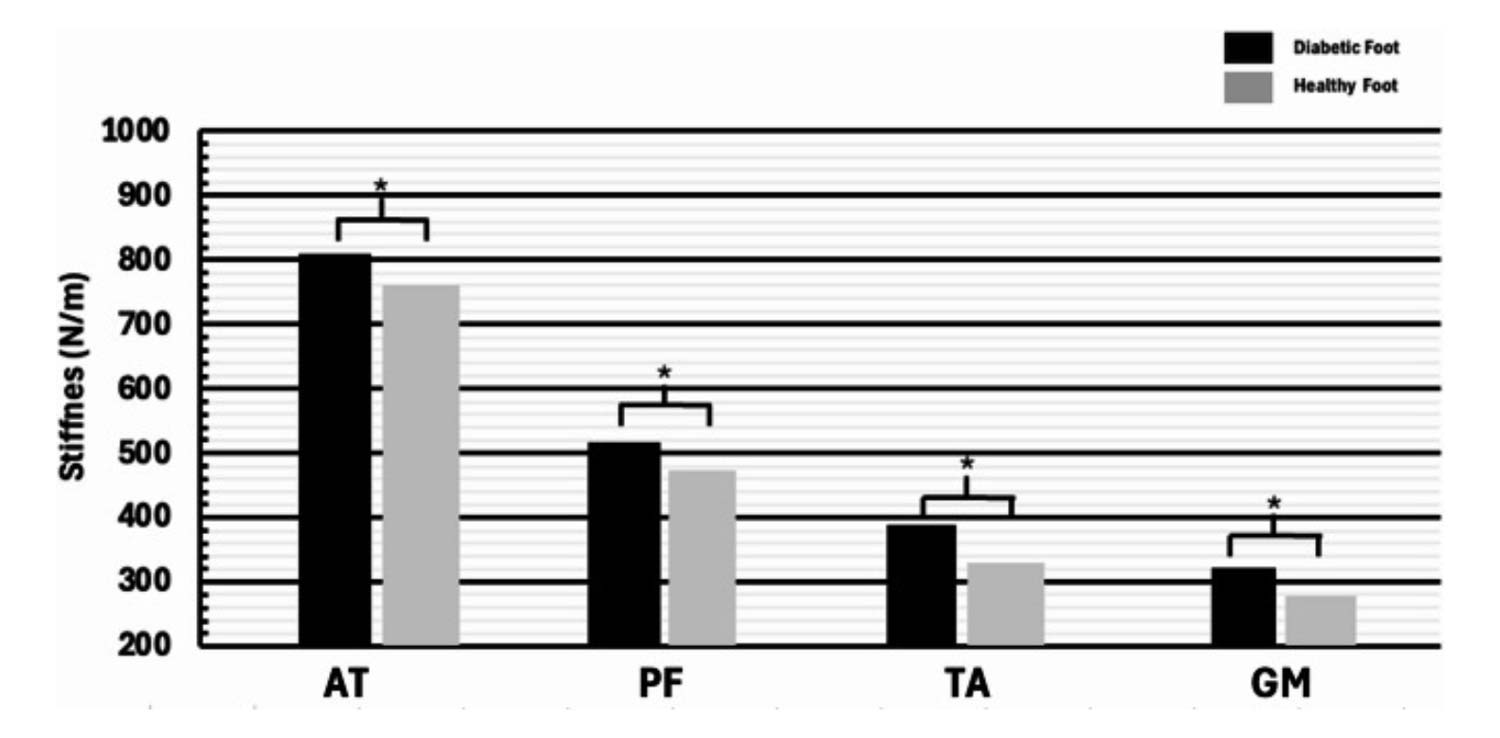
Stiffness (N/m) of Achilles Tendon, Plantar Fascia, and Tibialis Anterior in Diabetic and Healthy Feet. Stiffness (N/m) of the Achilles tendon (AT), plantar fascia (PF), tibialis anterior (TA), gastrocnemius medialis (GM), and gastrocnemius lateralis (GL) in the diabetic foot (DF) and healthy control (HC) groups. Statistically significant differences (P< 0.05) are marked with
Diabetic foot ulcers (DFU) are a major complication of diabetes, often leading to impaired mobility and increased risk of recurrence due to persistent biomechanical alterations. Understanding the mechanical properties of foot muscles, tendons, and fascia may provide insight into ulcer development, prevention and rehabilitation strategies. This study aimed to assess the biomechanical properties of the extrinsic foot muscles, Achilles tendon (AT), and plantar fascia (PF) in individuals with a history of DFU using myotonometry.
A total of 38 diabetic feet with a history of DFU (Wagner Grade 0-1) and 40 healthy controls (HC) were evaluated. The MyotonPRO device was used to measure muscle tone (Natural Oscillation Frequency, F), stiffness, and elasticity in the tibialis anterior (TA), gastrocnemius medialis (GM), gastrocnemius lateralis (GL), AT, and PF. Measurements were performed in standardized positions, with statistical comparisons made between groups using independent t-tests.
TA and GM showed significantly increased muscle tone and stiffness in the DFU group compared to HC (P < 0.05), whereas GL did not exhibit significant differences. Similarly, PF and AT stiffness were higher in the DFU group (P < 0.05), suggesting alterations in tissue load distribution. No significant differences in elasticity were observed between groups.
This study highlights persistent mechanical alterations in the TA, GM, AT, and PF in individuals with a history of DFU, despite ulcer healing. The increased stiffness and tone in these structures may contribute to abnormal foot loading patterns, potentially increasing the risk of ulcer recurrence. The findings emphasize the importance of early biomechanical assessment and targeted rehabilitation strategies, such as neuromuscular training, load redistribution, Achilles tendon stretching and custom orthotic interventions to mitigate mechanical dysfunction in diabetic foot patients.
Source: Varol F, Ilez A, Aslan Y. Mechanical properties of extrinsic foot muscles, achilles tendon, and plantar fascia in patients with a history of diabetic foot ulcers. BMC Musculoskelet Disord. 2025 29;26(1):531. doi: 10.1186/s12891-025-08791-w.