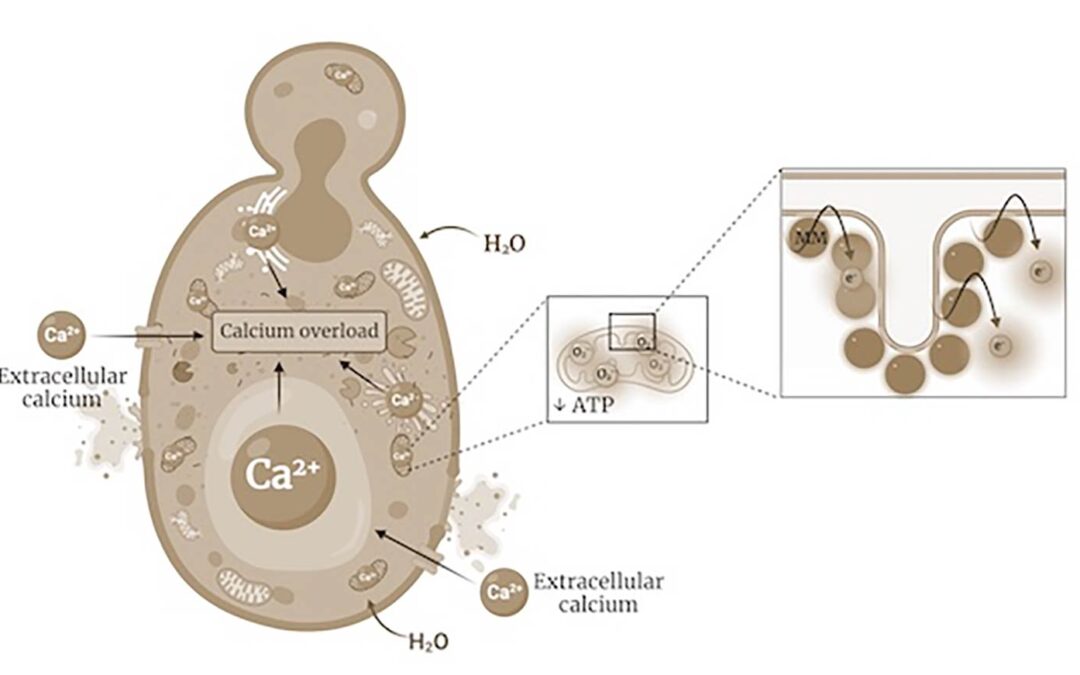








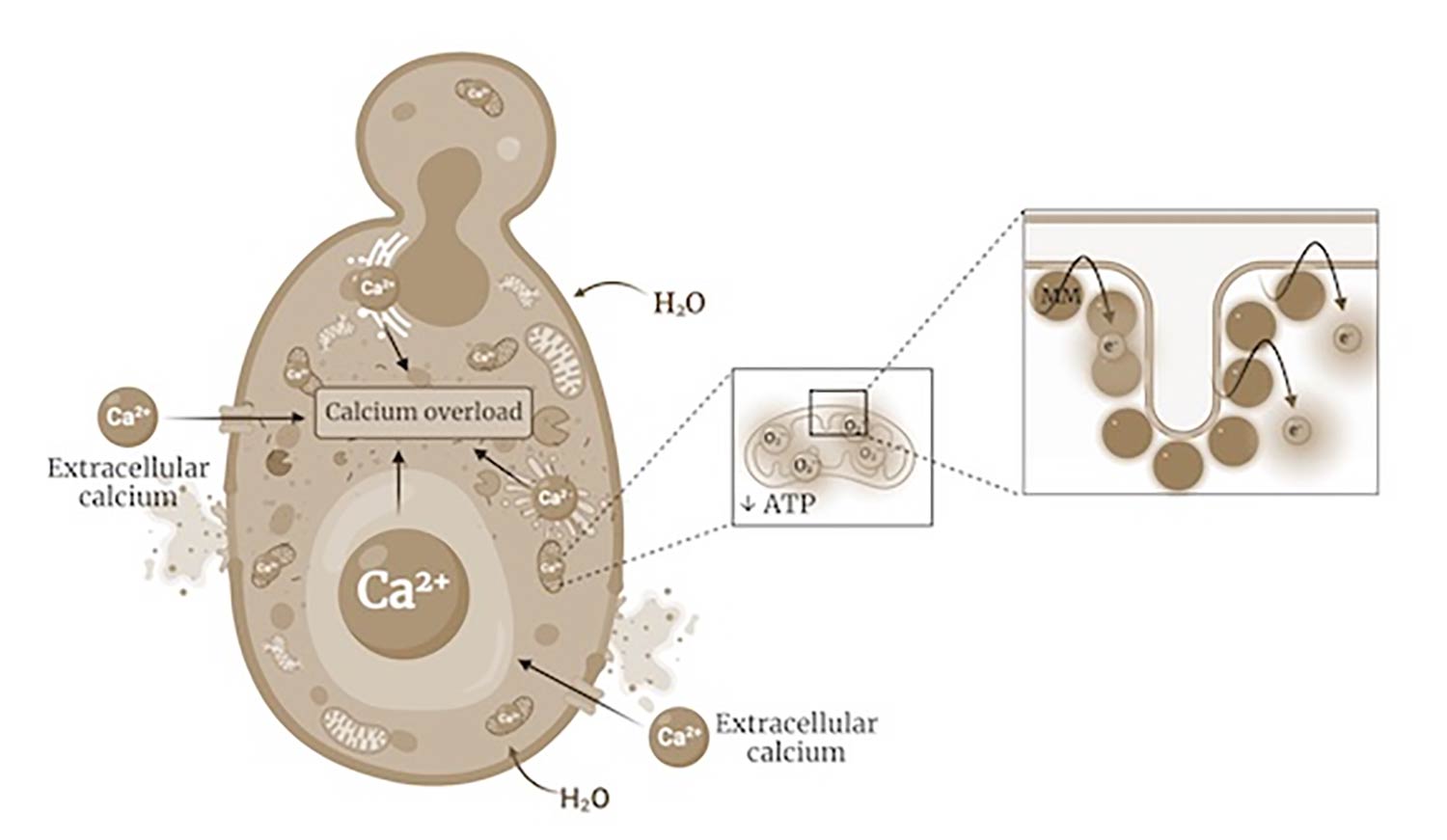
Schematic representation of the mechanisms by which light-activated molecular machines kill fungi. Molecular machines bind to fungal mitochondria, decreasing adenosine triphosphate production and impairing the function of energy-dependent transporters that control the movement of ions, such as calcium. This leads to the influx of water, which causes the organelles to swell and eventually the cells to burst. Image courtesy of Tour Group/Rice University.
That stubborn athlete’s foot infection an estimated 70% of people get at some point in their life could become much easier to get rid of thanks to nanoscale drills activated by visible light.
Proven effective against antibiotic-resistant infectious bacteria and cancer cells, the molecular machines developed by Rice University chemist James Tour, PhD, and collaborators are just as good at combating infectious fungi. Based on the work of Nobel laureate Bernard Feringa, PhD, the molecular machines are nanoscale compounds whose paddlelike chain of atoms moves in a single direction when exposed to visible light. This causes a drilling motion that allows the machines to bore into the surface of cells, killing them.
Fungal infections pose a particular threat to patients with a weakened immune system, such as cancer patients and transplant recipients. COVID-19 has made matters worse. Immunosuppressants were widely used early in the pandemic to reduce the risk of long-term organ damage caused by an overactive immune system in response to the virus, a tactic that allowed fungal infections to proliferate. Additionally, overuse of antifungals in agriculture is also contributing to resistance in humans.
In contrast to most antifungals, development of resistance to the visible-light activated nanoscale drills was not detected. Spinning at 2–3 million times per second, their rotors cause fungal cells to disintegrate by disrupting their metabolism. By targeting the mitochondria, the researchers’ molecules disrupt the cell’s metabolism, resulting in an overall energy imbalance that leads to an uncontrolled flow of water and ions such as calcium into the cell, eventually causing the cell to explode.