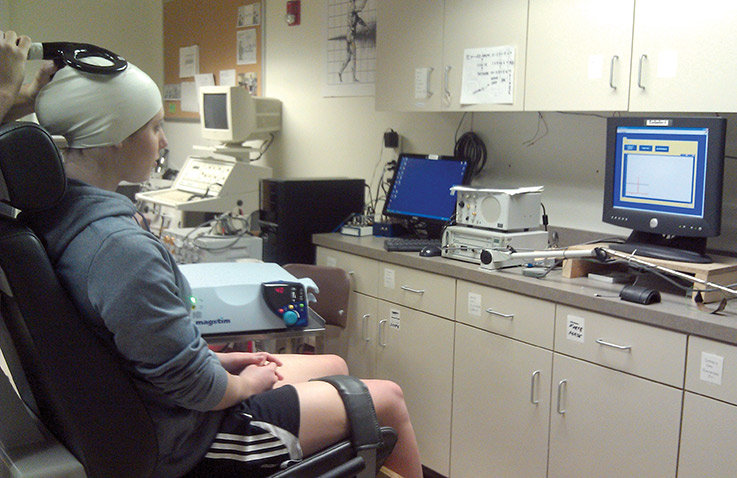
Stochastic resonance stimulation (SRS) more effectively improves balance in patients with functional ankle instability (FAI) when optimized based on each patient’s sensory threshold than when all patients receive the same treatment, according to research from Virginia Commonwealth University in Richmond.
Lower Extremity Review
Minimalist miss: Even over time, gait differs from barefoot
The biomechanical differences between barefoot running and running in minimalist shoes appear to amount to more than just a matter of time.
Altering landing to reduce ACL load may decrease jumping performance
Changes in landing mechanics that are intended to decrease risk of anterior cruciate ligament (ACL) injury may also inadvertently decrease jumping performance in athletes, according to research presented in late May at the annual ACSM meeting.
Kinetic changes postmeniscectomy mimic those associated with knee OA
One to five years after partial medial meniscectomy, young adults demonstrate kinetic alterations associated with knee osteoarthritis (OA), according to research presented in late May at the annual ACSM meeting.
Loose links Cortical data distinguish unstable ankles
A small study points to a “decoupling” effect between neurological and mechanical aspects of the ankle joint among some people with recurrent sprains and resultant functional ankle instability (FAI), reported investigators in a Journal of Sport Rehabilitation paper e-published on April 9.
Barefoot running with nonrearfoot strike pattern may put Achilles at risk
Women who run barefoot with a midfoot or forefoot strike pattern have higher Achilles tendon (AT) loads—and, potentially, a higher risk of tendinopathy—than rearfoot strikers, according to research e-published May 3 in the Annals of Biomedical Engineering.
Study links concussion to increased incidence of lower extremity injury
College athletes who sustain a concussion are almost four times as likely as their counterparts who avoid the brain injury to subsequently injure lower extremity muscles, according to research presented at the 2013 American Medical Society for Sports Medicine conference held in April in San Diego.
Bad breaks: Fifth met fractures can curtail NFL careers
Jones and proximal diaphyseal fifth metatarsal fractures are common among football players and may shorten their athletic careers, according to a February study that found players with fractures were significantly more likely than players without the injuries to have played in fewer than 10 National Football League (NFL) games.
Even gradual transition to minimalist running leads to signs of stress in feet
Investigators at Brigham Young University in Provo, UT, reported that runners who transitioned from traditional running shoes to zero-drop shoes meant to mimic barefoot running had evidence of bone marrow edema, a marker for stress on the foot, after gradual transition from conventional to minimalist shoes.
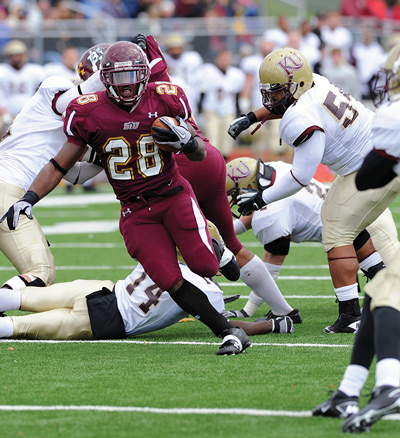
Girls, football players face highest risk of knee injury in high school athletics
The highest knee injury rates in US high school sports are associated with football, followed by girl’s soccer and gymnastics, according to an epidemiological study from The Ohio State University in Columbus and Colorado State University in Aurora.
Fear factors: ACL-reinjury concerns sideline athletes
A lack of confidence and fear of reinjury after anterior cruciate ligament (ACL) reconstruction is keeping some athletes from returning to play, according to several abstracts presented last month at the American Physical Therapy Association’s 2013 Combined Sections Meeting (CSM) in San Diego.
Study confirms neuromotor alterations in runners with Achilles tendinopathy
A recent study done at the University of Melbourne in Australia supports the theory that, in runners with Achilles tendinopathy (AT), altered neuromotor recruitment patterns of the triceps surae create differential intratendinous loads that lead to pathology.
Soccer simulation data show benefits of ankle supports change over time
Ankle bracing and taping have a limited ability to restrict ankle range of motion (ROM) and improve proprioceptive capability under soccer-specific conditions, according to a small study e-published by the Journal of Sport Rehabilitation in January.
Brains and sprains: Is there an extremity-concussion link?
The sports medicine community is demonstrating increasing interest in the possibility that neurocognitive impairment and musculoskeletal injury may be related, as evidenced most recently by an exchange in the letter to the editor section of the September issue of The American Journal of Sports Medicine (AJSM).
Achilles tendon in runners maintains stiffness despite stress of marathon
Running a marathon does not significantly affect Achilles tendon stiffness, suggesting that overuse may not explain Achilles ruptures in runners, according to a Finnish study published in the October issue of the Journal of Experimental Biology.
Join
Subscribe For Updates
Stay in the loop with the latest news and updates! Subscribe now to receive exclusive content, special offers, and important announcements straight to your inbox. Don’t miss out – join our community today for all the latest updates delivered directly to you.