What to Do About “Too Much Sitting”

What to Do About “Too Much Sitting”

“…In one analysis of sedentary behavior, participants were found to spend 14 hours sitting each day. In the NHANES nationally representative survey, the self-reported number of hours spent sedentary in 2007-2008 was 5.7, and this increased to 6.4 hours per day for 2015 – 2016 (Du et al 2019). Using accelerometry-derived data, U.S.

read more
qMRI Biomarkers for OA & Knee Replacement

qMRI Biomarkers for OA & Knee Replacement

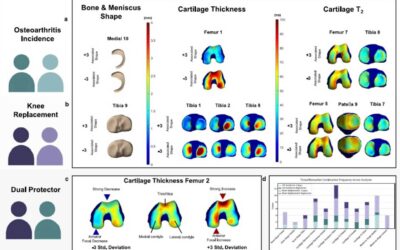
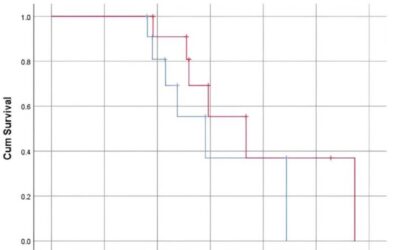
This study forms the basis of a digital twin system of the knee joint, using advanced quantitative MRI (qMRI) and machine learning to advance precision health in osteoarthritis (OA) management and knee replacement (KR) prediction. The study authors combined deep learning–based segmentation of knee joint structures with…

read more
Yoga Practice as a Potential Sarcopenia Prevention

Yoga Practice as a Potential Sarcopenia Prevention

Sarcopenia is characterized by the progressive loss of skeletal muscle mass and poses a significant health challenge for older adults by increasing the risk of disability and decreasing quality of life. With the increasing number of older adults, sarcopenia has the potential to become a major public health burden across the globe. Yoga is considered a low-risk and beneficial exercise for older adults. 

read more
MS Relapse Prevention: Baby Let the Sun Shine In

MS Relapse Prevention: Baby Let the Sun Shine In

Getting at least 30 minutes of daily summer sun in the first year of life may mean a lower relapse risk for children who are diagnosed with multiple sclerosis (MS) later, according to a study published in Neurology Neuroimmunology & Neuroinflammation. The study also found if a child’s biological mother had at least 30 minutes of daily sun during the second trimester of pregnancy, the child had a lower risk of MS relapses.

read more
Timing of Resistance Exercise and Cardiometabolic Health

Timing of Resistance Exercise and Cardiometabolic Health

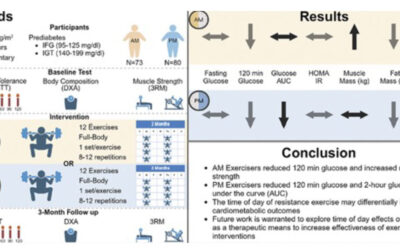
In this secondary analysis, there was no difference between morning (AM) and afternoon/early evening (PM) exercisers in blood glucose, insulin, body composition, or muscular strength following 12 wk of supervised exercise. However, examining within-group changes, glucose area under the curve (AUC) was significantly reduced in PM exercisers, but not in AM exercisers. 

read more
Which Is Better…

Which Is Better…

Reductions in balance performance, hip strength, and ankle function along with increases in disablement and injury-related fear are among the many motor-behavioral and sensory-perceptual impairments associated with chronic ankle instability (CAI). Both balance training (BAL) and hip strengthening (HIP) can improve balance, but how do the 2 modalities compare?

read more

Join

Subscribe For Updates

Stay in the loop with the latest news and updates! Subscribe now to receive exclusive content, special offers, and important announcements straight to your inbox. Don’t miss out – join our community today for all the latest updates delivered directly to you.