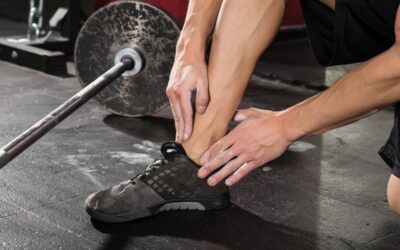
Weightlifting continues to increase in popularity due to its numerous benefits for physical health, performance enhancement, and age-related functional preservation. Although previous studies have investigated injury patterns in strength athletes, few have examined lower extremity injuries among the general population.
Lower Extremity Review
Incidence of and Risk Factors for Hospitalizations and Amputations for People with DFU
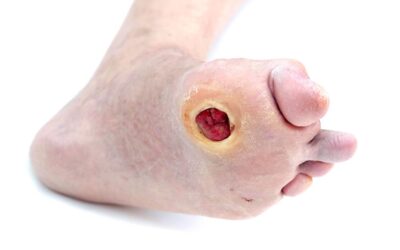
Diabetic Foot Ulcers (DFU) are a serious complication of diabetes and often lead to hospitalizations. This study sought to assess the incidence, risk factors and length of stay for hospitalizations, with and without amputations. Among 4709 people with DFU in Queensland (median age, 63 years, 3275 men, type 2 diabetes, DFU-related hospitalizations were recorded for 977 people : 669 without amputations…
Assessment of Peroneal Muscles Using Ultrasound in CAI
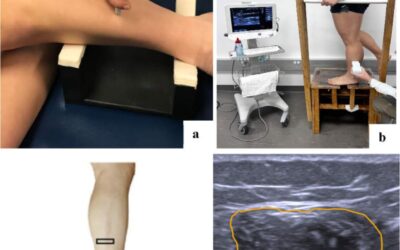
Lateral ankle sprains (LAS) result in chronic ankle instability (CAI), causing ongoing instability. Although peroneal muscle weakness is documented in CAI, surface electromyography shows similar activation patterns between CAI and healthy individuals, suggesting structural rather than neural deficits. Ultrasound imaging (USI) uniquely enables noninvasive assessment of muscle morphology and quality through…
The Effect of Foot Orthotics on Dynamic Stability in Females with Pes Planus Foot Posture
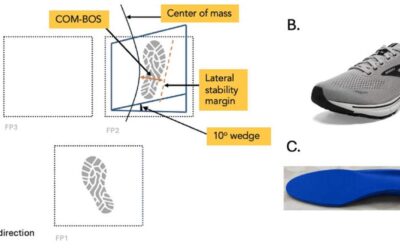
Foot orthotics, a device which can modify the mechanical interaction between foot and the external environment, are commonly prescribed for individuals with pes planus foot postures. The purpose of this study was to investigate the role of foot orthotics on controlling dynamic stability when females with pes planus foot posture experience a modified foot placement orientation during walking.
Effect of Foot Orthoses on Persons with Posterior Tibialis Tendon Dysfunction Stair Climbing
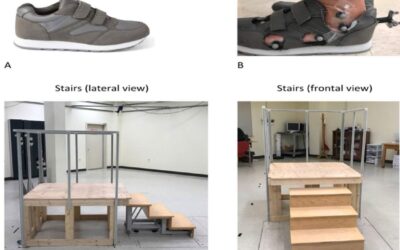
Posterior tibialis tendon dysfunction is a chronic musculoskeletal disorder characterized by a progressive flatfoot deformity which negatively impacts health-related quality of life. Custom foot orthoses modify walking biomechanics in individuals with posterior tibialis tendon dysfunction, but no studies have investigated their effects on stair climbing biomechanics in this population.
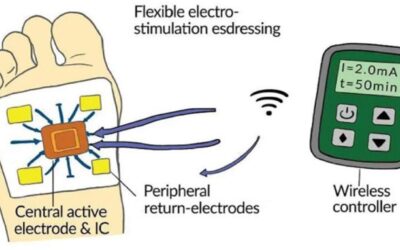
Electrical Stimulation: Novel Therapy for Diabetic Foot Ulcers
Diabetic foot ulcer (DFU) is one of the most severe complications of diabetes; its healing is typically protracted and marked by a high rate of recurrence. In recent years, electrical-stimulation (ES) therapy has emerged as a novel adjunct to conventional approaches such as debridement, negative-pressure wound therapy, and moist dressings. By applying an exogenous electric field that mimics the skin’s endogenous wound…
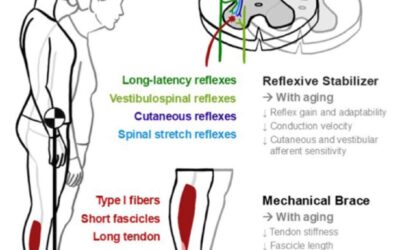
The Neuromechanics of the Soleus for Fall Prevention in Aging
Falls are a leading cause of injury-related hospitalization, morbidity, and mortality in older adults, with impaired postural control serving as a key predictor of fall risk. The triceps surae, and particularly the soleus, plays a central role in maintaining upright stance by generating continuous plantarflexion moments that stabilize the body’s center of mass. This summarizes evidence for the neuromechanical contributions of the…
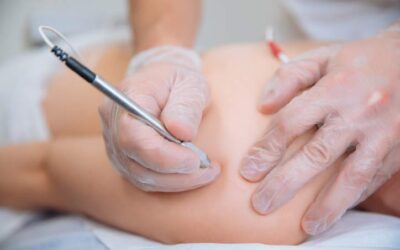
Percutaneous Electrolysis for Musculoskeletal Disorders in Rehab
Percutaneous electrolysis (PE) is a minimally invasive procedure that utilizes galvanic current delivered through a needle. PE is increasingly employed for musculoskeletal disorders, despite the scarcity of scientific evidence supporting its use. The aim of this systematic review is to synthesize the existing evidence and explore the applications of PE in rehabilitation. In line with Preferred Reporting Items for…
Mitochondrial Trifunctional Protein Deficiency Masquerading as Charcot-Marie-Tooth Disease
Mitochondrial trifunctional protein deficiency (MTPD) is an inherited disorder of fatty acid β-oxidation caused by mutations in HADHA or HADHB genes. It typically presents with cardiomyopathy or hepatic failure in early childhood; however, it may rarely present in adulthood with the neuromyopathic form. Researchers describe a patient with MTPD with isolated neuropathy mimicking Charcot-Marie-Tooth disease (CMT) as the first and only presenting symptom.
Treatment-Induced Diabetic Neuropathy: A Case Report on a Young T1 Patient
Treatment-induced diabetic neuropathy (TIND), also known as insulin neuritis, is a rare but important complication that can occur after rapid correction of chronic hyperglycemia in patients with long-standing diabetes. It manifests as acute, severe neuropathic pain with autonomic dysfunction despite improved glycemic control. Chronic neuropathic pain, which arises from…
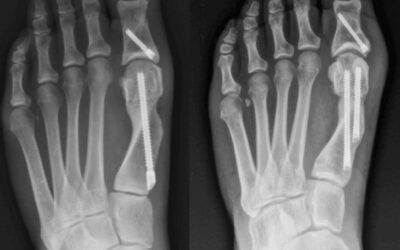
One Versus 2 Screw Fixation in MIS for Hallux Valgus
Radiographs demonstrating single-screw (left) and dual-screw (right) fixation following minimally invasive distal metatarsal osteotomy for hallux valgus correction. Minimally invasive surgery (MIS) for hallux valgus has evolved significantly, with ongoing debate about optimal fixation methods. Fourth-generation techniques typically use 2 metatarsal screws; however…
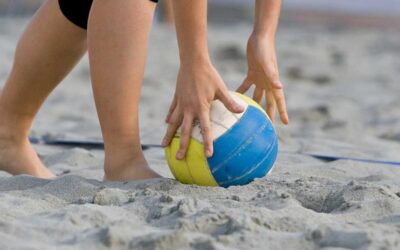
Volleyball-Associated Lower Extremity Injuries Among Adult Athletes
The mean age of volleyball athletes has increased over the past decade, raising concern for musculoskeletal injuries. To evaluate epidemiologic trends, diagnoses, and mechanisms of volleyball-related lower extremity injuries within different adult age groups. Data on volleyball-associated lower extremity injuries in patients ≥19 years of age was…
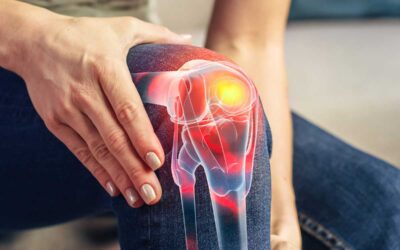
Knee Crepitus and Osteoarthritis in Young Adults Following Traumatic Knee Injury
Knee crepitus, the audible crackling or grinding noise during knee joint movement, has been proposed as an early clinical indicator of structural osteoarthritis (OA). One year following anterior cruciate ligament reconstruction (ACLR), 112 participants self-reported the presence and/or absence of knee crepitus using an item from the…
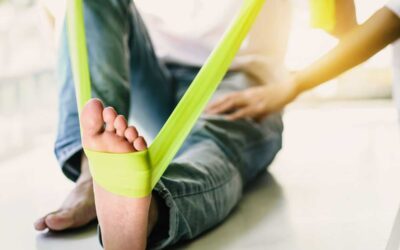
Muscle Strengthening Exercises for Foot and Ankle
Foot and ankle muscle strengthening exercises are common interventions for many musculoskeletal conditions that are associated with pain and limited function in the lower limb. Science offers many strengthening exercises but has been criticized for not adhering to best practice. A systematic search of peer-review journal articles was conducted.
Review of Nonpharmacological Interventions for Basic Skills in Older Adults
This study aims to synthesize existing evidence on the effectiveness of nonpharmacological interventions designed to increase the intrinsic capacity (IC) of community-dwelling older adults. An umbrella review of systematic reviews from 2015 to October 31, 2024 was conducted. The review included 5 databases.
Join
Subscribe For Updates
Stay in the loop with the latest news and updates! Subscribe now to receive exclusive content, special offers, and important announcements straight to your inbox. Don’t miss out – join our community today for all the latest updates delivered directly to you.