Maxibrace is now a reseller of Polymem Wound Care Dressings manufactured by Ferris Mfg. Corp., made to roll onto a toe or finger right out of the package. The product embeds everything needed for wound care in the dressing, which can be used for open or closed...
Lower Extremity Review
Keeping O&P compliance in check
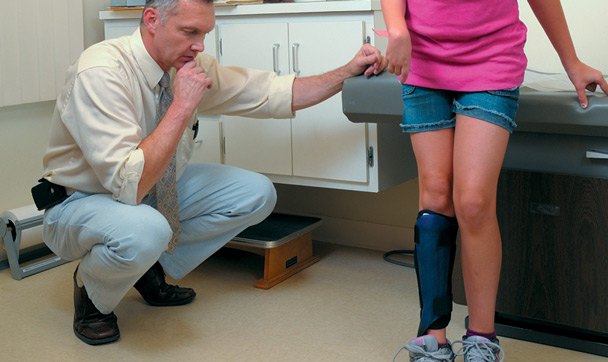
A recent paper suggests that a checklist system can help practitioners educate caregivers about orthotic device use in children with CP, which could improve compliance. But experts differ as to whether such checklists make sense in the complex world of O&P devices.
By Larry Hand
Out on a limb: Jock talk
Much of sports talk radio is essentially a forum for negativity. Even in Boston, where sports fans have been ridiculously spoiled by local teams’ successes in the last decade, talk show hosts and callers spend hours bemoaning athletes’ failures and second-guessing coaches’ decisions. But on a weekday morning in early September, a conversation about ankle injuries on sports talk radio actually left me feeling surprisingly optimistic.
Jordana Bieze Foster, Editor
Practice Tactics: How brand development can benefit your practice
Some of us remember the days when there was virtually no need for marketing healthcare practices. All that was required was hard work, well-developed skills, and a shingle out front. Word of mouth was the primary method for growing practices, and any overt messaging was considered unethical. In fact, there were regulations specifically preventing physicians from advertising themselves. It was a simpler time with far less competition for patients and referrals.
By Jason Kraus
Strategies for rehab after Achilles tendon surgery
At the Palo Alto Foundation Medical Group, rehabilitation following operative repair of Achilles tendon ruptures is based on three key evidence-based criteria for return to activity and selective use of an anti-gravity treadmill to accelerate that return.
By Amol Saxena, DPM, FACFAS
A patient-first approach to critical limb ischemia
Outcomes of revascularization in patients with lower extremity critical limb ischemia should be defined according to patient goals and functional criteria rather than more traditional, physician-oriented variables such as limb salvage and graft patency.
By Ginger L. Manos, MD, John W. York, MD, FACS, and Brent L. Johnson, MS
OA after ankle fracture: Surgery’s complex role
In the surgical management of ankle fractures, post-traumatic arthritis is the outcome that practitioners and patients would most like to avoid. But given the sensitivity of joint cartilage to even the slightest malalignment or pressure shift, that can be easier said than done.
By Cary Groner
Effects of load carriage on amputee ambulation
Amputees lack the lower extremity muscles responsible for maintaining kinematic stability under increasing load carriage conditions, and would benefit from a more versatile prosthetic foot design that could adapt dynamically to changing loads.
By Kurt Collier, CP
Factors affecting athletes’ perception of movement
In sports, the concept of “affordance perception” can mean sensing an opponent’s next move, which has implications not just for performance but also for reducing injury risk. An understanding of affordance perception also can improve the effectiveness of training.
By Julie A. Weast-Knapp, MA, and Kevin Shockley, PhD
OA braces: Buying time
Long-term compliance data raise issues
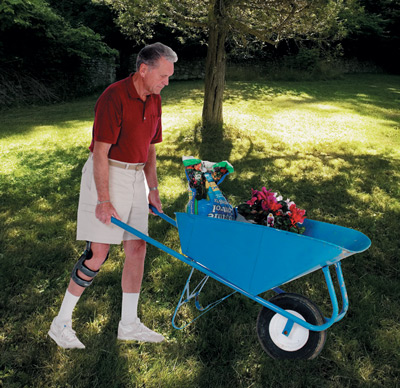
A study published in the August issue of Orthopedics found that although unloader braces effectively relieve pain and improve function in patients with unicompartmental knee osteoarthritis, many patients stop wearing the devices after a few years and opt for total knee replacement.
By Emily Delzell
Orthotic clubfoot outcomes depend on complexity, not socioeconomics
The critical factor affecting compliance with the orthotic aspect of Ponseti clubfoot therapy—and its success—appears to be complexity of the therapy, not parents’ education and income levels, according to research published in the September issue of the Journal of...
Patients feel both electrical stimulation and AFOs have a place in stroke rehab
Although patients with drop foot show an overall preference for functional electrical stimulation over ankle foot orthoses, individuals familiar with both therapies recognize the benefits and drawbacks of the two modalities, according to research published in the...
Control issues
Shoe effects on tibial rotation vary
Research from the U.K. published this month suggests that motion control running shoe technology can help decrease tibial internal rotation during running, theoretically decreasing the risk of proximal symptoms such as those associated with iliotibial band syndrome or patellofemoral pain syndrome.
By Jordana Bieze Foster
A decade later, athletes maintain benefits of training for groin pain
The positive effects of a training program on adductor-related groin pain are still evident up to 12 years later, according to a Danish study. Researchers from Copenhagen University Hospital in Amager, Denmark, assessed the long-term effects of training eight to 12...
Whole body vibration training fails to improve jumping performance
Two recent studies cast doubt on the merits of whole body vibration training, as either a replacement or an adjunct to conventional training, for improving jump performance. Researchers from Springfield College in Massachusetts found that WBV training and conventional...
Join
Subscribe For Updates
Stay in the loop with the latest news and updates! Subscribe now to receive exclusive content, special offers, and important announcements straight to your inbox. Don’t miss out – join our community today for all the latest updates delivered directly to you.