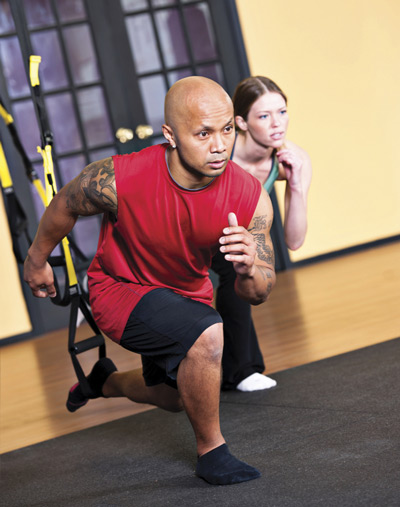
The exploding popularity of so-called extreme conditioning programs is now infiltrating the armed forces, prompting military sports medicine experts to take a closer look at the potential risks and benefits of high intensity exercise.
Lower Extremity Review
Hip strength deficits characterize both patellofemoral pain and osteoarthritis
Patellofemoral osteoarthritis (PFOA) is associated with deficits in hip abduction strength, a similarity to patellofemoral pain syndrome (PFPS) that appears to support the theory that the two conditions lie on the same continuum, according to research from the University of Calgary presented in late May at the ACSM meeting.
Ankle instability patients exhibit landing kinematics suggestive of ACL injury risk
Sagittal plane landing kinematics in patients with chronic ankle instability (CAI) mimic those associated with risk of anterior cruciate ligament (ACL) injury, suggesting that similar neuromuscular control deficits may be involved in both processes, according to research from the University of Toledo (OH) presented in late May at the ACSM meeting.
Toning shoe twist: Embattled footwear may still have benefit
The research on toning shoes presented early this month at the annual meeting of the American College of Sports Medicine in San Francisco didn’t add much support for controversial claims that the rocker-bottom footwear promotes muscle activation and energy expenditure. But the presenters did point out more subtle benefits of toning shoes that manufacturers might find are more acceptable to the Federal Trade Commission.
Balance control in occupational boots reflects shaft height more than mass
In workers wearing occupational footwear, the mass of a boot may be less important for maintaining balance than its shaft height, according to a study presented in late May at the annual ACSM meeting.
Injuries prevent runners from adapting to acute changes in midsole hardness
Injured runners do not make sagittal plane kinematic adaptations to changes in midsole hardness the way that healthy runners do, according to research from the University of Wisconsin-La Crosse (UW-L) presented in late May at the ACSM meeting.
Out on a Limb: Down the habit hole
Much of sports medicine research focuses on what’s never been done before: new techniques, new procedures, and new theories. Less sexy, but equally important, is the research that takes a fresh look at old practices, the ones that have somehow become standard simply because they’ve never been questioned.
Jordana Bieze Foster, Editor
ACL injury and OA risk: Surgery’s complicated role
Given the accumulating evidence linking anterior cruciate ligament injury to early-onset osteoarthritis, one might reason that surgical repair of the injured joint would decrease that risk. But too often that isn’t the case. This two-part series explores the complicated ways, both negative and positive, that surgery can influence OA risk.
By Cary Groner
Diabetic foot infections: Progress meets pitfalls
New evidence-based guidelines on the management of diabetic foot infections reflect significant advances by researchers and clinicians, but the recent emergence of regulatory hurdles has slowed the development of new antibiotic drugs for treating those infections.
By Emily Delzell
Foot strike in runners: Influence on injury risk
Different foot strike patterns are associated with different means of attenuating and redistributing forces during running, which may have implications for injury risk and rehabilitation. Researchers, however, have yet to fully examine and understand those implications.
By Peter Larson, PhD
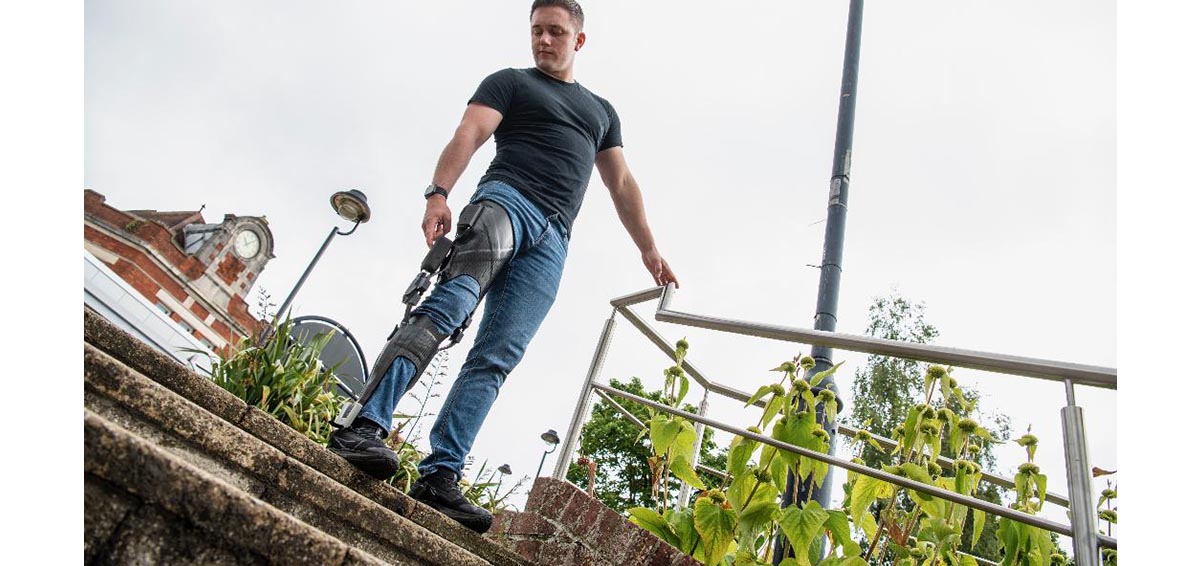
Minimizing the effects of knee brace migration
Too many knee braces just won’t stay put, which can affect compliance and possibly even device effectiveness. Research on the topic is scarce, but experts say the key to minimizing knee brace migration is making sure the device fits the patient’s anatomy as closely as possible.
By Shalmali Pal
Rehabilitative footwear: Importance of comfort
A growing body of research suggests that footwear comfort can improve movement performance and, in particular, neuromuscular control of balance. These findings could have significant implications for rehabilitation of older adults and patients with lower extremity disorders.
By M. Owen Papuga, PhD, and Jeanmarie R. Burke, PhD
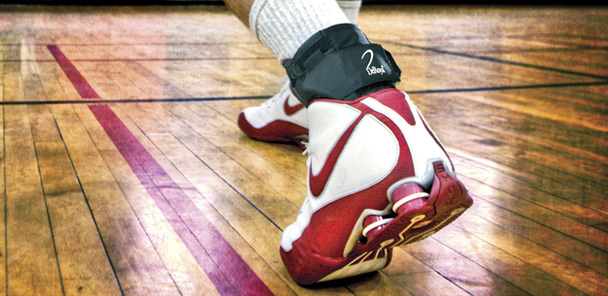
Effects of ankle bracing on athletic performance
Ankle braces help prevent injury by restricting motion, but those restrictions don’t necessarily result in negative effects on athletic performance. Evidence suggests that while agility may be affected with use of an ankle brace, vertical jump and balance skills may not.
By Jatin P. Ambegaonkar, PhD, ATC, OT, CSCS; Nelson Cortes, PhD; and Shruti J. Ambegaonkar, MS, PT
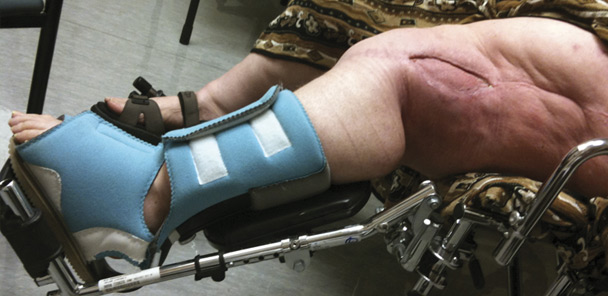
Amputation vs salvage for lower limb tumors
Studies assessing the relative functional benefits of limb salvage and amputation for lower extremity bone and soft tissue tumors have produced inconsistent results, but the range of subjective and objective tests used in those studies may have influenced the findings.
By Lucy Kupersmith, BA, and Jeremy S. Somerson, MD
Edser FlopThotics
Edser Orthotic Labs FlopThotic is a custom-made flip-flop fabricated from a cast or 3D foot scan. Its base is direct milled to the corrected foot form. Accommodations, wedges, and heel lifts can be incorporated into the FlopThotic. After milling and hand finishing...
Join
Subscribe For Updates
Stay in the loop with the latest news and updates! Subscribe now to receive exclusive content, special offers, and important announcements straight to your inbox. Don’t miss out – join our community today for all the latest updates delivered directly to you.