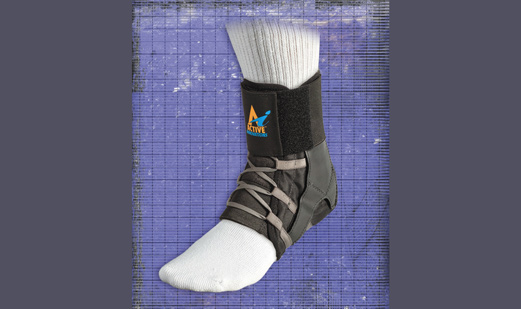
Active Innovations introduces the new ProMed lace-up ankle brace. The ProMed ankle brace offers comfort and mobility with added support provided by its Y-shaped vertical stabilization straps that allow for control over both the forefoot and heel. Total control lacing...
Lower Extremity Review
Squared Toe Post Op Shoe
DJO offers the new ProCare Squared Toe Post Op Shoe. The shoe is designed to provide maximum immobilization and protection of the forefoot and toes for postoperative rehabilitation. The post op shoe features a rigid rocker sole, forefoot fastening system, and high...
Roomy Socks
MDI Corporation introduces Roomy Socks. These high quality, affordable diabetic socks have been awarded an exclusive national contract for VA Hospitals and clinics across the country. American made, the socks are acrylic and have relaxed tops with a 12-inch...
Arthritis Pain Relief Orthotics
New from Dr. Scholl’s, Arthritis Pain Relief Orthotics are designed to provide both immediate and all-day relief from osteoarthritis pain in the feet, knees, and hips. Offered with a money back guarantee, the pain relief orthotics are engineered with a contoured...
LER: Our first year
We published 12 information-packed issues,and readers responded— on our website and through our social media outlets. These are just a few of the highlights.
• Top Articles – Most Visits • Top Products – Most viewed • Articles Most Commented On • Most Viewed Product Videos • Top 5 – Most Time Spent on Article • #1 Facebook Fan
The Throw – From Below: Hip mechanics dictate overhead motion
It’s shoulder and elbow injuries that most often land baseball pitchers and other throwing athletes on the disabled list. But the cause of those injuries often can be traced to strength and flexibility deficits at the hip—effects that reverberate up the kinetic chain.
by Kevin Laudner, PhD, ATC, FACSM
Publisher’s memo: The first of many
When I decided to create LER, I spoke with many of you to determine if there was a need for a multi-disciplinary magazine exclusively focused on the lower extremity. The response was overwhelming and very positive. You wanted a practical, easy-to-read publication that delivered the clinical literature reviews but without all the dry and boring details of the methods, a publication that encouraged collaboration and helped to improve outcomes for your patients.
by Richard Dubin, Publisher
Out on a limb: Personality test
Athletes are known for being difficult patients, with psychology often playing as important a role as biomechanics. The objective is to keep an athlete’s personality from getting in the way of proper medical care. But sometimes that’s easier said than done. Just ask the Boston Red Sox.
by Jordana Bieze Foster, Editor
Quantifying functional effects of AFO alignment
Assessing device alignment is a key aspect of prosthetic practice, but when it comes to lower extremity orthotics the process is less common. That’s changing, however, as researchers begin to document the effects of alignment on gait biomechanics.
by Cary Groner
Knee OA and obesity: A cyclical clinical challenge
Obesity not only increases the risk of knee osteoarthritis but also makes it more difficult to treat, as typical exercise recommendations often are simply not practical. Gait researchers, however, are working to identify new potential therapeutic approaches.
by Elizabeth M. Russell, MS, and Joseph Hamill, PhD
Therapeutic management of flexible flatfoot pain
The practitioner’s objective in treating flexible flatfoot is to realign the foot and eliminate pain. Multiple nonsurgical therapeutic options are available, but if those are unsuccessful, surgical interventions can be effective.
by Neal M. Blitz, DPM, FACFAS, and Pawel Hanulewicz, MD
Achilles tendinopathy: Treatment strategies
Research has elucidated new information about the disease processes that contribute to Achilles tendinopathy and the relative effectiveness of therapies such as heavy-load eccentric exercise and injections of corticosteroids, dextrose, and other solutions.
by Michael Ryan PhD, CPed(C)
Dyslipidemia’s effect on diabetic neuropathy
The importance of glycemic control in patients with diabetes is well known. But neurological studies suggest that dyslipidemia is actually a more significant contributor to the development of peripheral neuropathy in the same patient population.
by Andrea M. Vincent, PhD, Lucy M. Hinder, PhD, and Eva L. Feldman, MD, PhD
Fighting fatigue
As a growing body of research supports the idea that fatigue contributes to sports-related injury, investigators are now working to identify those athletes who may be most vulnerable to the effects of fatigue and interventions that could counteract those effects.
Charcot and limb loss
Ulcer prevention is the key to amputation prevention in patients with Charcot arthropathy, according to research from Chicago that raises the question of whether pre-emptive surgical correction of deformities is warranted in Charcot patients.
Join
Subscribe For Updates
Stay in the loop with the latest news and updates! Subscribe now to receive exclusive content, special offers, and important announcements straight to your inbox. Don’t miss out – join our community today for all the latest updates delivered directly to you.