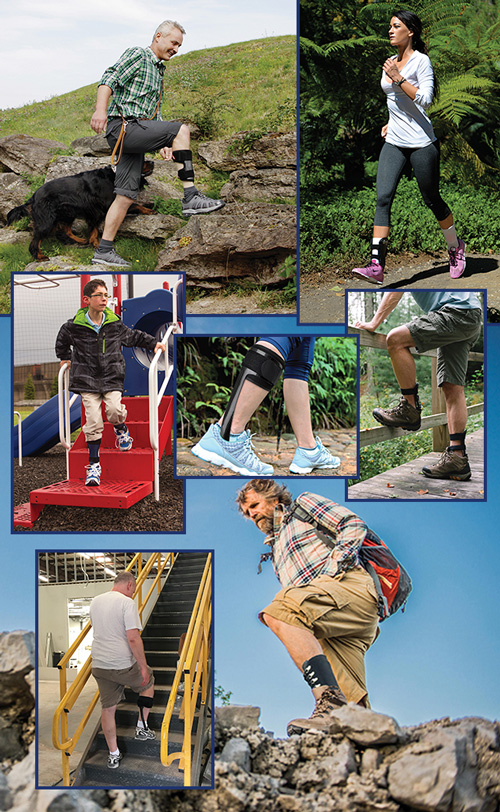
VibraCool Vibrational Cryotherapy is a wearable, FDA-cleared pain relief device that provides simple, serious relief for iliotibial band pain, plantar fasciitis, osteoarthritis, and other acute and overuse injuries. VibraCool’s Cool-Pulse technology leverages the…
Lower Extremity Review
MD Orthopaedics ADM Brace
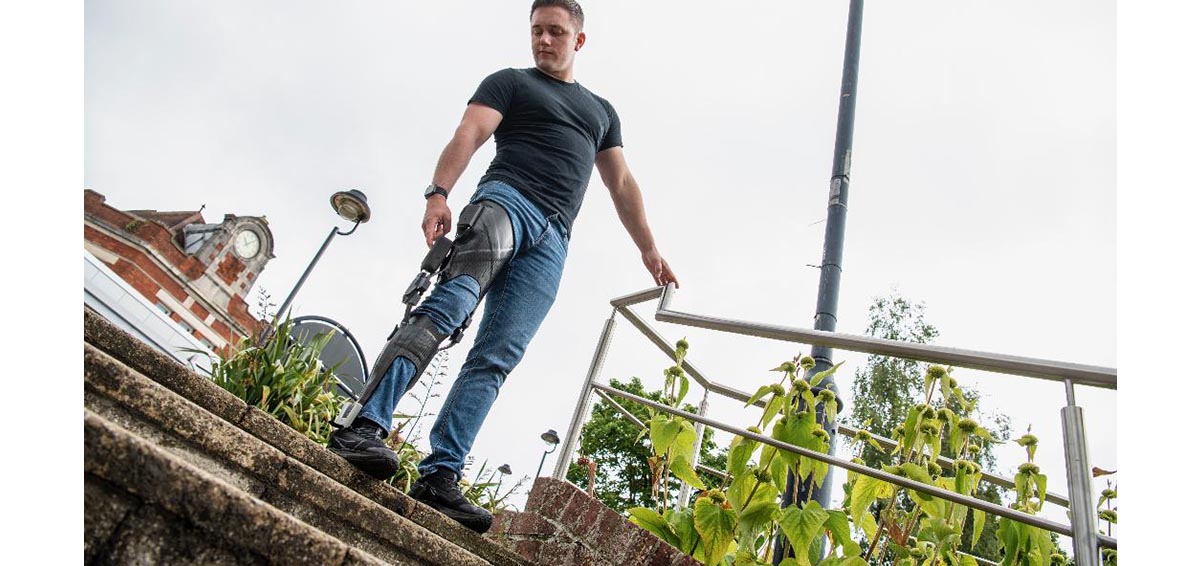
MD Orthopaedics introduces the Abduction Dorsiflexion Mechanism (ADM), a new generation of foot abduction bracing for babies and children with clubfoot and other conditions that result in equinovarus or supination. The ADM enables new bracing strategies…
3D PRINTING OF FOOT ORTHOSES: Clinical feasibility and cost-benefit analyses
Several technical issues currently limit the cost effectiveness of 3D-printing custom foot orthoses, but these will likely be addressed in the near future with the emergence of larger and faster 3D printers.
By Steven Hoeffner, PhD; Timothy Pruett; Breanne Przestrzelski, MS; Brian Kaluf, CP; Nikki Hooks, CO; Katelyn Ragland; Shannon Hall; Kyle Walker; Dan Ballard, CPed; and John DesJardins, PhD
Does history of running protect against knee OA?
Running may increase the risk of knee osteoarthritis (OA) onset or progression for some people, but in many others the knees will be safe during running; in such individuals, the benefits of physical activity can positively affect weight management and other means of reducing OA risk.
By Nicole M. Cattano, PhD, LAT, ATC; and Jeffrey B. Driban, PhD, ATC, CSCS
Managing O&P patients who are hard on devices
Even patients who obediently wear their O&P devices can pose a clinical challenge if they wear their devices past the point of breakdown. Experts offer suggestions for dealing with patients who are hard on devices—including those who are very large, very active, or very frugal.
By Shalmali Pal
Basketball shoe trends favor fashion over feet
Several confounding factors make it difficult to determine statistical associations between footwear and injuries in basketball, but attitudes toward shoes among National Basketball Association (NBA) players suggest both positive and negative trends with regard to potential injury risk.
By Will Carroll
Jump mechanics and risk of patellar tendinopathy
To understand the association between jumping biomechanics and transmission of forces through the patellar tendon, practitioners must have a working knowledge of the anatomy of the knee, as well as the biomechanical factors that determine force transmission through the knee.
By Rob Halle, PT, DPT, OCS, CSCS
Subconcussive subtleties: Lacrosse study links balance, impacts
Measures of cumulative subconcussive head impacts during a men’s lacrosse season are associated with decreases in balance scores from pre- to postseason, according to findings from Sacred Heart University in Fairfield, CT, that could have implications for lower extremity injury risk.
By Katie Bell
Stiffer shoes improve running energetics as long as first MTP flexion is preserved
Increasing running shoe bending stiffness helps improve running energetics up to the point at which it impairs metatarsophalangeal (MTP) joint flexion—a threshold that varies between individuals—according to research from the Republic of Korea.
By Jordana Bieze Foster
Long after return to play, ACL injury takes toll on perceived knee function
Perceived knee function is poorer in athletes who successfully return to play after an anterior cruciate ligament (ACL) injury than in their uninjured counterparts, despite no strength or balance differences between the groups, according to research from Norway.
By Jordana Bieze Foster
Out on a limb: Her head’s in the game
It’s more difficult to assess the effects of head impacts in female lacrosse players than in their male counterparts. But it’s no less important, particularly with regard to lower extremity injury prevention.
By Jordana Bieze Foster, Editor
Plantar fasciitis: clinical concerns in cleated sports
Cleated sports are associated with a high incidence of lower extremity injuries. American football and soccer are particularly troublesome due to unique risk factors involving footwear design, loading patterns, and sport-specific biomechanics.
By Patricia Pande, MClScPT, CSCS, CPed
Texting while walking: Gait adaptations and injury implications
It’s not surprising that tactile interaction with a smartphone while walking can increase the risk of traumatic injury, but texting while walking also affects gait in ways that may ultimately have long-term effects.
By Shalmali Pal
Multiple jumpers increase risk for ‘trampoline ankle’
Large forces can cause severe fractures: Multiple trampoline jumpers are a primary cause of “trampoline ankle,” according to a recent Canadian study, which also noted that, when two individuals are bouncing out of sync, they generate kinetic energy forces that produce a high-impact effect that can cause serious growth-plate injuries in children.
By P.K. Daniel
Active Stance: Patients with at-risk feet need collaborative care
In a recent editorial in The Lancet Diabetes-Endocrinology,1 Lipsky and colleagues wrote that diabetic foot disease “…is not a one doctor disease—it demands multidisciplinary care. Furthermore, as a notoriously unglamorous problem, the disease depends on…
By Terrence P. Sheehan, MD
Join
Subscribe For Updates
Stay in the loop with the latest news and updates! Subscribe now to receive exclusive content, special offers, and important announcements straight to your inbox. Don’t miss out – join our community today for all the latest updates delivered directly to you.