







Background
Diabetic foot ulcers and other skin conditions such as blisters, calluses, and general skin irritation pose significant health challenges. These issues often stem from excessive friction and shear forces acting on vulnerable areas of the skin. Individuals who rely on specialized footwear, orthopedic braces and prosthetic devices are particularly susceptible to these types of injuries. When left unaddressed, these conditions can lead to pain, infection, and even long-term mobility complications or limb loss.
Challenge
In environments where medical or performance equipment interfaces with the skin–such as prosthetic sockets, insoles, and orthotics–managing friction and pressure is a persistent imperative. Traditional padding and liners focus on reducing pressure but often ignore and fail to effectively reduce shear forces, resulting in irritation, breakdown, and discomfort. For diabetic patients who often can’t feel this damage, these complications can escalate rapidly into chronic ulcers that get infected and become difficult to treat. Patients and their providers require a reliable solution that prevents these issues before they start and quickly heals them if they happen.
Solution
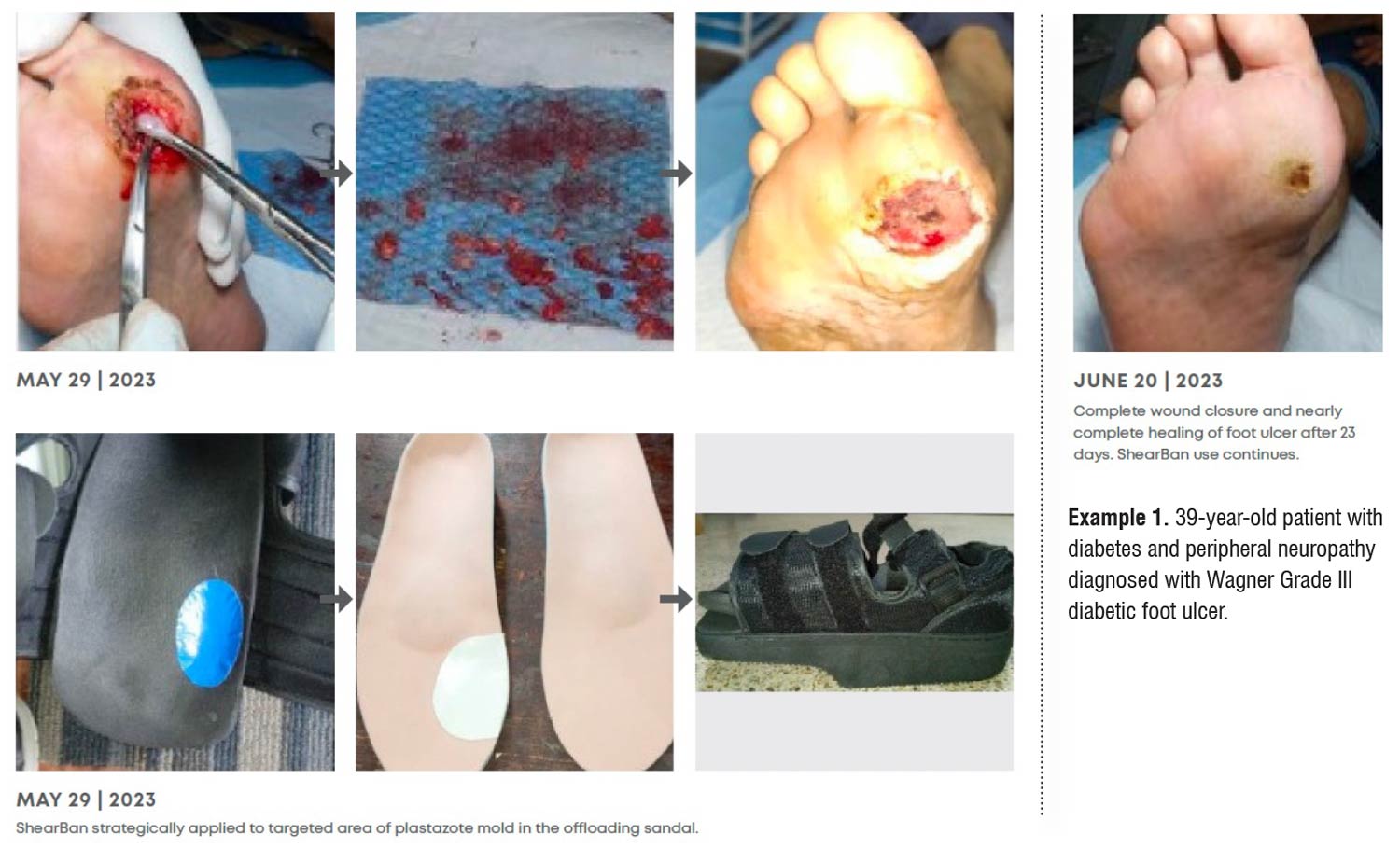
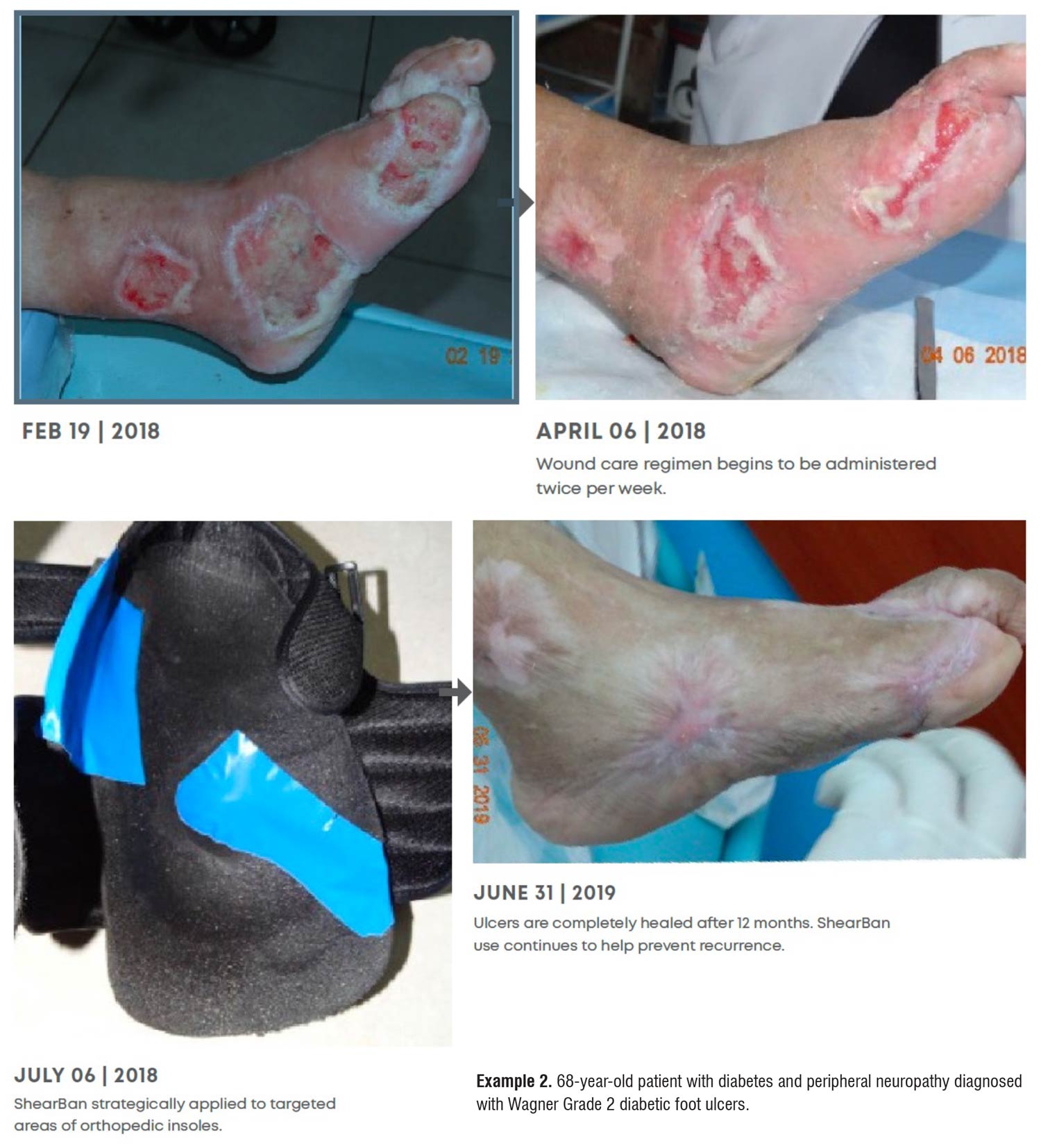
ShearBan, a patented, self-adhesive material, offers a proven, innovative approach to friction and shear force management. Unlike other solutions, ShearBan is applied directly to the device or shoe, providing targeted protection to the contact area that needs it most. By dramatically reducing friction and shear at the skin–device interface, it helps prevent the skin damage that can lead to blisters, calluses, and diabetic foot ulcers. ShearBan’s unique design and durable material allows it to be applied easily and directly to the surfaces of problem areas on orthopedic braces, prosthetic sockets, footwear and insoles, rather than the skin, providing long-lasting protection by strategically reducing friction at the contact area.
The result is enhanced comfort, improved device performance and wear times, expedited healing, and reduced risk of injury or skin breakdown.
Results: