







By Gary Bedard, CO, FAAOP(D)
Falls and falls-related injuries are a problem in individuals with chronic ankle symptoms.
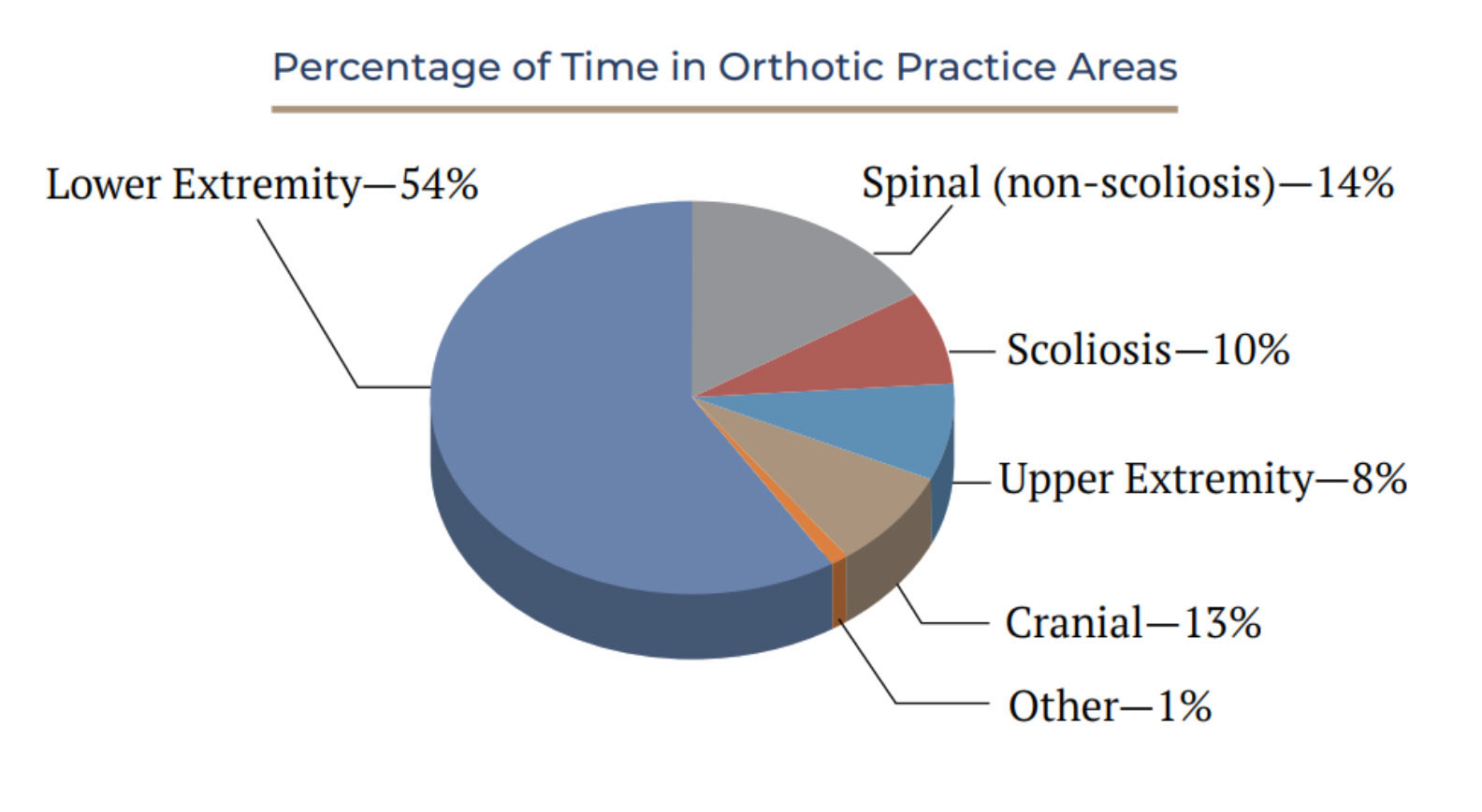
Figure 1. Practice Data Metrics: 54% = AFOs & KAFOs
At last year’s Academy meeting, there was a great paper that talked about how they’re now developing outcome measures for lower limb orthotics, something we’ve had for a while in prosthetics. The author looked at his data and also data from the American Board for Certification (ABC) in terms of orthotic practice areas—Figure 1 shows the areas of responsibility of an orthotist in terms of where they’re involved with their clinical service provision. As you can see, the main one is lower extremity orthotics. So, from an orthotic fabrication standpoint, whether you’re doing all your fabrication in-house or selectively doing in-house and in central fab, 54% of that time is basically thrown at lower limb orthotics.
He broke it down even further, looking at all the different levels of orthotic management of the lower limb and 89% of the time spent on lower limb is in the production or delivery of ankle foot orthoses (AFOs)—which is a significant amount. If you don’t do any year-end analysis of your L code utilization, this gives you an idea of what the averages are in our field at this point in time. (Figure 2)
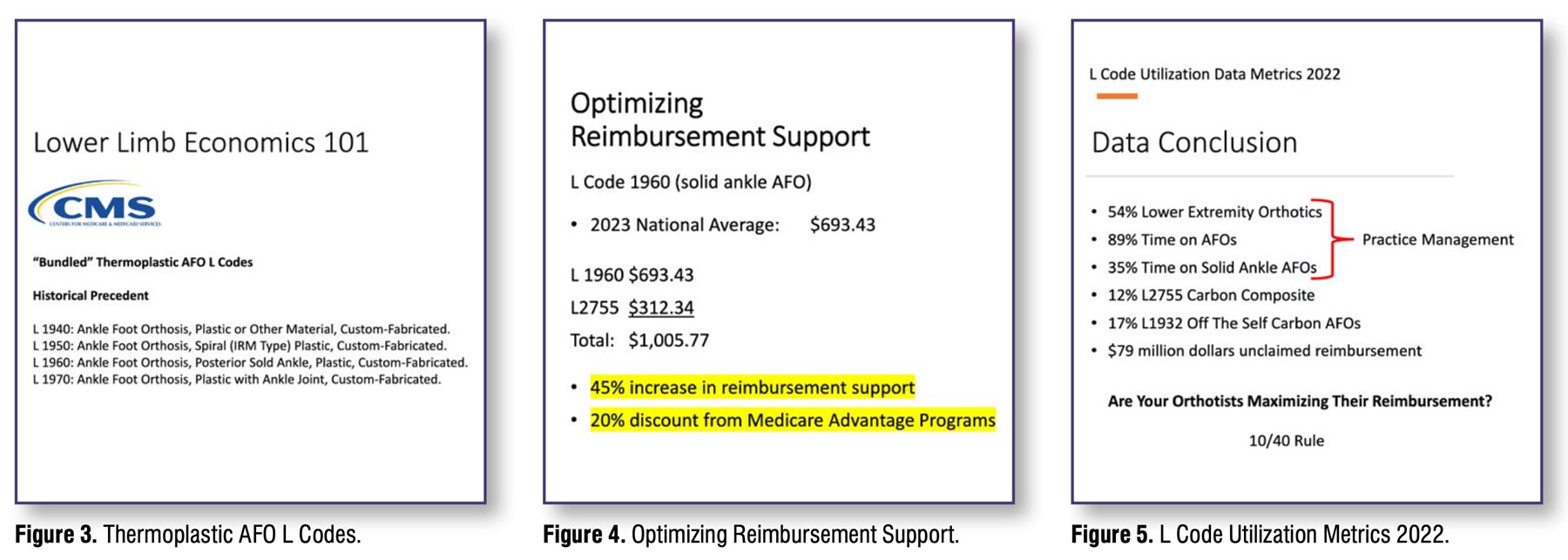
Now within my circle of friends, I happen to have a young person who has a phenomenal background in international economics and computer science and works primarily as a data engineer for the pharmaceutical industry through a data management company. Their database claims a 90% penetration of the market, including federal, state, and private reimbursement including Medicaid, Medicare, and private. Over the last 2 years, we’ve done analysis of our L codes and have found for the whole year of 2022 that 35% of all thermoplastic AFOs delivered to the United States are our most basic design solid ankle AFOs. Frankly, I look at this as Tupperware. At this point, no offense to Doctor Tupper, who started Tupperware in Massachusetts in 1934, where the injection molding industry started in this country. But for us, it’s Tupperware—mass market, mass production one size fits all. That’s my opinion based on how CMS treats us as vendors, and the L codes basically guide us into thermoplastics. What do I mean by that? As you look at our primary runs—40, 50, 60, L code 1970—that’s all for thermoplastic devices, so our L code system is bundled and biased toward the selection or use of thermoplastic materials. (Figure 3)
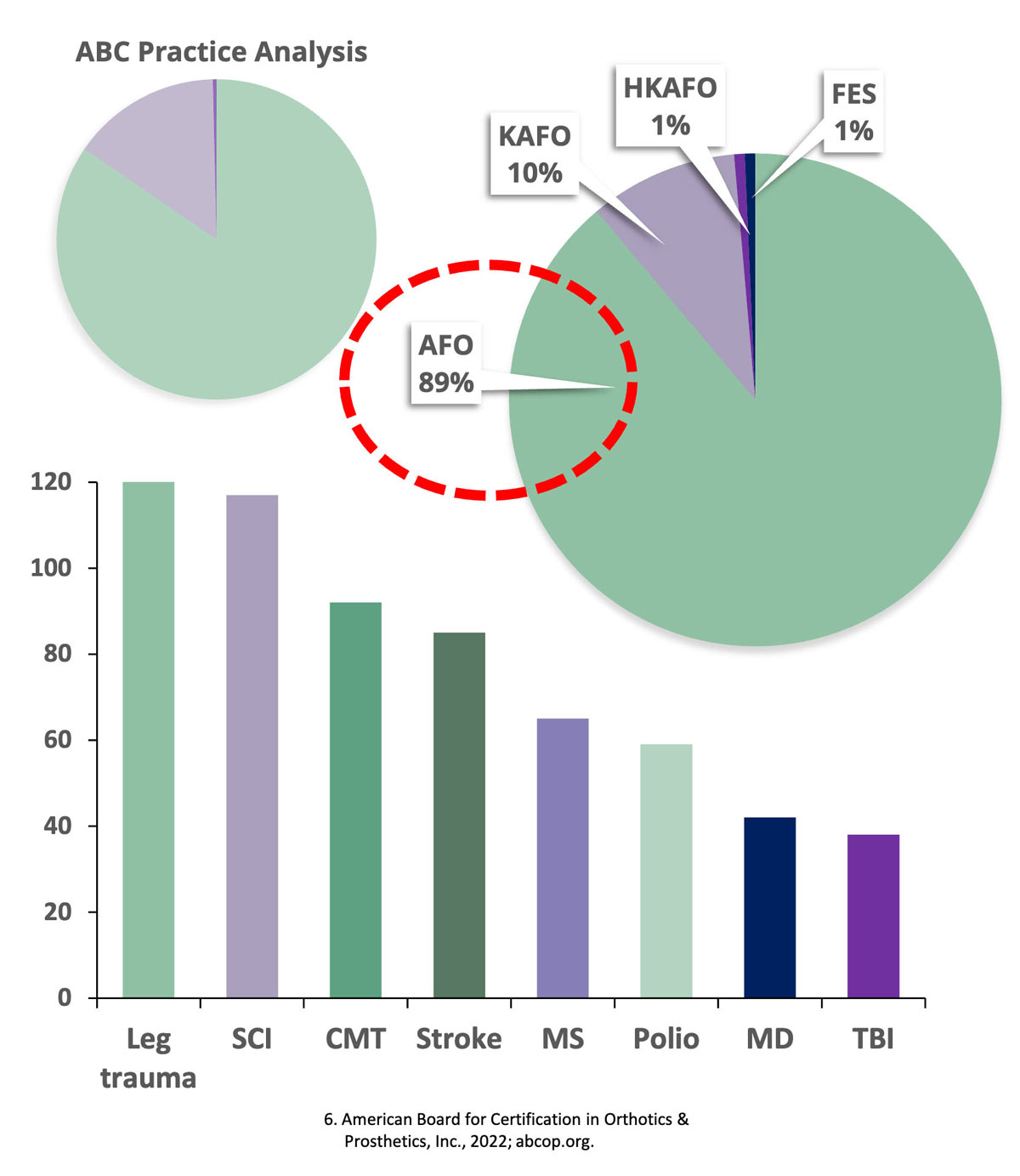
Figure 2. 89% of Production = AFOs.
Now we only have one option in lower extremity orthotics where we can basically bring in the concept of using carbon fiber or prepregs and that’s with our addition L code 2755. You’re all familiar with this how it reads: Addition to lower extremity orthoses, high strength, lightweight material, all hybrid lamination prepreg composite, PER SEGMENT, for custom fabricated orthoses only. But there’s a point of clarification that I find working in the field that adds some confusion when it comes to your billing, and that’s where it says per segment.
I asked Devon Bernard, the assistant director of coding and reimbursement for American Orthotic & Prosthetic Association, to clarify what that means. In AOPA’s opinion, segment is congruent with the number of anatomical segments that are managed by the device. That means under L code description and interpretation there are 2 units where L code 2755 can be applied to a solid ankle AFO. Devon calls it “the myth of L 2755” because most people feel that a solid ankle AFO is only 1 segment because it’s a solid piece. In actuality, because we’re dealing with 2 anatomical segments, the shank and the foot, it basically gets utilized twice.
Now let’s break this down using 2023 L code 2755 reimbursement: 2755 on (national) average gives us $156.17, but because of the dual usage for a solid ankle AFO or any of your thermoplastic AFOs, you get the reimbursement support of $312.34. So that raises basically your reimbursement by foot on an average of 45% when you look at all those bundled thermoplastic AFOs.
So even if you’re under contract with an insurance company – let’s say for a Medicare Advantage patient – and you’re working at a 20% discount, even at that point, there’s still enough gross margin built in that if you want to use the addition L code for an advanced material, you’ve still got enough profitability within the L code system to give you that reimbursement support. (Figure 4)
Interestingly, coming back to that database analysis I did with my friend, we found that when you add up the utilization of all the thermoplastic AFO L codes that were current for 2022, only 12% of practitioners were taking advantage of that addition L code. What does that mean? That means there was $79 million in unclaimed reimbursement support for the year 2022. That’s not an insignificant amount of money. In essence, we’re leaving that money on the counter. Even when we looked at the dynamics of the custom fitted carbon fiber AFOs (using L 1932), when you add all that utilization to your thermoplastics, that only comes up to 17% of the market. (Figure 5)
To give you a little data conclusion: 54% of an orthotist’s time is spent on lower extremity orthotics; 89% of that time is spent delivering some form of an AFO; 35% are solid ankle AFOs – from a practice standpoint and revenue analysis, that’s one of the lowest reimbursement L codes that you can use. So if you want to look at the profitability of your practice, you have to look at it from a materials science standpoint. You can ask the question, are your orthotists maximizing their reimbursement? I have my 10:40 rule which really brings it down to the bottom line: Would you want to spend $10.00 for a piece of polypropylene to make an AFO that comes directly out of your base code cost or spend $40 and basically increase your revenue by over $300.00?
Gary Bedard, CO, FAAOP(D), is the developer and patent holder of ProComp®, the only thermoplastic prepreg composite that is a compatible with standard O&P draped encapsulation vacuum thermoforming. Mr. Bedard is a graduate of the University of Washington O&P program. He was the founding chair of the Academy Fabrication Sciences Society. Mr. Bedard has been recognized by his peers as the recipient of the Educator of the Year Award, Distinguished Practitioner Award, and the Titus-Ferguson Lifetime Achievement Award. Mr. Bedard has presented and published over 50 topics in the field and has been an invited speaker in 35 countries. He is the managing principal of Rhode 401 LLC.
To hear more from Mr. Bedard about using materials science in your practice, visit lerEXPO.com, click on events and scroll to: Carbon Composite AFOs, Biomechanics and Gait.
This is an edited transcript from a lerEXPO event, “Carbon Composite AFOs, Biomechanics, and Gait.” The online event is approved for 6.25 CEUs and is still available online. The full title of Mr. Bedard’s talk is “Optimizing Lower Extremity Clinical Device Performance and Reimbursement Support Through Material Science.”