







 By Janice Radak
Osteoporosis reduces bone mass, weakening the overall microarchitectural structure of bone tissue and leaving individuals susceptible to fractures from falls, or in severe cases, hard sneezes. That postmenopausal women are at increased risk for osteoporosis and the fractures it causes, has been known for some time. Cost-effective drug treatments available for postmenopausal osteoporosis can reduce the risk of hip fractures up to 40%.1 Studies have shown that bone mineral density (BMD) in postmenopausal women can be maintained or increased with therapeutic exercise. Now, two new studies show promise with dietary approaches, the first with a modified Mediterranean Diet,2 and the second with soy-based foods.3
The Mediterranean Diet focuses on vegetables, whole grains, fish, nuts, and olive oil. Numerous studies have shown it to be beneficial in treating several chronic diseases, such as diabetes, Alzheimer’s, Parkinson’s, and cardiovascular disease. Its role in osteoporosis had not been examined…until now. In a 1-year randomized clinical trial, researchers from across Europe sought to study the effects of a Mediterranean-like dietary pattern on indexes of inflammation in elderly adults. Secondary endpoints included BMD and biomarkers of bone and collagen breakdown. They recruited 1294 participants and 1142 completed the trial. Average age was 70.9 years.
Participants were randomized into 2 groups: the intervention group received personally tailored dietary advice as well as food supplies (whole-grain pasta, olive oil, and a 10 µg/d vitamin D3 supplement). The control group received information about healthy eating in their home country. The vitamin supplement was to accommodate the variances in sunshine across the 5 countries in which the study was conducted.
Although the Mediterranean-like dietary pattern had no effect on site-specific or whole-body BMD, researchers found that serum 25-hydroxyvitamin D significantly increased while parathyroid hormone dropped when compared to the control group. In the subgroup with osteoporosis at baseline (site-specific BMD T-score ≤ −2.5 SDs), the rate of bone loss in femoral neck BMD was much slower than that experienced by the control group (P = 0.04). There was no effect on lumbar spine or whole-body BMD.
Given that the normal growth pattern for bone can take years, the fact that these dietary changes were able to alter bone growth in 12 months makes this study significant. The authors conclude by calling for future studies to verify this “significant and interesting” finding.
In the second study, researchers from the University of Missouri in Columbia sought to understand the additive and synergistic effects of the bioactive components of soy-based proteins on the bones of postmenopausal women. The researchers used 2 groups of rats specially bred for studying menopause (N = 40). In the first group, the ovaries were removed while the second group underwent sham surgery. Then, for 30 weeks the 4 groups were fed either a soy-based diet or a corn-based diet and weighed every week. At the end, the researchers analyzed blood samples, including bone turnover markers, body composition, and bone strength. They also examined the bone microarchitecture and mechanical breaking point.
On examination, the researchers found that the bones of the rats that had consumed the soy-based protein were stronger than those of the rats fed the corn-based diet. Specifically, the researchers found that the soy diet improved tibial whole-bone and tissue-level biomechanical properties of cortical bone in rats both with and without ovaries.
The authors conclude that their results support the ability of a “soy-protein based diet to improve metabolic and bone outcomes in both menopausal and premenopausal women.” Furthermore, they emphasize that “results support the benefits of dietary soy protein, rather than the isolated, individual components.”
Osteoporotic fractures occur every 3 seconds1
 Osteoporosis is estimated to affect 200 million women worldwide – approximately one-tenth of women aged 60, one-fifth of women aged 70, two-fifths of women aged 80 and two-thirds of women aged 90
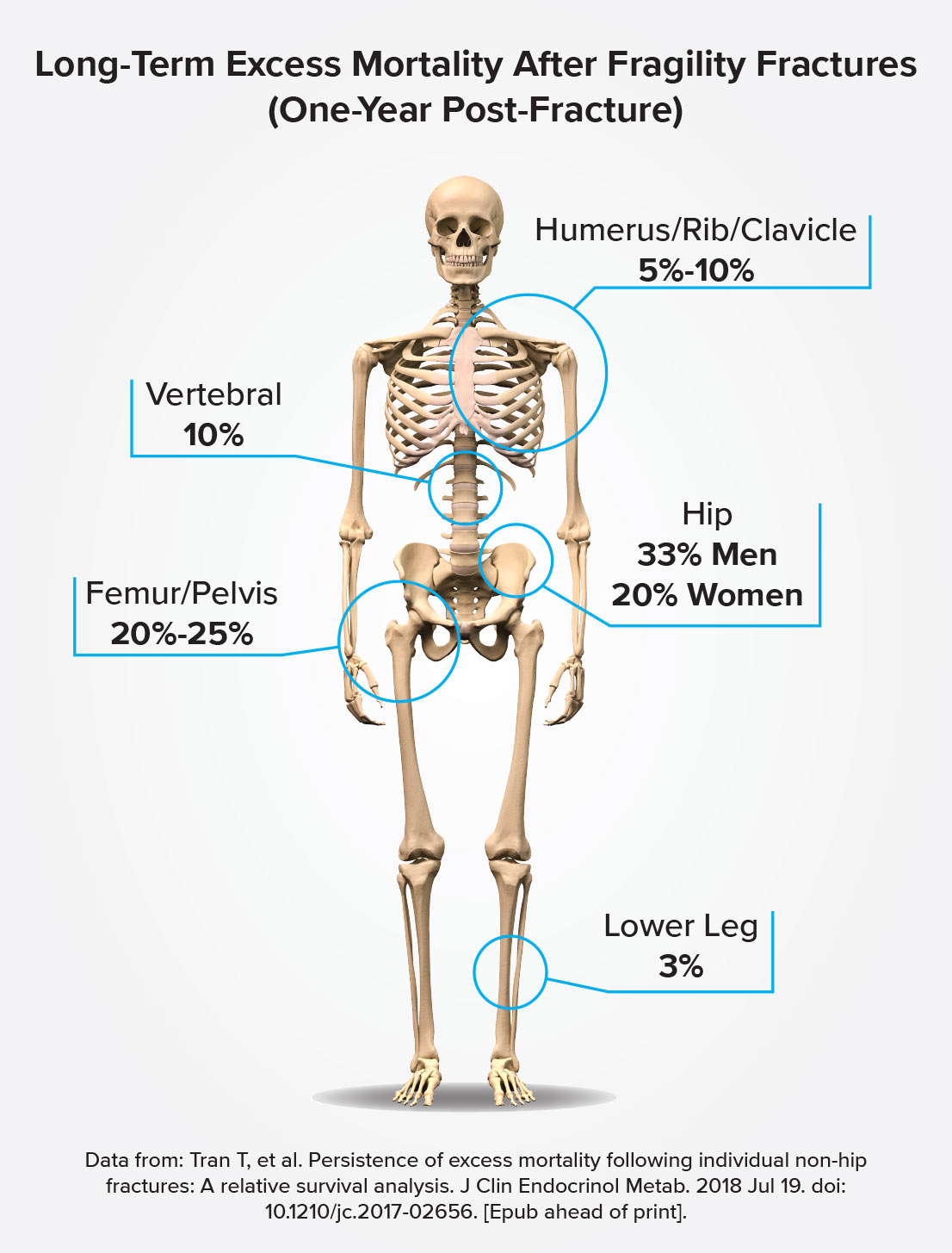
- Nearly 75% of hip fractures occur in women. About 20-25% of hip fractures occur in men. The overall mortality is about 20% in the first 12 months after hip fracture and is higher in men than women
- It is estimated that the residual lifetime risk of experiencing an osteoporotic fracture in men over the age of 50 is up to 27%, higher than the lifetime risk of developing prostate cancer of 11.3%
- Physical inactivity and a sedentary lifestyle as well as impaired neuromuscular function (e.g., reduced muscle strength, impaired gait and balance) are risk factors for developing fragility fractures
- Falls contribute to fractures — 90% of hip fractures result from falls. A third of people over age 65 fall annually, with approximately 10-15% of falls in the elderly resulting in fracture, and almost 60% of those who fell the previous year will fall again
- A prior fracture is associated with an 86% increased risk of any fracture
- Nearly 75% of hip fractures occur among patients 65 years old or over
- Worldwide, 1 in 3 women over age 50 will experience osteoporotic fractures, as will 1 in 5 men aged over 50
- By 2050, the worldwide incidence of hip fracture in men is projected to increase by 310% and 240% in women, compared to rates in 1990
- Although low BMD confers increased risk for fracture, most fractures occur in postmenopausal women and elderly men at moderate risk
- Evidence suggests that many women who sustain a fragility fracture are not appropriately diagnosed and treated for probable osteoporosis
- An International Osteoporosis Foundation survey, conducted in 11 countries, showed denial of personal risk by postmenopausal women, lack of dialogue about osteoporosis with their doctor, and restricted access to diagnosis and treatment before the first fracture result in underdiagnosis and undertreatment of the disease
- International Osteoporosis Foundation. Facts and Statistics. Available at https://www.iofbonehealth.org/facts-statistics.
- Jennings A, et al. A Mediterranean-like dietary pattern with vitamin D3 (10 µg/d) supplements reduced the rate of bone loss in older Europeans with osteoporosis at baseline: results of a 1-y randomized controlled trial. Am J Clin Nutr. 2018:108:1-8.
- Hinton PS, et al. Soy protein improves tibial whole-bone and tissue-level biomechanical properties in ovariectomized and ovary-intact, low-fit female rats. Bone Reports. 2018;8:244-254.