








 By Mathias B. Forrester, BS
Background: In 2023, 97% of United States (US) adults reported that they owned a cell phone. Use of cell phones while driving may result in crashes and injuries. This study characterized cell phone-related lower extremity injuries while in or on a motor vehicle that were treated at US hospital emergency departments (EDs).
Methods: An analysis was performed of cell phone-related lower extremity injuries while in or on a motor vehicle reported to the National Electronic Injury Surveillance System during 2000-2023. The NEISS collects reports of product- and activity-related injuries treated at a representative sample of 100 US hospital EDs. These records can be used to calculate national injury estimates.
Results: An estimated 3,793 cell phone-related lower extremity injuries while in or on a motor vehicle were treated at US hospital EDs during 2000-2023, representing 8.8% of the estimated 43,204 such injuries affecting all body parts. The estimated number of lower extremity injuries increased from 148 during 2000-2003 to 1,601 during 2020-2023. The type of motor vehicle was 82.4% automobile, truck, or unspecified motor vehicle; 12.0% motorcycle, moped, or dirt bike; and 5.7% other. The most severe diagnosis was 38.5% fracture, 18.8% contusion or abrasion, 12.0% laceration, 5.9% strain or sprain, and 24.9% other or not stated. The patient disposition was 72.6% treated or evaluated and released from the ED; 22.8% admitted, transferred to another hospital, or held for observation, and 4.6% left without being seen or against medical advice.
Conclusion: The estimated number of cell phone-related lower extremity injuries while in or on a motor vehicle increased by over an order of magnitude during the study period. Although most of the injuries involved an automobile, truck, or unspecified motor vehicle, other types of vehicles also were involved. While most patients were treated or evaluated and released from the ED, almost one-quarter required further hospital intervention. The results of this study may be useful for creating educational activities to attempt to reduce the occurrence of these injuries.
In 2023, 97% of United States (US) adults reported that they owned a cell (mobile) phone.1 With millions of people using cell phones, injuries related to the devices are likely to occur. One well-recognized cell phone-related mechanism of injury involves motor vehicle crashes where the driver is using or otherwise distracted by a cell phone.2,3 Cell phone use while driving is considered such a problem that many states have enacted laws restricting cell phone and other electronic device use while driving.4
The objective of the study was to describe cell phone-related lower extremity injuries while in or on a motor vehicle managed at US hospital emergency departments (EDs).
Methods
 This retrospective epidemiologic study used data downloaded from the National Electronic Injury Surveillance System (NEISS) website at https://www.cpsc.gov/cgibin/NEISSQuery/home.aspx. The NEISS database has previously been described in detail in Lower Extremity Review.5 In brief, operated by the US Consumer Product Safety Commission (CPSC), NEISS collects data on consumer product- and activity-related injuries from a probabilistic sample of the EDs of approximately 100 US hospitals. National estimates are calculated from database records according to the sample weight assigned to each case based on the inverse probability of the hospital being selected for the NEISS sample.6,7 The data are publicly available and de-identified, so the study is exempt from institutional review board approval. Previous studies used NEISS data to examine cell phone-related injuries. However, none of these studies focused on injuries while in or on a motor vehicle.8-12
Cases were cell phone-related injuries while in or on a motor vehicle reported to NEISS during 2000-2023. The NEISS database includes 3 numeric fields for coding the product or activity involved in the injury (Product_1, Product_2, Product_3). (Product_3 was added to the NEISS database in 2018 but does not appear to have been used until 2019.)7 Although the NEISS database includes product code 550 (telephones or telephone accessories), this code is not only used for cell phones but also for landline phones, intercoms, and other such devices. Thus, the product code alone cannot be used to identify cell phone-related injuries. For this analysis, all records with code 550 in any of the 3 product code fields or “phone” in the Narrative text field (a text field that briefly summarizes the circumstances of the injury) were identified. Next, the Narrative fields were individually reviewed to determine whether the injury appeared to be related to a cell phone while in or on a motor vehicle. A record was included even if its Narrative field did not explicitly state that the phone was a cell phone because it was assumed that a landline phone, even a cordless phone, would not be used in or on a motor vehicle. A record was also included if the driver was using or distracted by the cell phone but it was a passenger who was injured or a passenger was using or distracted by the cell phone and injured; no effort was made to distinguish between whether the driver or passenger was the person using or distracted by the cell phone because the Narrative was not always clear who was using or distracted by the cell phone. Furthermore, records involving cell phone-related items, such as cell phone chargers, were included; from here on the term cell phone refers to both cell phones and cell phone-related items. Records where the patient was not in or on the same motor vehicle as the cell phone (eg, the patient was walking down the street and was hit by a car whose driver was texting on their cell phone) were excluded.
The variables examined were the affected body part, type of motor vehicle, year and month of treatment, patient age and gender, location of the incident, most severe diagnosis, and patient disposition. The type of motor vehicle was identified from the record Narrative. Some vehicles may or may not have a motor (eg, bicycle, scooter, wheelchair). For such vehicles, if the record did not specifically indicate that the vehicle had a motor, it was excluded from the analysis.
 A person involved in a motor vehicle crash may experience multiple injuries to multiple body parts. The NEISS database contains multiple fields for documenting the diagnosis and/or affected body part; however, only 2 fields were used consistently throughout the study period: Diagnosis (a numeric field for coding the most severe diagnosis) and Body_Part (a numeric field for coding the body part associated with the most severe diagnosis). (All diagnoses are supposed to be documented in the Narrative; however, this is not performed in a consistent manner.) For these reasons, only the Diagnosis and Body_Part numeric fields were used to analyze the diagnosis and affected body part.
Analyses were performed using Microsoft 365 Access and Excel (Microsoft Corporation, Redmond, Washington, US). For the selected variables, the distribution of the national injury estimates was determined for cell phone-related injuries while in or on a motor vehicle affecting any body part (total injuries) and the subset of lower extremity injuries (based on the Body_Part field). Comparisons were made between the 2 groups for the studied variables by calculating the lower extremity rate (lower extremity injury estimate/total injury estimate x 100, presented as a percentage). National injury estimates were calculated by summing the values in the Weight numeric field in the publicly available NEISS database. The CPSC considers an estimate unstable and potentially unreliable when the estimate is <1,200.6
Results
 There were an estimated 3,793 cell phone-related injuries while in or on a motor vehicle treated at US hospital EDs during 2000-2023 where the most severe diagnosis affected the lower extremity, representing 8.8% of the estimated 43,204 such injuries affecting all body parts. The distribution of lower extremity injuries by body part was 1,522 (40.1%) knee, 728 (19.2%) upper leg, 669 (17.6%) lower leg, 577 (15.2%) ankle, 169 (4.5%) foot, and 129 (3.4%) toe. Of the lower extremity injuries, an estimated 3,763 (99.2%) involved a cell phone, 15 (0.4%) involved a cell phone charger, and 16 (0.4%) involved a cell phone holder. Of the total injuries, an estimated 42,917 (99.3%) involved a cell phone, 249 (0.6%) involved a cell phone charger, and 38 (0.1%) involved a cell phone holder.
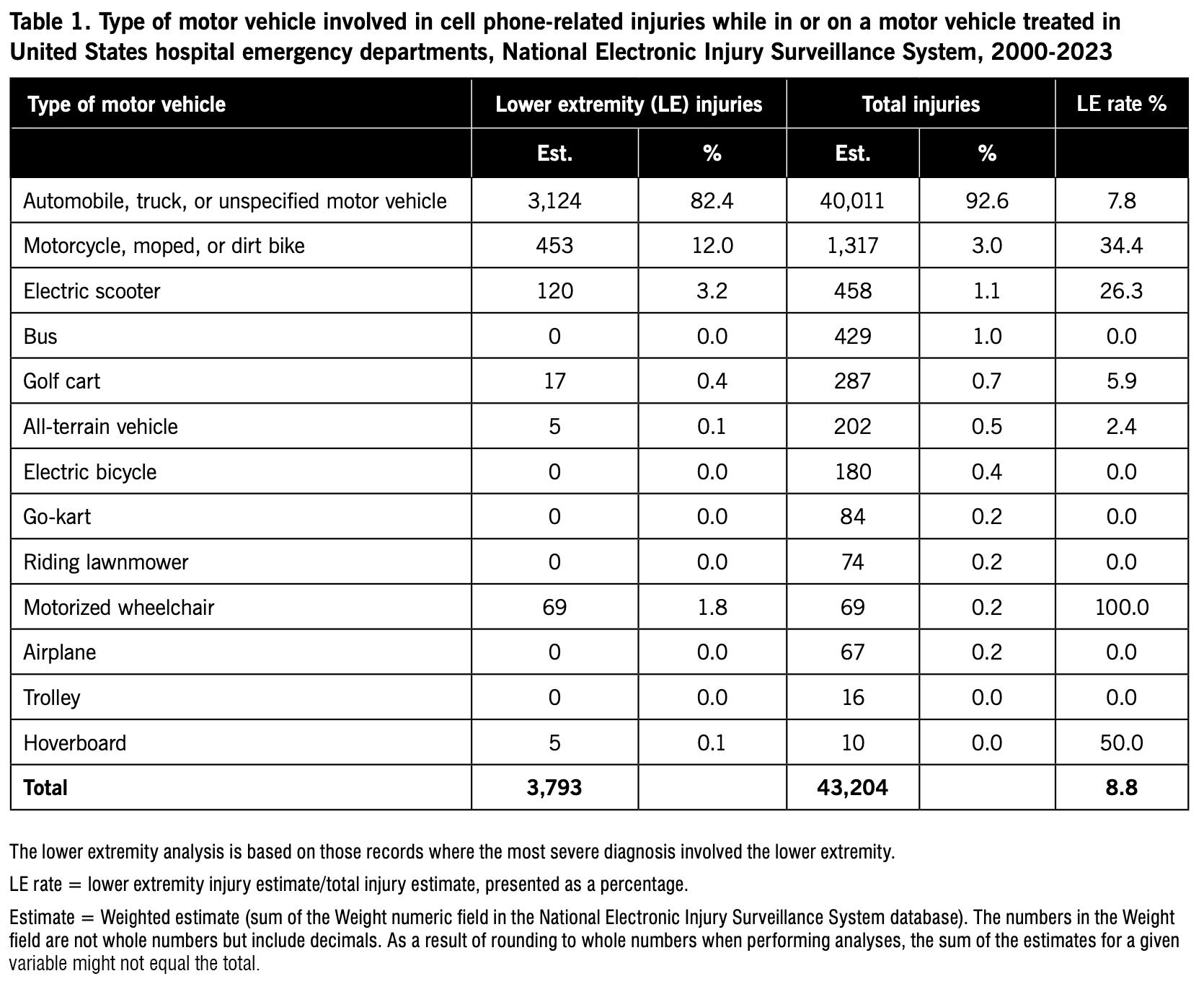
The most frequently reported motor vehicle was an automobile, truck, or unspecified motor vehicle followed by a motorcycle, moped, or dirt bike and electric scooter (Table 1). The lower extremity rate was higher for motorcycle, moped, or dirt bike and electric scooter than for automobile, truck, or unspecified motor vehicle.
The Consumer Product Safety Commission considers an estimate unstable and potentially unreliable when the estimate is <1,200.
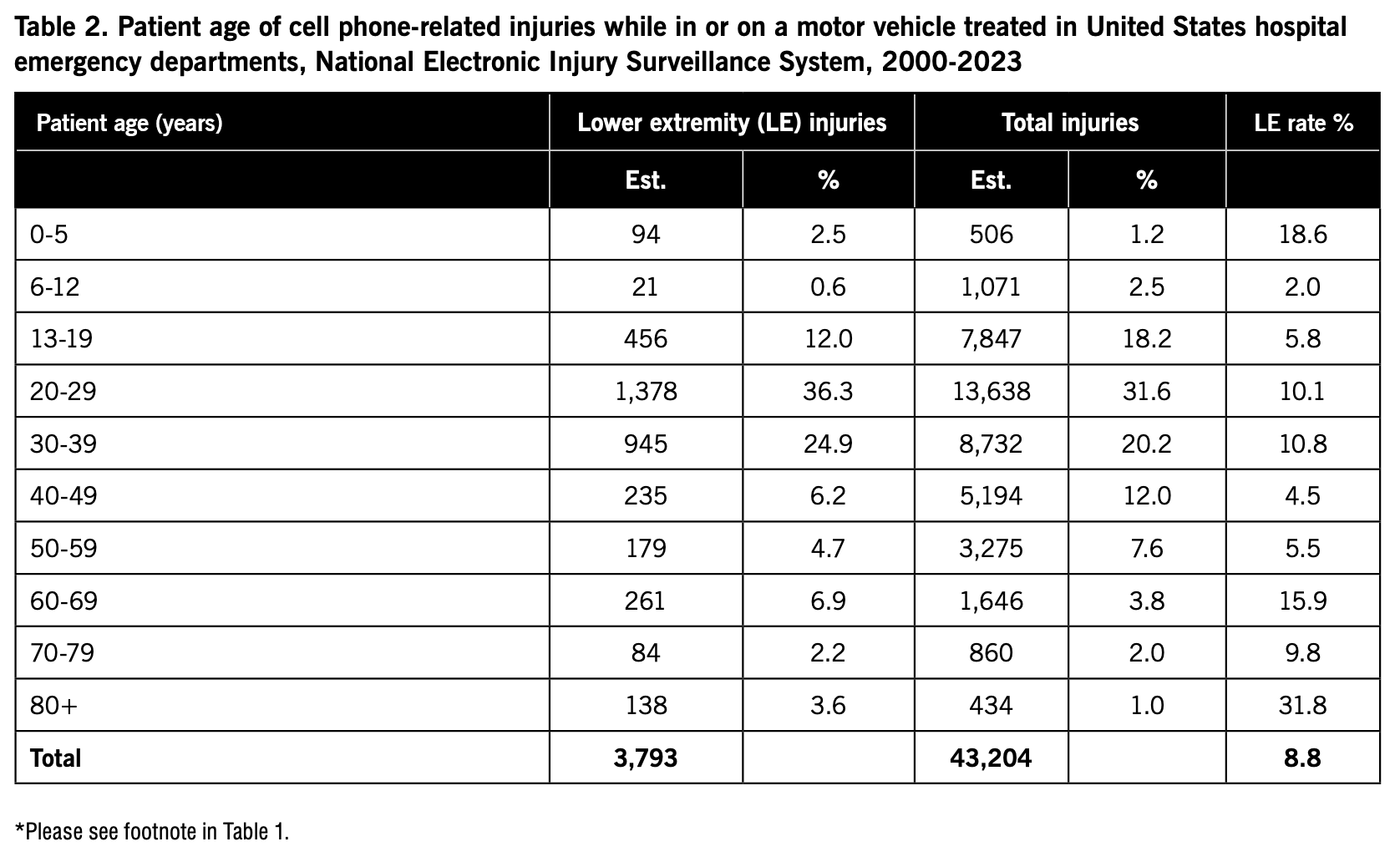
When the patient age of cell phone-related injuries while in or on a motor vehicle was examined (Table 2), patients age 13-39 years accounted for roughly 70% of the injuries. Of patients with lower extremity injuries 2,122 (56.0%) were male; of patients with all injuries, 21,485 (49.7%) were male.
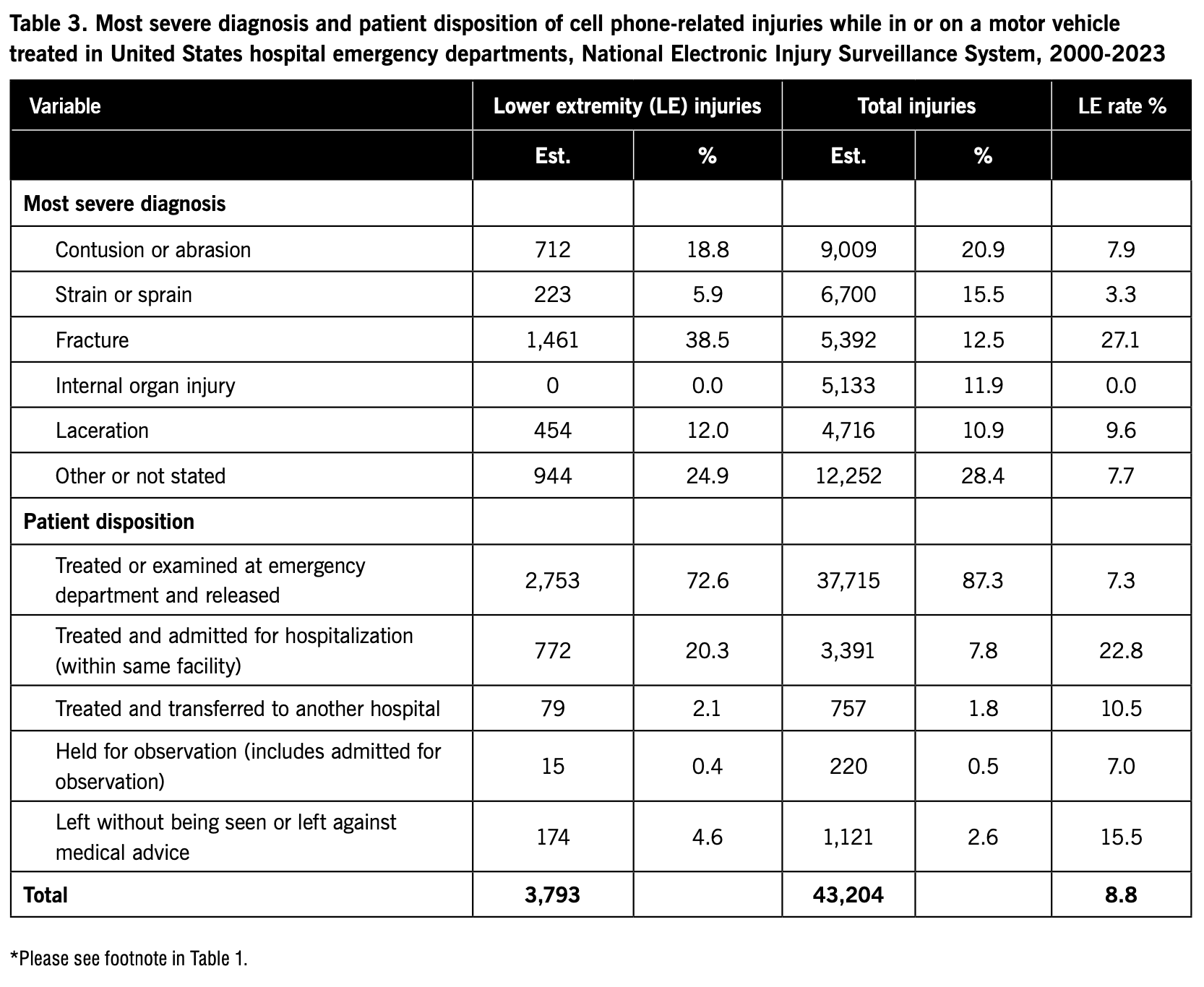
Table 3 shows the distribution of cell phone-related injuries while in or on a motor vehicle by most severe diagnosis and patient disposition. For lower extremity injuries, the most frequently reported diagnosis was fracture followed by contusion or abrasion and laceration. For total injuries, the most frequently reported diagnosis was contusion or abrasion followed by strain or sprain and fracture. For both lower extremity injuries and total injuries, most patients were treated or evaluated and released from the ED, although this proportion was greater for total injuries than for lower extremity injuries. In addition, a greater proportion of patients with lower extremity injuries were treated and admitted for hospitalization in the same hospital.
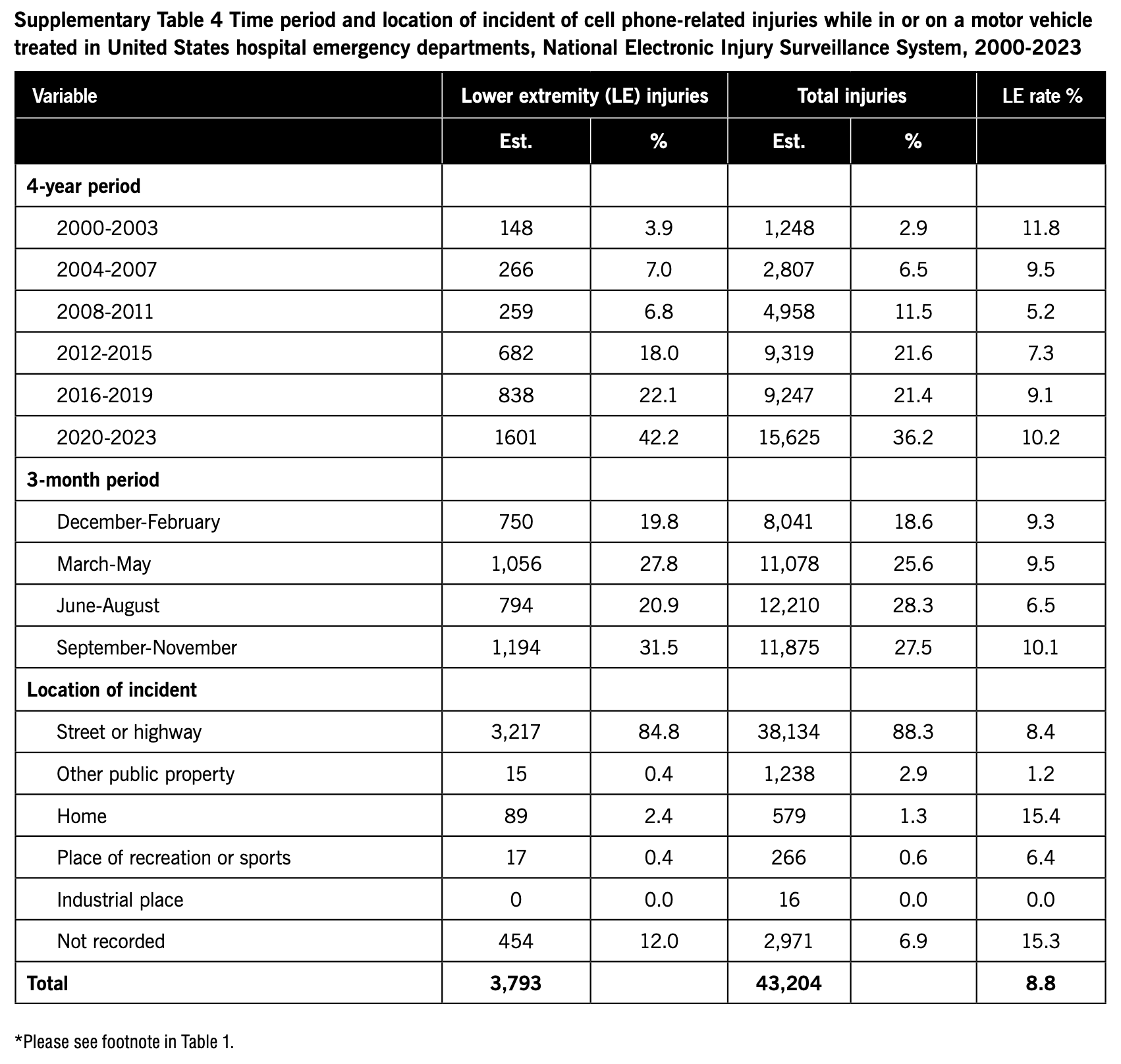
The distribution of cell phone-related injuries while in or on a motor vehicle by time period and location of the incident can be found in Supplementary Table 4 online. The estimated number of both lower extremity injuries and total injuries increased over the 24-year period of the study with approximately 40% of the estimated injuries occurring during the last 4 years of the study period. The lowest proportion of injuries were treated during December-February. Most of the injuries occurred on a street or highway.

Discussion
 This study examined cell phone-related injuries while in or on a motor vehicle, focusing on lower extremity injuries. Although the hazards of cell phone use while driving are well-recognized,2,3 and many states have enacted legislation to restrict the use of cell phones while driving,4 published data on injuries while in or on a motor vehicle are limited.
For both lower extremity injuries and total injuries, most of the injuries involved an automobile, truck, or unspecified motor vehicle followed by a motorcycle, moped, or dirt bike and electric scooter. While motorcycles, mopeds, or dirt bikes and electric scooters accounted for a small proportion of the injuries, their lower extremity rates were 3-4 times higher than for automobiles, trucks, or unspecified motor vehicles. The lower parts of the bodies of riders of motorcycles, mopeds, dirt bikes, and electric scooters are more exposed, and thus may be at greater risk of injury, than of riders of automobiles and trucks.
The estimated number of cell phone-related injuries while in or on a motor vehicle increased during the 24-year study period, with the estimated number of injuries during 2020-2023 being more than 10 times that during 2000-2003. This increase has continued into recent years, with the estimated number of injuries during 2020-2023 being 70-90% higher than during 2016-2019. This has occurred despite numerous states passing legislation restricting, but not completely banning, cell phone use while driving.4 It may take time for the full impact of these legislative efforts to take effect. Furthermore, several other factors should be taken into consideration when evaluating the increase in the estimated number of cell phone-related injuries while in or on a motor vehicle. The increase may partly be due to the hospital staff providing records to NEISS increasingly documenting in the Narrative field that the injury involved a cell phone while the patient was in or on a motor vehicle. In addition, the study included injuries where either the driver or a passenger was using or distracted by a cell phone. Legislative restrictions on cell phone use while driving will not likely restrict cell phone use by passengers.
The lowest proportion of cell phone-related injuries while in or on a motor vehicle were treated during December-February. These are the coldest months of the year, and people may be less likely to use motor vehicles or less likely to be injured in motor vehicle crashes during these months. When data on 25,608,360 estimated injury only motor vehicle crashes during 2008-2022 were obtained from the National Highway Traffic Safety Administration of the US Department of Transportation Fatality and Injury Reporting System Tool (FIRST) at https://cdan.dot.gov/query, 23.9% occurred during December-February, 24.8% during March-May, 25.4% during June-August, and 25.9% during September-November.
For both lower extremity injuries and total injuries, roughly 70% of the patients were age 13-39 years. This may reflect the fact that individuals age 13-39 years are more likely to use a cell phone while in motor vehicles.
For total injuries, the estimated number of cell phone-related injuries while in or on a motor vehicle were similar for males and females. In contrast, for lower extremity injuries, 56% of the patients were male. It may be that males are slightly more likely than females to be involved in situations that result in lower extremity injuries. For example, automobiles, trucks, and unspecified motor vehicles accounted for 82% of lower extremity injuries but 93% of total injuries, and motorcycles, mopeds, and dirt bikes accounted for 12% of lower extremity injuries but only 3% of total injuries. Among the total injuries involving automobiles, trucks, and unspecified motor vehicles, 48% of the patients were male, while among the total injuries involving motorcycles, mopeds, and dirt bikes, 82% of the patients were male.
Lower extremity and total injuries differed by type of diagnosis. For lower extremity injuries, the most frequently reported diagnosis was fracture followed by contusion or abrasion and laceration. For total injuries, the most frequently reported diagnosis was contusion or abrasion followed by strain or sprain and fracture. Other parts of the body can experience diagnoses that the lower extremity cannot (eg, concussion, internal organ injury). Moreover, the circumstances that lead to lower extremity injuries may differ from those that lead to injuries of other body parts, and consequently differences in the types of diagnoses.
When compared to patients with total injuries, patients with lower extremity injuries were less likely to be treated or evaluated and released from the ED (87% vs 73%, respectively) and more likely to be admitted, transferred to another hospital, or held for observation (10% vs 23%, respectively). This suggests that lower extremity injuries may be more serious or require greater hospital intervention than injuries involving the rest of the body.
This study has limitations. The NEISS database does not have any fields or codes to easily identify cell phone-related injuries. For this study, all records where the product code for telephones or telephone accessories was used in any of the product code fields or “phone” was used in the Narrative field were identified. Then the Narrative for each record was reviewed to determine whether the injury was related to a phone while in or on a motor vehicle. Any records that did not include the product code or “phone” in the Narrative would not have been included in the study.
The study included records where either the driver or passenger was using or distracted by a cell phone. Whether it was the driver or a passenger who was using or distracted by a cell phone could not easily be distinguished in all records and thus was not examined.
A person involved in a motor vehicle crash may experience multiple injuries of multiple body parts. However, this study was limited to the data fields that coded the single most severe diagnosis and affected body part because these were the only fields that consistently documented diagnosis and affected body part throughout the entire study period. Thus, a higher proportion of patients may have experienced lower extremity injuries.
The selection of records for inclusion in the study was made by a single person. Finally, the study included only patients treated at hospital EDs. Examination of patients treated elsewhere, such as at home, at an independent urgent care, or by a primary care physician, would provide a more complete understanding of injuries that occur while in or on a motor vehicle.
In conclusion, the estimated number of cell phone-related lower extremity injuries while in or on a motor vehicle that were treated at US hospital EDs increased during the 24-year period of the study. Over 70% of the patients were age 13-39 years, and most patients were male. The most frequently reported diagnoses were fracture followed by contusion or abrasion and laceration. Although most patients were treated or evaluated and released from the ED, almost one-quarter required further hospital intervention. The results of this study may be useful for creating educational activities to attempt to reduce the occurrence of these injuries.
Mathias B. Forrester, BS, is an independent researcher in Austin, Texas. Now retired, he has performed public health research for various university and government programs for 38 years.
- Pew Research Center. Mobile fact sheet. January 31, 2024. Available at https://www.pewresearch.org/internet/fact-sheet/mobile/. Accessed September 16, 2024.
- Caird JK, Johnston KA, Willness CR, Asbridge M, Steel P. A meta-analysis of the effects of texting on driving. Accid Anal Prev. 2014;71:311-318.
- Redelmeier DA, Tibshirani RJ. Association between cellular-telephone calls and motor vehicle collisions. N Engl J Med. 1997;336(7):453-458.
- IIHS. Electronic device laws. Available at https://www.iihs.org/topics/distracted-driving/electronic-device-laws. Accessed October 5, 2024.
- Forrester MB. Pickleball-related injuries involving the lower extremity treated in emergency departments. Lower Extremity Review. 2021;13(5):24-30.
- United States Consumer Product Safety Commission. National Electronic Injury Surveillance System (NEISS). Available at https://www.cpsc.gov/Research–Statistics/NEISS-Injury-Data/Explanation-Of-NEISS-Estimates-Obtained-Through-The-CPSC-Website. Accessed March 20, 2023.
- United States Consumer Product Safety Commission. NEISS Coding Manual. January 2021. Available at https://www.cpsc.gov/s3fs-public/January-2021-NT-CPSC-only-NEISS-Coding-Manual.pdf?xa_nMM1kB4SGpuSMOwf0NHkkkIqNcn8F. Accessed Dec. 15, 2024.
- McLaughlin WM, Cravez E, Caruana DL, Wilhelm C, Modrak M, Gardner EC. An epidemiological study of cell phone-related injuries of the hand and wrist reported in United States emergency departments from 2011 to 2020. J Hand Surg Glob Online. 2023;5(2):184-188.
- Zheng H, Giang WCW. Risk perception and distraction engagement with smart devices in different types of walking environments. Accid Anal Prev. 2021;162:106405.
- Guyon PW Jr, Corroon J, Ferran K, Hollenbach K, Nguyen M. Hold the phone! Cell phone-related injuries in children, teens, and young adults are on the rise. Glob Pediatr Health. 2020;7:2333794X20968459.
- Nasar JL, Troyer D. Pedestrian injuries due to mobile phone use in public places. Accid Anal Prev. 2013;57:91-95.
- Smith DC, Schreiber KM, Saltos A, Lichenstein SB, Lichenstein R. Ambulatory cell phone injuries in the United States: an emerging national concern. J Safety Res. 2013;47:19-23.