








By Ajith Soman, Sunil Chandy, Khalid Alkhathami, Baranitharan Ramamoorthy, and Bijad Alqahtani
Backward walking offers many benefits relative to forward walking, not least of which is a decrease in C-reactive protein, body mass index, and blood pressure levels.
 It is a widely accepted fact that obesity is not much amenable to medical treatment. Diet and exercise, systematically undertaken, is the only way to treat obesity, manifested as a high body mass index (BMI). Of the different modes of exercise, walking at a brisk pace is beneficial to the cardiovascular health and helps in maintaining a healthy body weight. Retro walking, or backward walking, performed on a treadmill has been proven to expend energy and improve exercise capacity at a greater extent than forward walking, while also making a higher metabolic demand on the body. The discrepancy in metabolic cost among the 2 types of walking is postulated due to increased stride frequency and decreased stride length, and also owing to the concentric contraction of the quadriceps muscle as opposed to eccentric contraction, resulting in increased energy expenditure after retro walking.
C-reactive protein (CRP), an important inflammatory marker in serum, has been reported to be elevated in persons who are obese, and correlates with insulin resistance and endothelial dysfunction. The increased energy expenditure after retro walking may indirectly have an effect on CRP level and BMI, since inflammatory and obesity markers are linked to exercise capacity and energy expenditure. Thus, the aim of this study was to compare the effect of retro walking with that of forward walking on CRP levels, BMI, and blood pressure (BP), and to understand the influence of independent factors, namely systolic blood pressure (SBP), diastolic blood pressure (DBP), and BMI on CRP in untrained overweight and obese young adults.
Methods
This randomized controlled trial included 106 male subjects age 20–25 years, whose BMI was equal to or above 25 kg/m2, and who were not participating in habitual exercise training. The participants allotted to the retro walking group (n = 53) participated in a backward treadmill training program under supervision for 4 days a week for 12 weeks. Each session included an exercise period, which started with duration of 15 minutes, and progressed to 30 minutes over the 12-week training period. During the exercise period, the participants were made to walk backward at a speed of 4 km/h (or 67 meters/min) with a 10% gradient. The participants in the forward walking training group (n = 53) underwent a supervised treadmill training program with duration, intensity, and frequency similar to that of the retro walking treadmill training program.
CRP, BMI, and BP levels were measured before and after the training sessions. Blood samples were obtained after an overnight 12-hour fast and immediately before commencement of the treadmill exercise. The post-exercise blood samples were taken 24–72 hours following the last exercise session. Body height, body weight, BMI, hip circumference, waist circumference, waist–height ratio, and waist–hip ratio were measured using standardized methods. Four BP readings were taken with the participant seated, the arm supported on a cushion at chest level, resting a minute between each measurement. The mean of the last 3 readings was considered the final level of BP. Comparison of the measured values before and after intervention and between the groups was done and the influence of BMI and BP on CRP levels was determined.
Results
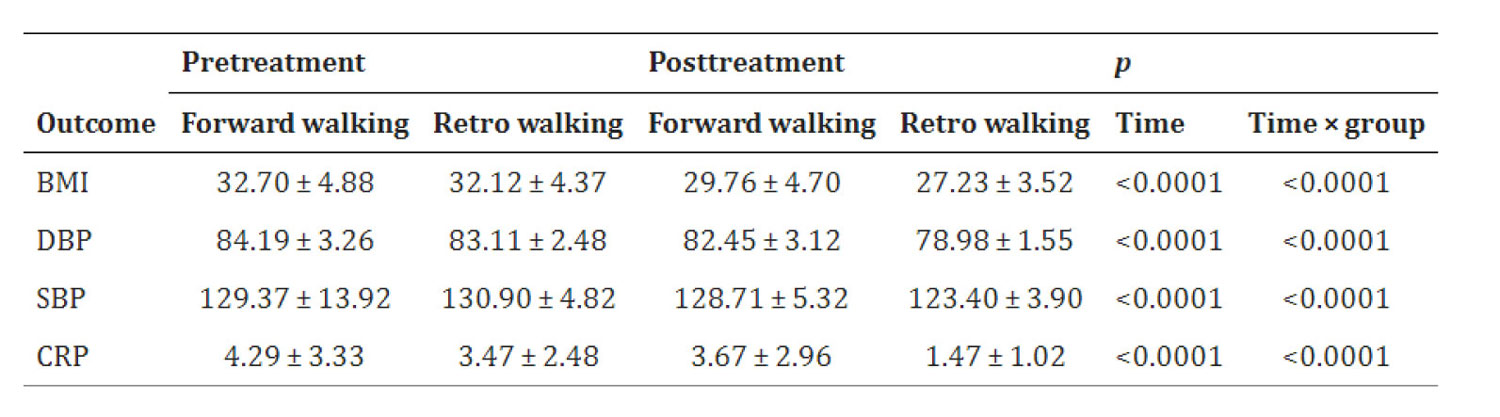
Table 1: Between-group analysis of outcomes in forward and retro walking.
Abbreviations: BMI, body mass index; CRP, C reactive protein; DBP, diastolic blood pressure; SBP, systolic blood pressure.
Both groups recorded a significant decrease (P < 0.001) in CRP, BMI, and BP levels postintervention. The participants who underwent retro walking training showed a significantly (P < 0.001) higher decrease in all the outcomes as compared with the forward walking group (Table 1). CRP levels were seen to be influenced by BMI and DBP.
Multiple regression analysis revealed that BMI (β: 0.432, P < 0.0001, 95% CI: 0.156–0.337) and DBP (β: 0.317, P < 0.0001, 95% CI: 0.078–0.441) were the significant predictors of CRP.
The results of mediation effect of DBP on BMI and CRP have been descripted in Figure 1. The total effect of BMI on CRP was (0.366, P < 0.0001, 95% CI: 0.281– 0.451) with a direct effect of 0.259, P < 0.0001, 95% CI: 0.173–0.346 and an indirect effect of 0.107, P < 0.0001, 95% CI; 0.060–0.162.
Discussion
The primary aim of this study was to compare the effects of retro walking and forward walking training on blood CRP level and BMI of untrained young men. CRP, an important inflammatory marker in serum, has been reported to be elevated in persons who are obese, and correlates with insulin resistance and endothelial dysfunction. Obesity or an increase of fatty tissue causes chronic inflammation in the body, which in turn causes an increase in cytokine synthesis. Furthermore, CRP is most consistently associated with atherogenesis when compared with other inflammatory markers, and hence poses a greater cardiovascular risk. Many studies have demonstrated the interrelationship of CRP, BMI, and BP, though this relationship has not been conclusively proven.
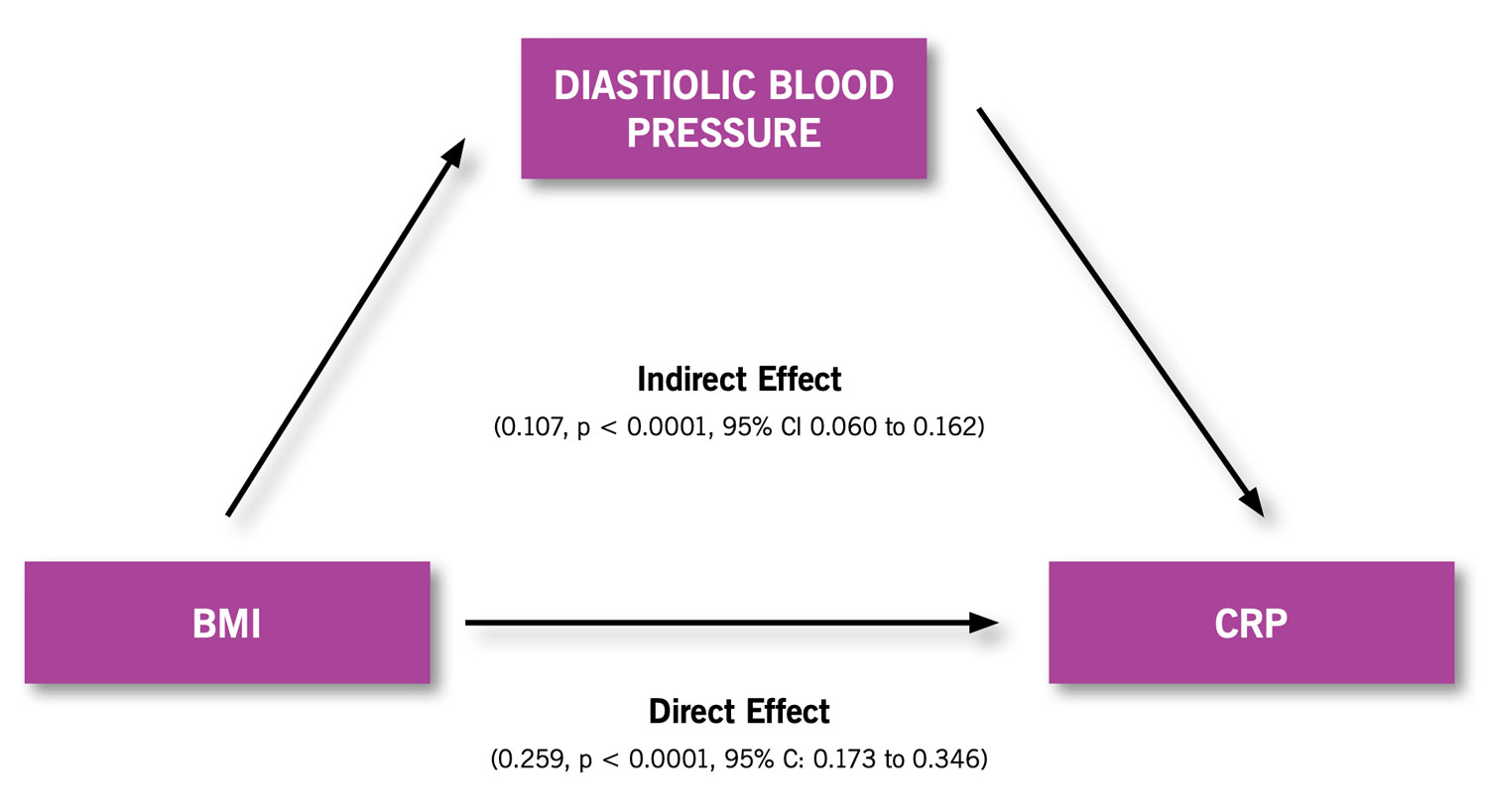
Figure 1: Mediation effect. Mediating role of diastolic blood pressure in the relationship between body mass index and C reactive protein.
The results showed that CRP levels and BMI decreased significantly in both groups following treatment. In addition, both SBP and DBP were also seen to be reduced after normal walking and retro walking. The effect of retro walking in reducing the level of CRP, BMI, DBP, and SBP over the period of intervention was greater than that of forward walking. The variables SBP, DBP, and BMI were seen to influence CRP levels.
At a similar level of intensity, backward walking places higher demands on metabolic sensorimotor, cardiovascular, and perceptual responses than forward walking. Also, backward walking poses a considerable challenge to standing dynamic balance, thus recruiting more neurons in the process. Hyun-Gyu and co-workers found that backward walking stimulated the lower limb muscles and resulted in higher energy consumption in the lower limbs. They also stated that backward walking stimulates the quadriceps muscles and other muscles, which subsequently move the knee joint in a considerably more balanced manner as compared with forward walking. Owing to the increased challenge to the different systems of the body, retro walking increases energy expenditure relative to forward walking. This increased energy expenditure causes a decrease in the level of adiposity in the body, thus leading to decreased body weight and consequently decreased BMI, as proven in the results of the present study. Similarly, several researchers have found that retro walking produces more energy expenditure than forward walking at similar speeds.
Exercise and physical activity have been known to reduce levels of CRP by increasing levels of adiponectin—a relatively novel anti-inflammatory adipocytokine known to improve insulin sensitivity. Leptin is yet another polypeptide, which is closely associated with CRP levels and is decreased with physical activity and exercise. Exercise, in general, can decrease levels of adipose tissue and leptin levels and increase adiponectin levels, ultimately leading to decreased CRP levels.
Physical exercise has been seen to have an influence on the immune system in that it reduces the number of mononuclear cells in blood, which in turn produce proinflammatory cytokines like IL-1 (Interleukin-1), IL-6 (Interleukin-6), IL-8 (Interleukin-8), and CRP. Moderate exercise done regularly can decrease CRP and IL-6 levels in obese persons. Exercise has an anti-inflammatory effect, which can reduce systemic inflammation and CRP levels. In agreement to this, the present study also saw a decrease in CRP levels following both modes of walking.
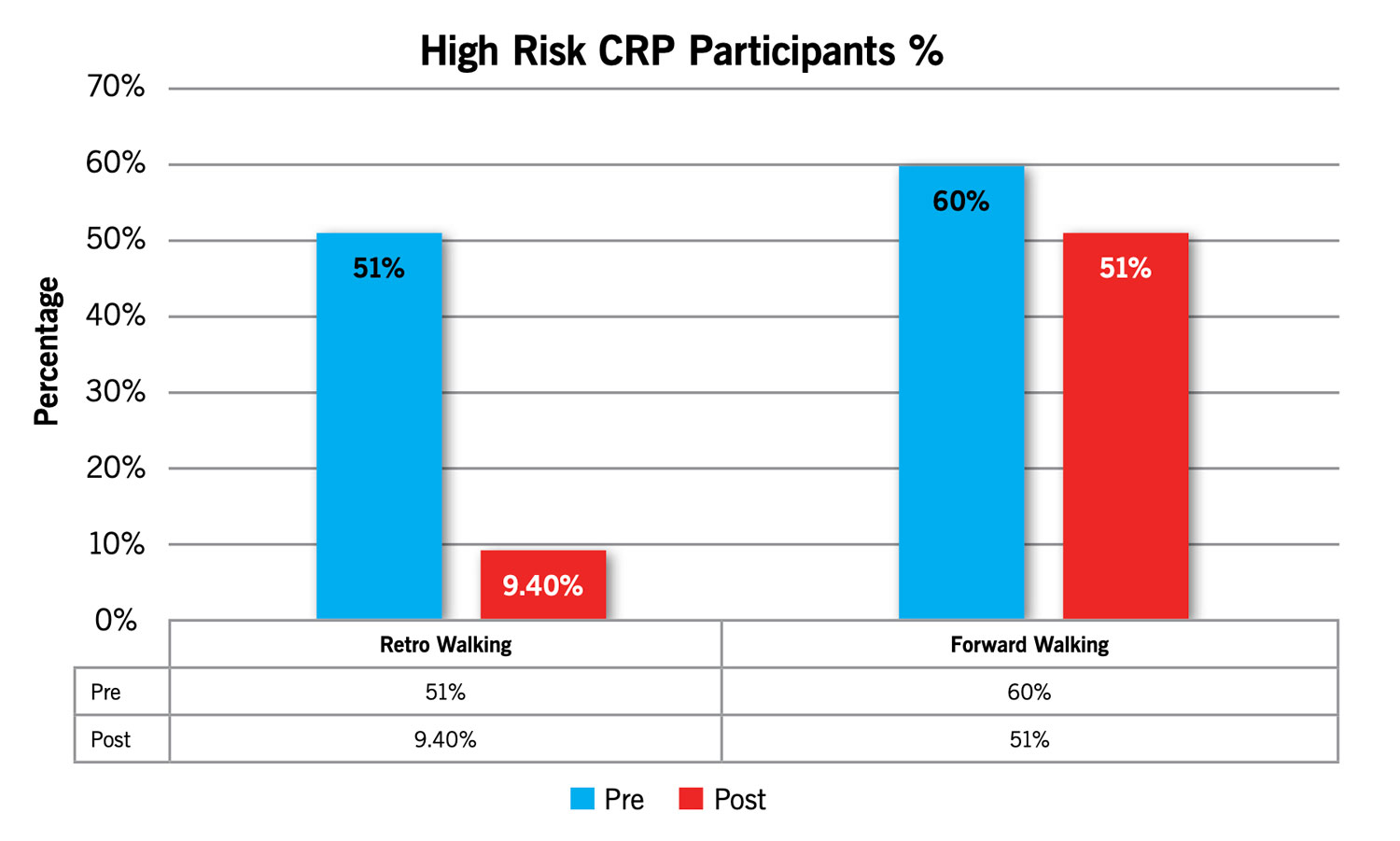
Figure 2: Pre- and post-exercise high risk (CRP > 3 mg/L) CRP values. BMI, body mass index; CRP, C reactive protein.
As an exercise mode that places more demand on the cardiovascular and metabolic system than regular walking, it could be expected that retro walking would have a similar effect, but of more magnitude, on CRP levels. The present study is the first, to the knowledge of the study authors, to evaluate the effect of a backward walking program on an inflammatory marker and cardiovascular risk factor such as CRP in young obese and pre-obese individuals. Terblanche et al. found that a backward walking program can increase levels of cardiovascular fitness and produce changes in body composition. Similarly, a meta-analysis demonstrated that physical training can be correlated to reduced CRP levels regardless of age or gender, and that greater improvements in CRP levels could be seen additionally when the BMI is reduced. In contrast, Mouridsen et al. noted that there was a spike in high-sensitivity CRP as an immediate response to exercise, however, the increase was moderate and not independently associated with coronary artery disease.
The multiple linear regression analysis revealed that BMI and DBP were the significant predictors of CRP. Studies have demonstrated CRP to be associated with obesity, increased waist circumference, and SBP; these parameters can be used for identification and intervention in children and adolescents with high risk of atherosclerosis. An expanding body of evidence indicates that inflammation has a major role to play in the development of high BP; elevated levels of CRP have been shown to be associated with the incidence of hypertension in middle-aged adults. In the present study, most of those who had stage 1 hypertension were in the high-risk CRP category (CRP > 3 mg/L), and conversely, none of those with high-risk CRP were with normal BP (Figure 2). This would demonstrate the importance of CRP as a predictor of cardiovascular risk factors, including hypertension and ischemic heart disease. The study of factors that can modify CRP levels in the body would play an important role in prevention and management of cardiovascular risk factors.
In the between-groups comparison, there was a significant difference in the outcomes between the forward-walking and retro-walking groups. The present study adds to the existing body of literature to provide evidence about the benefits of retro walking by documenting a reduction in CRP, which is not only an important inflammatory marker, but also a cardiovascular risk factor. Retro walking also places less stress on the weight bearing joints of the lower limb and thus reduces the probability of injury during exercise in people who are overweight or obese, and more energy can be expended in a shorter period of time, which makes the exercise more time efficient. It can be surmised that retro walking is a viable replacement to forward walking in reducing cardiovascular risk factors.
Conclusions
The present study demonstrates that both retro walking and forward walking can help alleviate CRP level and obesity. However, the retro walking program has added benefits over a forward walking program of similar intensity in modifying these outcomes. BMI and DBP have the potential to influence CRP levels in the blood. These factors can be considered while designing an exercise program to modify cardiovascular risk factors in young individuals. Considering the advantages and practicability of use, retro walking can be a valuable addition to any exercise program which aims at addressing obesity and cardiovascular risk factors.
Authors Ajith Soman, Khalid Alkhathami, Baranitharan Ramamoorthy, and Bijad Alqahtani practice in the Department of Health Rehabilitation; Sunil Chandy practices in the Department of Clinical Lab Science. All are in the College of Applied Medical Sciences at Shaqra University in Saudi Arabia.

This article has been excerpted from “Retro walking treadmill training reduces C—reactive protein levels in overweight and obese young adults: A randomized comparative study,” by the same authors. Health Sci Rep. 2023 Apr; 6(4): e1169.Published online 2023 Mar 30. doi: 10.1002/hsr2.1169. Editing has occurred, including the renumbering or removal of tables and figures, and references have been removed for brevity. Use is per CC Attribution 4.0 License.