







 By Mathias B. Forrester, BS
Background: Rodeo is an extreme sport that has higher injury rates than most other sports. This study described rodeo-related lower extremity injuries treated at United States (US) emergency departments (EDs).
Methods: An analysis was performed of rodeo-related lower extremity injuries using data from the National Electronic Injury Surveillance System of the US Consumer Product Safety Commission during 2000-2022. National injury estimates were calculated for selected variables.
Results: An estimated 10,831 rodeo-related lower extremity injuries were treated at US hospital EDs during 2000-2022, representing 21.3% of the 50,879 total estimated rodeo-related injuries. The affected body parts were 31.2% knee, 25.9% lower leg (not including knee or ankle), 23.1% ankle, 9.3% upper leg, 8.5% foot, and 2.0% toe. The most common types of injuries were contusion or abrasion (32.9%), fracture (26.6%), and strain or sprain (24.1%). The most common mechanisms of injury to the lower extremity were 33.2% stepped on by an animal, 22.5% fell off or thrown by an animal, and 14.3% contact with a structure. The patient age distribution was 8.2% 0-12 years, 43.7% 13-19 years, 25.7% 20-29 years, 15.5% 30-39 years, and 6.9% 40 years and older. Patients were 83.2% male. The patient was treated or examined at the ED and then released in 90.9% of the estimated injuries.
Conclusions: The most common types of rodeo-related lower extremity injury were contusion or abrasion followed by fracture and strain or sprain. Rodeo-related lower extremity injuries occurred because of a variety of mechanisms, the most common being stepped on by an animal and fell off or thrown by an animal. The highest proportion of patients were adolescents, and most patients were male. The majority of patients were treated or examined in the ED and released.
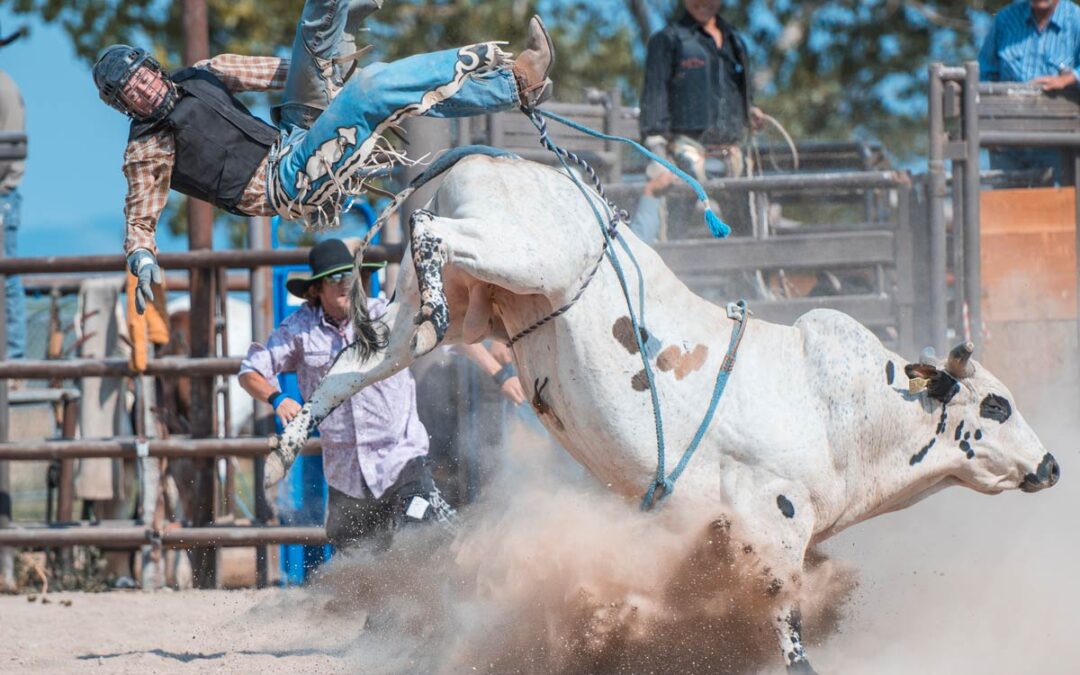
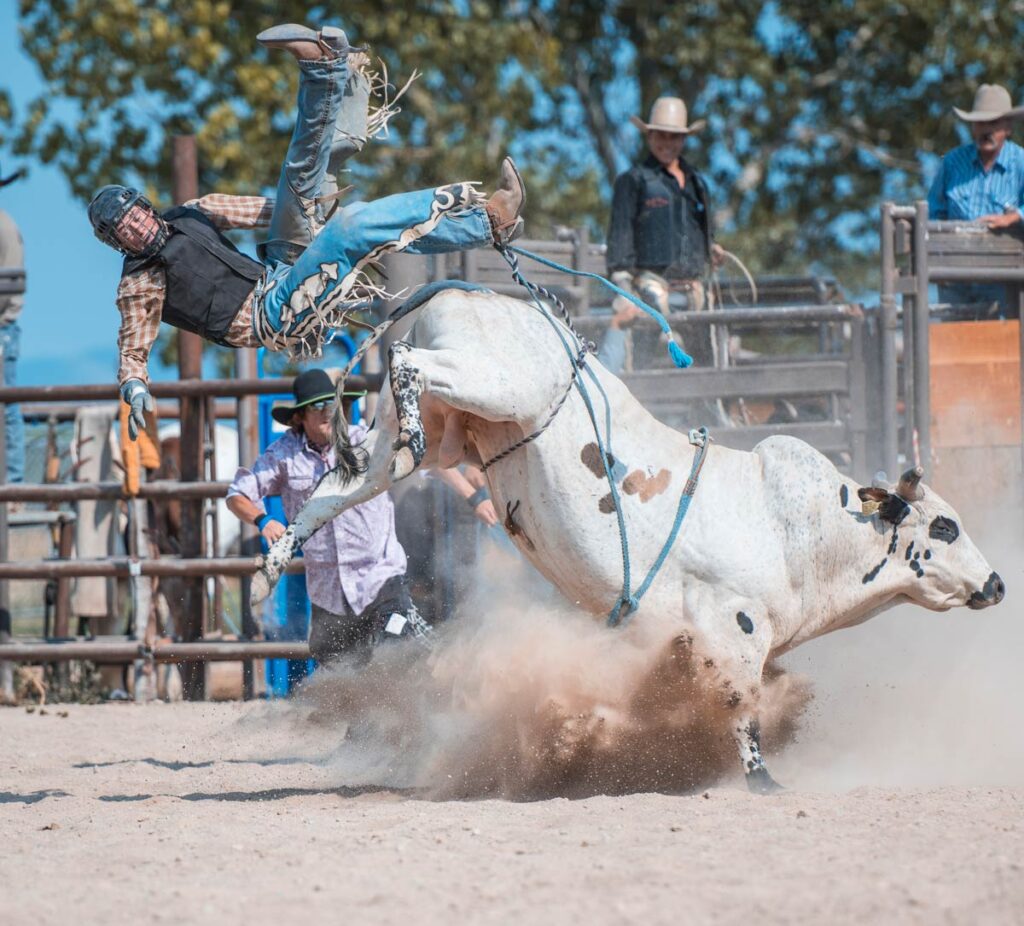
 Rodeo is an extreme sport. It involves powerful forces created by large and often uncooperative or unpredictable animals, including bulls and horses.1 The Professional Rodeo Cowboys Association (PRCA) sanctions approximately 650 rodeos in about 38 states in the United States (US) and multiple Canadian provinces each year; other rodeos operate independently.2 Rodeos involve 2 types of event categories: (1) rough stock events include bull (steer), saddle bronc, and bareback riding; and (2) timed events include team roping, tie-down roping, steer wrestling, and barrel racing.1
With reports of injury densities of 14.7-16.6 injuries per 1,000 competitive exposures among all events,3,4 rodeos have higher injury rates than most other sports.5 Rodeo events differ in risk and mechanisms of injury. Injuries most often result from impact with the ground after falling from or being bucked off the animal or impact with the animal itself, such as being stepped on, kicked, or hit by the animal. Injuries also may occur by impact with the ground when dismounting, being caught in the gear, and contact with rodeo infrastructure (e.g., gate, chute).3,6-11
Tracking injuries among rodeo participants is difficult because the participants often travel and compete independently and usually do not have the equivalent of a coach as in traditional sports.9 The objective of this study was to describe rodeo-related lower extremity injuries managed at US hospital emergency departments (EDs).
Methods
This study used data from the National Electronic Injury Surveillance System (NEISS) available at https://www.cpsc.gov/cgibin/NEISSQuery/home.aspx. Operated by the US Consumer Product Safety Commission (CPSC), the NEISS collects data on consumer product-related injuries from the EDs of a stratified random sample of 100 hospitals from the more than 5,000 hospitals in the US. The random sample is stratified by hospital size, geographic location, and hospital type (general and pediatric hospitals). Professional NEISS coders view the medical charts at participating hospitals and, for patients with injuries that meet NEISS inclusion criteria, collect and code information such as treatment date; patient age, sex, and race; injury diagnosis and body part injured; discharge disposition; consumer product(s) involved in the injury; type of location where the incident occurred; and a brief narrative describing the incident.12,13 Data are publicly available and de-identified, so the study is exempt from institutional review board approval. A previously published study used NEISS data to examine rodeo-related injuries among adolescents.6
Cases were rodeo-related lower extremity injuries reported to the NEISS database during 2000-2022. The publicly available NEISS database contains three numeric fields for coding the product (or the sports activity) involved in the injury (Product_1, Product_2, Product_3). However, there is no product code specific to rodeos. The NEISS database contains a text field (field name Narrative) that provides a summary of the circumstances of the injury. The NEISS database was searched for all records that included the word “rodeo” in the Narrative field. The Narrative fields of the resulting records were individually examined, and any records that appeared to involve a rodeo-related injury were included in the study. That the injury involved a lower extremity was based on the Body_Part numeric field (a field that documents the injured body part) containing codes for a lower extremity (upper leg, knee, lower leg, ankle, foot, toe). The NEISS database contains another numeric field for documenting whether a second body part was injured (Body_Part_2); however, this field was only added in 2018,13 although this field does not appear to have been used until 2019. For consistency over the entire study period, only the Body_Part field was examined.
The variables examined were patient age and sex, treatment year and month (grouped into three-month periods), animal involved in and mechanism of the injury, type of injury (diagnosis), affected body part, and disposition. The publicly available NEISS database does not have specific data fields for the type of animal involved in the injury or the mechanism of the injury. For these variables, the Narrative fields of the records were individually examined, and the type of animal involved in the injury and the mechanism of the injury were noted.
For the type of animal, the species of animal was noted except for cattle, where whether the animal was a bull (steer), cow, or calf was grouped separately. This was done because different rodeo events may involve cattle of different sexes and ages, and rodeo events differ in risk and mechanisms of injury.3,6-11 Records where the patient was injured by rodeo infrastructure (eg, fence, barrel) and no animal was involved were included in the analysis. Previous studies have indicated that rodeo injuries may occur when the person was not actively competing or was not due to interaction with an animal.6-11
For the mechanism of the injury, the records were grouped into the following categories based on those included in a previous study:9
- Fell/thrown from animal– includes bucked. If the person subsequently experienced another mechanism of injury, such as being stepped on or other contact with the animal, only the latter mechanism of injury was assigned
- Stepped on by animal
- Kicked by animal
- Other contact with animal – excludes being stepped on or kicked by animal; includes being gored by animal
- Contact with infrastructure – includes being caught between an animal and the infrastructure or the animal pushed the person into the infrastructure
- Caught in gear– includes rope cuts and burns
- Other
- Unknown
Analyses were performed using Microsoft 365 Access and Excel (Microsoft Corporation, Redmond, Washington, US). For the selected variables, the distribution of the national injury estimates was determined for both total rodeo-related injuries affecting any body part and the subset of rodeo-related lower extremity injuries. Comparisons were made between the 2 groups for the studied variables by calculating the percent of total injuries that were lower extremity injuries. National injury estimates were calculated by summing the values in the Weight numeric field in the publicly available NEISS database. The CPSC considers an estimate unstable and potentially unreliable when the estimate is <1,200.12
 Results
An estimated 10,831 rodeo-related lower extremity injuries were treated at US hospital EDs during 2000-2022, representing 21.3% of the 50,879 total estimated rodeo-related injuries. The distribution of lower extremity injuries by body part was 3,382 (31.2%) knee, 2,805 (25.9%) lower leg (not including knee or ankle), 2,497 (23.1%) ankle, 1,009 (9.3%) upper leg, 924 (8.5%) foot, and 213 (2.0%) toe.
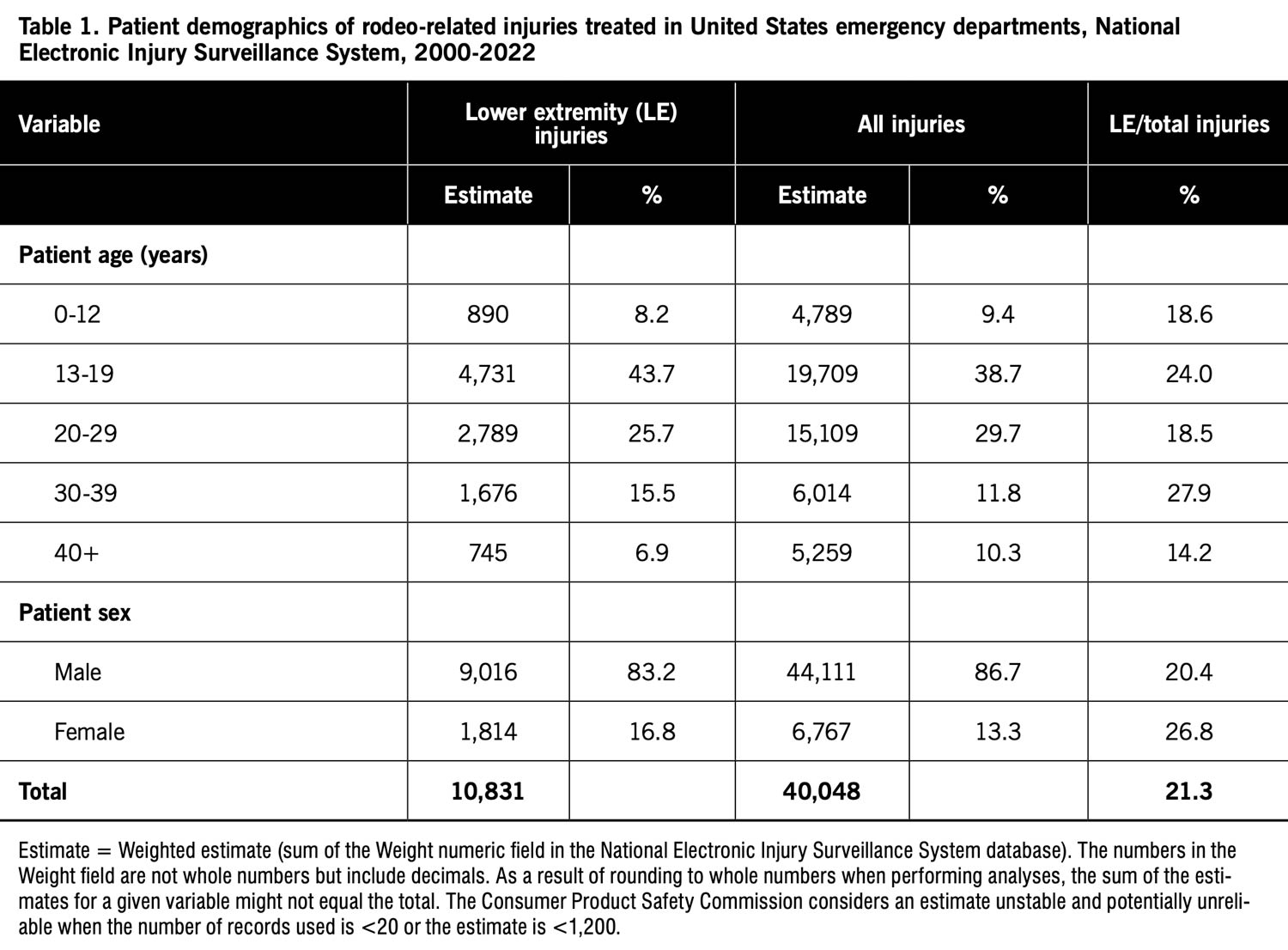
For both lower extremity injuries and total injuries, the highest proportion of patients were age 13-19 years followed by 20-29 years, and most patients were male (Table 1).
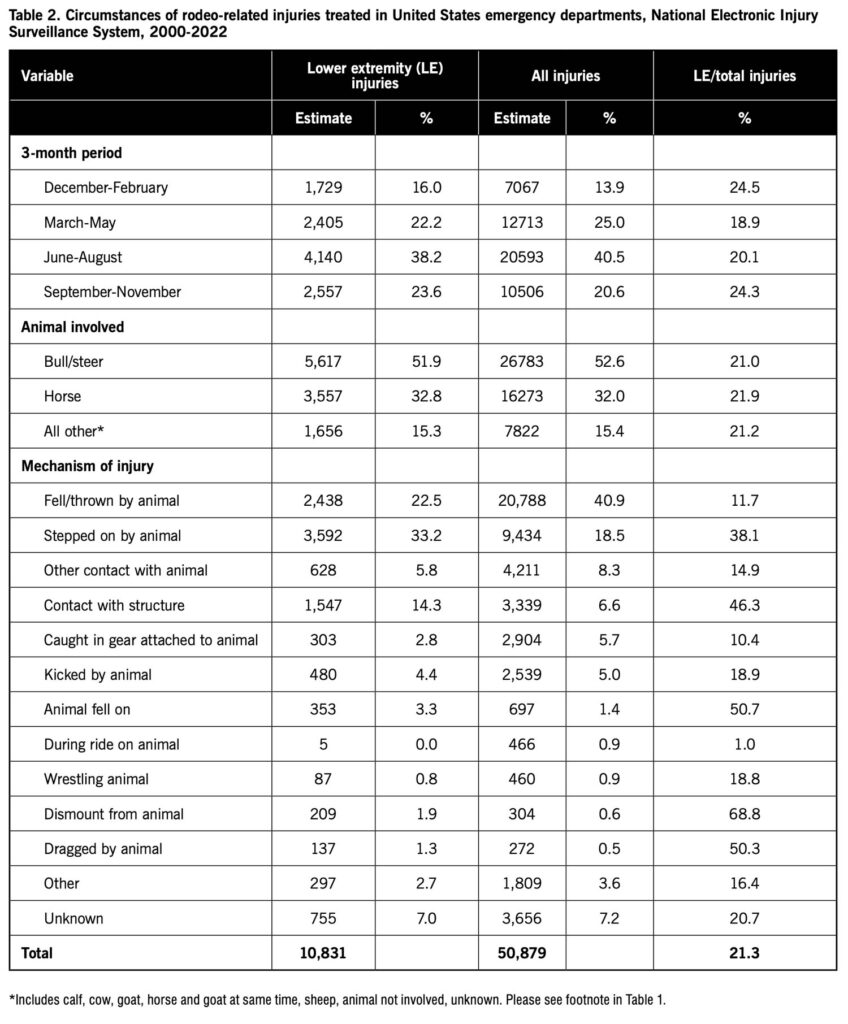
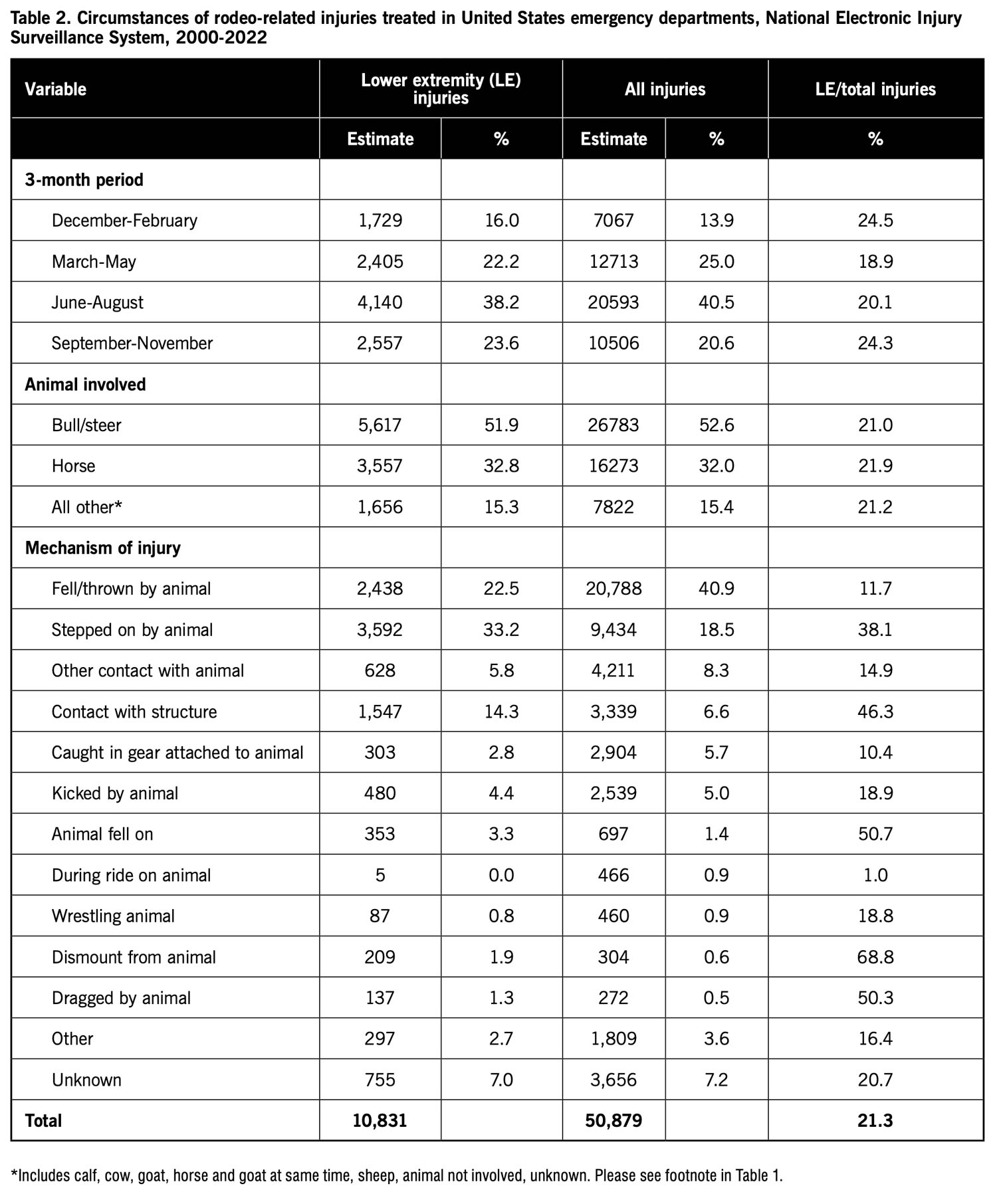
There was no clear annual trend in either lower extremity or total rodeo-related injuries (data not shown). Table 2 presents the distribution of rodeo-related injuries by the circumstances of the incident. The highest proportion of injuries occurred during June-August and the lowest proportion during December-February. Over half of the injuries involved a bull or steer and over 30% a horse. This pattern was observed for both lower extremity and total injuries. For total injuries, the 4 most common mechanisms of injury in descending order were fell or thrown by the animal, stepped on by the animal, other contact with the animal, and contact with a structure. For lower extremity injuries, the 4 most common mechanisms of injury in descending order were stepped on by the animal, fell or thrown by the animal, contact with a structure, and other contact with the animal.
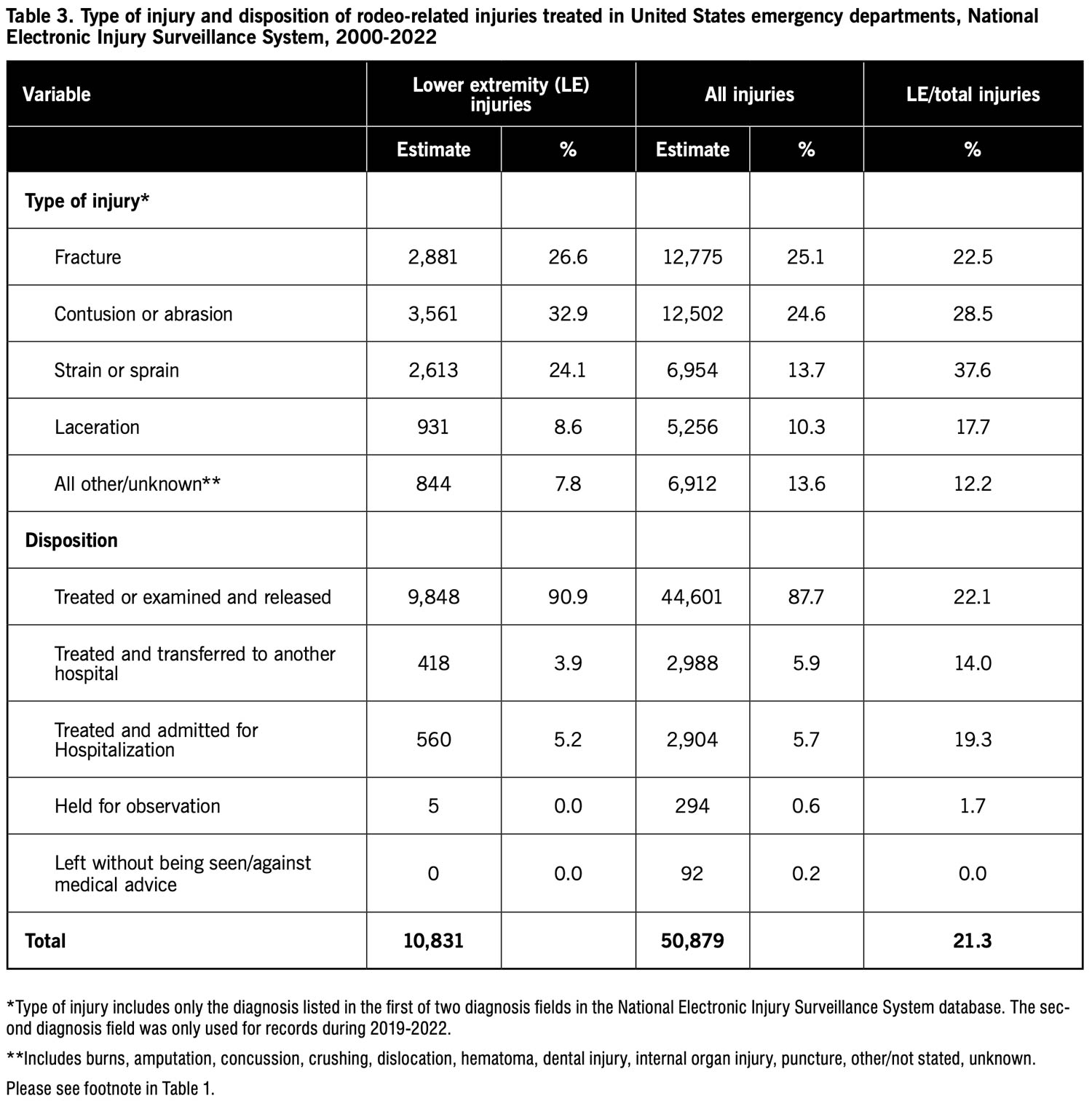
Table 3 shows the distribution of rodeo-related injuries by the type of injury and patient disposition. Total injuries most often involved fractures while lower extremity injuries most often involved contusions or abrasions, and lower extremity injuries were over 75% more likely to involve lacerations. Most patients with lower extremity and total injuries were treated or examined at the ED and released.

Discussion
This study describes rodeo-related lower extremity injuries treated at US EDs over a 23-year period. Rodeo has higher rates of injury than most other sports.5 Rodeo-related lower extremity injuries might be of particular interest because the current study found that over 20% of total rodeo-related injuries involved the lower extremity.
Eighty percent of the lower extremity injuries involved the knee, lower leg, and ankle, with over 30% involving the ankle alone. This may be due to the particular mechanisms of the injuries, where these body parts were more likely to be injured than other parts of the lower extremity.
Rodeo-related injuries, both total injuries and lower extremity injuries, tended to involve younger individuals. The highest proportion of patients were age 13-19 years followed by age 20-29 years. In addition, most of the patients were male. The high proportion of patients being adolescents may be due to people this age being less experienced and thus more likely to be injured. At least at the high school level, some rodeo events, particularly those involving bulls, are typically available only for male participants (bull riding, bareback, saddle bronc, steer wrestling, tie-down roping), some are available for female participants (barrel racing, team roping, goat tying, breakaway roping, pole bending), and some are co-ed events (team roping, reined cow horse, cutting).1 Thus, the lower proportion of females with rodeo-related injuries may result from females being less likely to participate in events that have higher risk of injury.8,9,14
 Rodeo-related injuries were seasonal, with the highest proportion of injuries treated in June-August and the lowest proportion during December-February. Although rodeo events occur throughout the year, the highest proportion take place during the summer months.1
Over half of the injuries involved a bull or steer, and over 30% involved horses. Specific rodeo events could not be examined in the study. However, this finding was consistent with the literature that report a higher proportion of rodeo injuries occur in rough stock events, particularly bull or steer riding, than in timed events.8,14
The pattern of injury mechanism and type of injury for rodeo-related lower extremity injuries differed from that for total injuries. Lower extremity injuries were more likely than total injuries to result from being stepped on by the animal and less likely from falling or being thrown from the animal. Lower extremity injuries also were more likely than total injuries to result from contact with a structure. Furthermore, total injuries most often involved fractures while lower extremity injuries most often involved contusions or abrasions, and lower extremity injuries were over 75% more likely to involve lacerations. This might be expected considering that different mechanisms of injury are not equally likely to affect the same body part or result in the same type of injury.
There are various ways to reduce the risk of rodeo-related lower extremity injuries. Rodeo participants can be trained how to land safely and quickly move away from an animal, or to curl into a ball to minimize body area, when thrown or falling from the animal.7,9 Matching the animal performance level with the age of the athlete also might reduce risk of injury.1
This study has various limitations. Cases were identified by searching for the word “rodeo” in the Narrative field. Thus, rodeo-related injuries where this word was not used would not have been included in this study. Furthermore, the selection of records to be included in the study and the assignment of the animal involved in the injury and the mechanism of injury were performed by a single person. Errors in the selection of records may have resulted in records being included or excluded erroneously. The NEISS database only includes injuries treated at an ED. Many injured rodeo participants may not seek treatment from healthcare providers.4 Investigation of rodeo-related lower extremity injuries that include information from sources other than EDs might provide a more complete view of such injuries. Specific rodeo events could not be studied, only the animal involved in the injury. Also, injury rates based on the number of competitors or competitor exposures could not be calculated.
In conclusion, rodeo-related lower extremity injuries treated at hospital EDs occurred via a variety of mechanisms, the most common being stepped on by an animal or falling or being thrown from an animal. The highest proportion of patients were age 13-19 years, and most patients were male. The most common type of injury was contusion or abrasion, followed by fracture and strain or sprain. Most patients were treated or examined in the ED and released.
Mathias B. Forrester, BS, is an independent researcher in Austin, Texas. Now retired, he previously performed public health research for various university and government programs for 38 years.
- Stoneback JW, Trizno AA, Albright JC. Pediatric and adolescent injury in rodeo. Res Sports Med. 2018;26(sup1):114-128.
- Professional Rodeo Cowboys Association. About the PRCA. Available at https://www.prorodeo.com/prorodeo/rodeo/about-the-prca. Accessed December 28, 2023.
- Sinclair Elder AJ, Nilson CJ, Elder CL. Analysis of 4 years of injury in professional rodeo. Clin J Sport Med. 2020;30(6):591-597.
- Butterwick DJ, Hagel B, Nelson DS, LeFave MR, Meeuwisse WH. Epidemiologic analysis of injury in five years of Canadian professional rodeo. Am J Sports Med. 2002;30(2);193-198.
- Brandenburg MA, Butterwick DJ, Hiemstra LA, Nebergall R, Laird J. A comparison of injury rates in organised sports, with special emphasis on American bull riding. Int Sport Med J. 2007;8(2):78-86.
- Forrester MB. Rodeo-related injuries among adolescents treated at emergency departments. J Emerg Med. 2021;61(4):387-395.
- Livingston R, Koval L, Livingston L, Scholes N. Six-year retrospective study of bullriding injuries in central Queensland. Australas Med J. 2012;5(7):362-366.
- Butterwick DJ, Lafave MR, Lau BH, Freeman T. Rodeo catastrophic injuries and registry: Initial retrospective and prospective report. Clin J Sport Med. 2011;21(3):243-248.
- Sinclair AJ, Smidt C. Analysis of 10 years of injury in high school rodeo. Clin J Sport Med. 2009;19(5):383-387.
- Yetman AT, McDonnell WM, Pye S, Schmitz ML, Drummond-Webb JJ. Ventricular septal rupture in an amateur rodeo rider. J Trauma. 2004;56(3):697-699.
- Brandenburg MA., Schmidt A, Mallonee S. Bull-riding injuries. Ann Emerg Med. 1998;32(1):118.
- United States Consumer Product Safety Commission. National Electronic Injury Surveillance System (NEISS). Available at https://www.cpsc.gov/Research–Statistics/NEISS-Injury-Data/Explanation-Of-NEISS-Estimates-Obtained-Through-The-CPSC-Website. Accessed December 28, 2023.
- United States Consumer Product Safety Commission. NEISS Coding Manual. January 2021. Available at https://www.cpsc.gov/s3fs-public/January-2021-NT-CPSC-only-NEISS-Coding-Manual.pdf?xa_nMM1kB4SGpuSMOwf0NHkkkIqNcn8F. Accessed December 28, 2023.
- Butterwick DJ, Meeuwisse WH. Effect of experience on rodeo injury. Clin J Sport Med. 2002;12(1):30-35.