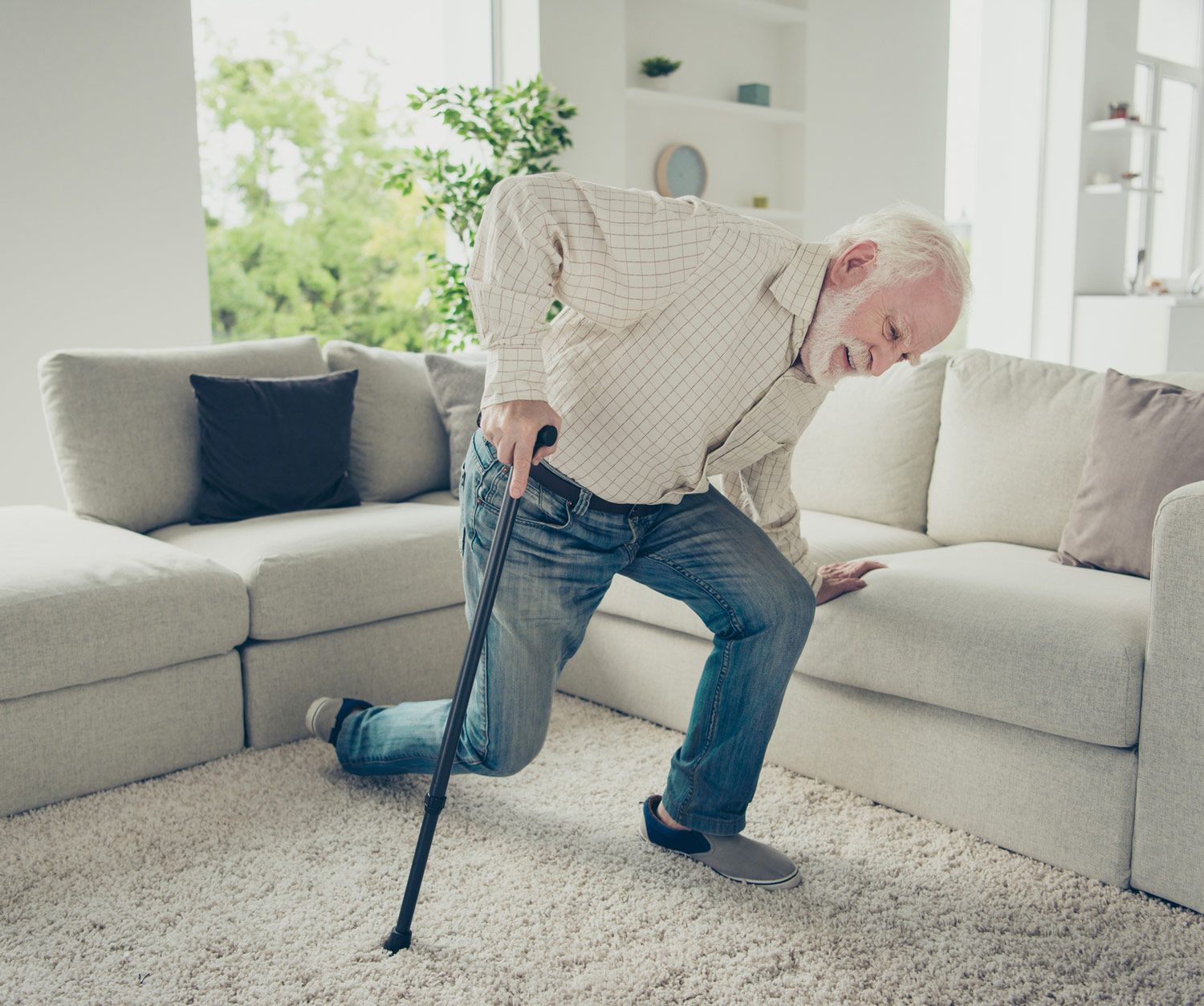








 The 2017 Global Burden of Diseases Study ranked falls as the 18th leading cause of disability-adjusted life years and the 2nd leading cause of death due to unintentional injuries. Those who fall 2 or more times per year—recurrent fallers—experience greater morbidity than those who are not recurrent fallers. Researchers from Canada wanted to better understand the effect of knee osteoarthritis in those who fall and to identify the factors that contribute to an individual with knee OA experiencing 1 or multiple injurious falls.
Using baseline and 3-year follow-up data from the Canadian Longitudinal Study on Aging, a population-based study of people ages 45–85 years at baseline, the researchers analyzed only individuals either reporting knee OA or no arthritis at baseline (n = 21,710). Differences between falling patterns among those with and without knee OA were tested using chi-square tests and multivariable-adjusted logistic regression models. An ordinal logistic regression model examined predictors of experiencing 1 or more injurious falls among individuals with knee OA.
Among individuals reporting knee OA, 10% reported 1 or more injurious falls; 6% reported 1 fall, and 4% reported 2+ falls. Having knee OA significantly contributed to the risk of falling (odds ratio [OR] 1.33 [95% confidence interval (95% CI) 1.14–1.56]), and individuals with knee OA were more likely to report having a fall indoors while standing or walking. Among individuals with knee OA, reporting a previous fall (OR 1.75 [95% CI 1.22–2.52]), previous fracture (OR 1.42 [95% CI 1.12–1.80]), and having urinary incontinence (OR 1.38 [95% CI 1.01–1.88]) were significant predictors of falling.
Looking at those with knee OA, the researchers found that those who reported multiple falls were more likely to report a previous injurious fall, knee symptoms, a lower-extremity fracture, and impaired performance on one-leg balance, TUG time, and chair rise tests. Interestingly, individuals with knee OA were significantly more likely to report failing indoors than individuals without knee OA (46.8% vs 38.7%), and significantly less likely to report failing outdoors (53.2% vs 61.3%)..
In conclusion, the authors wrote that their findings support the idea that knee OA is an independent risk factor for falls. The circumstances in which falls occur differ from those for individuals without knee OA. The risk factors and environments that are associated with falling may provide opportunities for clinical intervention and fall prevention strategies.
Source: Wilfong JM, Perruccio AV, Badley EM. Examination of the Increased Risk for Falls Among Individuals With Knee Osteoarthritis: A Canadian Longitudinal Study on Aging Population-Based Study. Arthritis Care Res. 2023. https://doi.org/10.1002/acr.25163