







 A recent survey found that experienced orthotic and prosthetic (O&P) device users with a chronic disability liked the range of care they received from certified O&P providers, were “very satisfied” with the device-related goals they had achieved, and reported they could not maintain their current level of function without certified P&O providers.
The cross-sectional survey, done by Dan Mazur, MRSc, CPO(c), from the University of British Columbia and Anderson Orthopedics, used Patient-Reported Experience Measures (PREMs) to better understand the impact of certified O&P care on client satisfaction with their device/s as well as with the service provider. Sample size was 95 O&P users with a chronic disability and mean device history of 10.4 years.
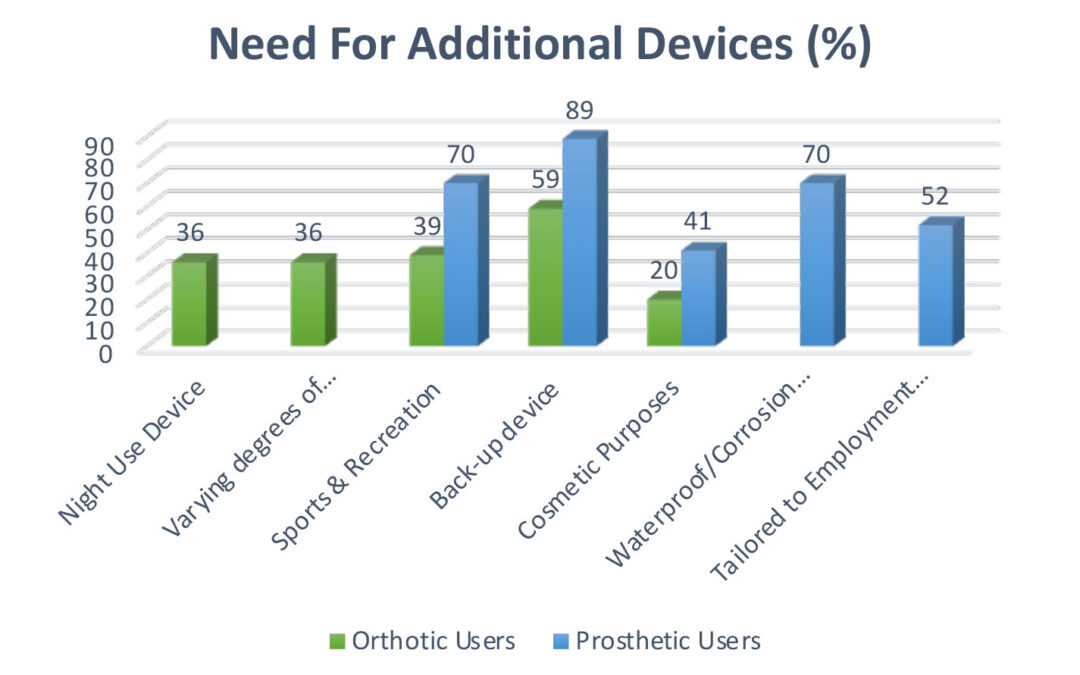
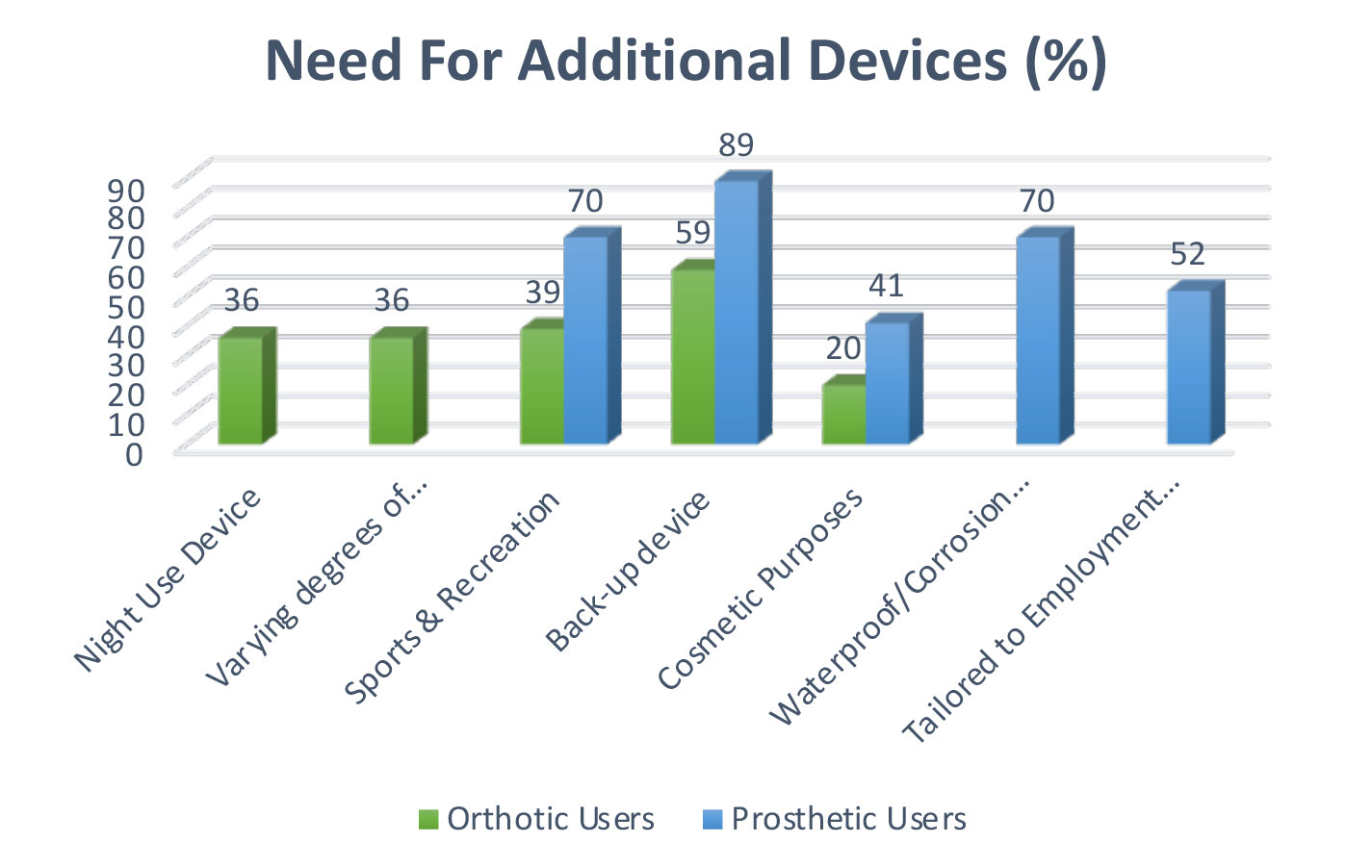
Users reported that their assistive devices improved their effectiveness in daily activities and provided a degree of safety and the associated physical therapy and occupational therapy helped to optimize their overall treatment plans…but access was limited. Users also reported the need for additional devices meeting a range of needs (see figure).
Regarding costs, the survey found that more than one-third of respondents were not able to afford any device/service costs, while less than 10% said they could afford over $1000. Thus, it is important for funding organizations to provide fully funded device solutions where possible and expand device offerings to better fulfill patient needs. Certified providers must also look for opportunities to collaborate with allied health clinicians in a cost-effective manner to improve efficiency and effectiveness of their P&O treatment plan. It is also of paramount importance for certified providers to lobby funding agencies for increases in both device and service level funding to more adequately reflect modern technological advances and evolving patient needs.
Future research in this area should include a larger sample size with representation of patient sub-groups and generalizability to other practice contexts. Additionally, future investigations could include a qualitative research component to complement a psychometrically tested quantitative instrument to further seek understanding of the lived experience of a prosthetic/orthotic user.
Source: Mazur D. An Exploratory analysis of patient reported experience measures in prosthetic and orthotic users treated in Manitoba, Canada. Poster presented at 50th Annual Meeting & Scientific Symposium of the American Academy of Orthotics and Prosthetics. Chicago, IL. March 6-9, 2024.