








 By Andreas Nilsson and Josefin Damm
The cost of treatment, such as nursing time required for application of products and the number of clinical visits, is a significant expense in venous leg ulcer (VLU) care.
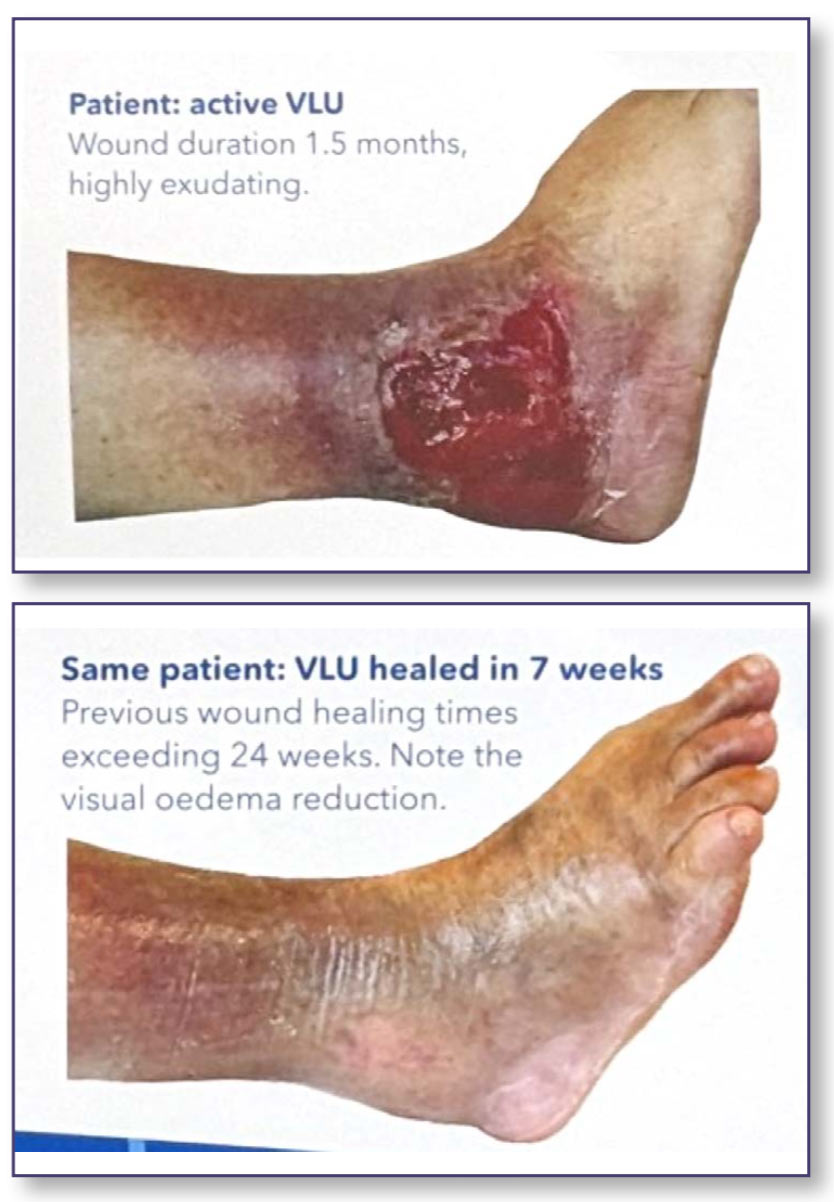
Objectives: This study aimed to evaluate the efficacy of an innovative compression technology that delivers a well-defined pressure, invariant of applier skills, leg shape, and without the need for reapplications due to edema reduction.
Methods: This study included 7 female patients (age 64-90) with active VLUs. Four had a history of recurring VLUs ranging from 2 to more to than 10 years, with wound healing time between 6 to 8 months. Two patients required skin grafting before compression treatment started. The compression products, both bandages and stocks, use a patented technology that always guarantees the correct pressure. The wound dressing used adheres to superficial wounds and can stay on until healing is achieved.
Results: The wound healing times were short compared to the patients past VLU history. Even the largest wound, 36cm2, healed in 7 weeks, compared to previous wound healing times exceeding 24 weeks. It was estimated that the number of visits to the clinic was reduced by more than 50%. This was due to the use of a wound dressing that required fewer changes in combination with the compression technology that did not require frequent reapplication to maintain the correct pressure, not even when edema reduction occurred. Patients who presented with edema demonstrated a substantial reduction in swelling.
The patients reported no pain in the treated wound during their first post-treatment checkup. Furthermore, the patients reported increased activity levels and improved self-management compared to standard compression treatment. One patient reported being able to handle donning and doffing of a compression stocking for the first time.
Conclusions: The treatment was effective and well-tolerated by the patients. Reducing the clinic visits by half highlights the important of utilizing new wound care technologies.
The controlled compression also allowed for inclusion of patients with somewhat impaired arterial circulation and type 1 and 2 diabetes. Hence, treatment is possible for patient groups that rarely receive compression.
Some patients and their relatives were able to learn how to apply the compression bandage themselves, following the visual guidelines. They were also able to don and doff the compression stocking. Self-care is an important factor when it comes to quality of life. Confirmation by a larger study is needed.
In conclusion, controlled compression has the potential to reduce the number of hospital visits, improve cost-effectiveness and allow for better self-care.
Source: Nilsson A, Damm J. Innovative Compression Technology May Reduce Hospital Visits and Improves Self-Care in Venous Leg Ulcer Patients. Poster presented at 2023 Union of International Phlebotomy World Congress and 37th Annual Congress of the American Vein & Lymphatic Society. Sept. 17-21, 2023; Miami Beach, FL.





Your insights on post-pregnancy vein changes are spot-on. Many new moms don’t realize that effective vein reduction options exist that are minimally invasive and safe. It’s great to see blogs helping people understand both their choices and what to expect from recovery