







 By Keith Loria
The American Diabetes Association estimates that 34.2 million people—10.5% percent of the U.S. population—have diabetes. And today, like every other day in America, 4,110 people will be diagnosed with diabetes (most will be Type 2) and, sadly, 356 will undergo an amputation. Worldwide, it’s over 500 million people.
According to the Centers for Disease Control and Prevention (CDC), diabetes is the most expensive chronic condition in the United States, accounting for $1 out of every $4 US in healthcare costs. CDC further estimates that $237 billion is spent each year on direct medical costs and another $90 billion on reduced productivity.
At a recent lerEXPO, a trio of authorities participated in “Diabetes Patients Are Different,” a webinar providing a comprehensive overview of the disease and exploring methods of wound and amputation prevention and patient engagement for effective diabetic foot self-care. The program was sponsored by Arche Healthcare.
Things kicked off with moderator Jason Kraus introducing the experts and explaining how the program would provide information from 3 different and essential points of view.
Robert Frykberg, DPM, MPH, FFPM, medical director of DM Prevent Diabetic Foot and Wound Center, was first up with a seminar entitled, “Lower Extremity Amputation Prevention: LEAP Back to the Future.”
In his talk, Frykberg reviewed studies that measured amputation trends related to diabetic complications.
“I do believe that we’ve made such great strides in our progression to learning how to treat ulcers and lower extremity complications, but I question whether we really paid enough attention to prevention,” he began, noting that amputation due to diabetic foot ulcer is the seventh-leading cause of death in the U.S.
Citing past research and studies, Frykberg talked about the success of the preventative strategies called LEAP (lower extremity amputation prevention), originally drafted in 1992, as well as the International Working Group of the Diabetic Foot’s recommendations published in 2019 for preventing wounds and amputations.
The 5-step LEAP program consists of annual foot screenings, patient education, daily self-inspection, attention to footwear selection, and early management of simple foot problems. It also recommends multidisciplinary management.
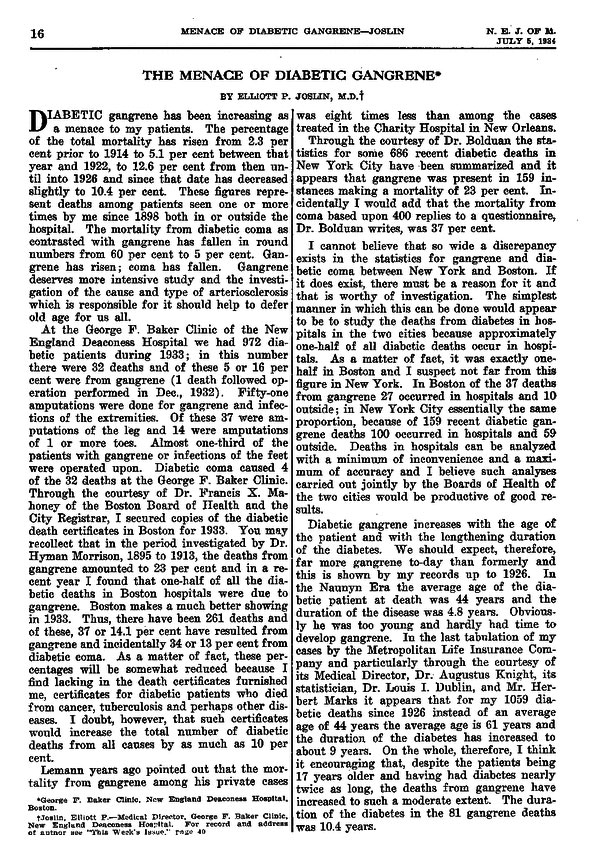
“A multidisciplinary approach is not new,” he said, mentioning Elliott P. Joslin’s 1934 notable paper on gangrene and prevention. (Joslin P. The Menace of Diabetic Gangrene. N Engl J Med 1934; 211:16-20. DOI: 10.1056/NEJM193407052110103).
Thankfully, there are a number of guidelines available throughout the industry that provide recommendations to improve prevention and the ways to monitor risk.
 One thing he believes in strongly is that 3 minutes is not a comprehensive approach.
“You need to look, listen, and feel that patient and do a thorough examination at least once per year, so that you get a sense,” he said. “And that patient can be drawn into that examination, because without patient engagement, we know that we’re not going to be effective in incorporating that patient into our multidisciplinary team.”
Patient education is vital to success, he noted, explaining ways to engage patients and understanding what to do to lower risk.
Another paper he focused on was about in-shoe orthoses and the prevention of recurrent foot ulcers due to plantar pressure. The results showed that customizing the insoles for high-risk patients based on both pressure and shape utilizing a CAD CAM design was far more effective than the standard normally described.
“[The paper provides] good evidence to indicate that we really need to be paying attention to those high-pressure areas,” he said.
Frykberg discussed how technology has played a big role in limiting amputations, noting that things such as temperature assessments and skin moisture assessments have been looked at more in research and found to be successful, though some of the technology may be too expensive for some.

His discussion ended with some of the updated treatment options including prophylactic surgical interventions and interdisciplinary treatment teams, and a look at what the future holds, pointing out the rise of telemedicine, remote patient monitoring, and pressure assessments. Frykberg also thinks people will be learning more about the skin moisture index to make a difference in wound care.
“Most complications in the high-risk diabetic patient can be prevented if we understand the significant pathways and risk factors leading to diabetic foot complications,” Frykberg concluded.
Next on the docket was Jeffrey Gonzalez, PhD, professor of psychology at Ferkauf Graduate School of Psychology at Yeshiva University and the departments of medicine and epidemiology and population health at Albert Einstein College of Medicine, who gave a talk entitled, “Engagement and Activation of Patients for Self-Care of the Diabetic Foot.”
In his seminar, Gonzalez identified and reviewed the challenges involved in treatment adherence for diabetic foot care, as well as the unique self-care challenges faced by people with diabetes.
In looking at treatment adherence across chronic illnesses, Gonzalez said he found 23 studies that looked at this topic specifically for diabetes and noted that one of the main problems was—and remains—that patients tune out their doctors and don’t follow what they need to do to be well.
“So, what makes treatment adherence challenging?” he asked. “One is that this trial goes on forever. Second, is that there’s discouraging feedback. Third, your reward is that nothing happens until 20 to 30 years from now, so we’re not really gaining something tangible by checking our feet or by taking our medications today.”
However, if patients did everything that their healthcare providers asked them to do, it could have a significant and positive effect on quality of life and well-being.
“The consequences of not getting this right are severe for the patients and the healthcare system,” Gonzalez said.
The burdens of diabetes self-management include time, cost, and a psychological component with fears associated with complications related to the foot and other complications associated with diabetes.
Calling out several studies, Gonzalez looked at the relationship between depression and diabetic foot ulcer risk and explained the significance of the baseline depression severity score. Promising studies have been made with offloading, and he expects more to happen with that in the future.
“Most studies have focused on ulcer healing, and there have been very few studies that have focused on ulcer prevention,” he said.
Gonzalez called attention to the fact that comprehensive care needs to include monitoring and agrees with Frykberg that there are new technologies now that make this possible and digestible in meaningful ways to patients and providers to alert them both of the risks and opportunities for intervening to prevent these outcomes.
“We need to do a better job at incorporating behavior change strategies, connecting this feedback to behavioral change in a way that is reinforcing ongoing support to both patients and providers—facilitating communication between them and having prompts that are going to trigger provider actions,” he said, noting there’s a role for smart technology in providing this feedback. “This is really a job for the long haul.”
The third presentation was delivered by Jonathan Moore, DPM, MS, MA, managing partner of the Cumberland Foot and Ankle Centers of Kentucky. His talk, entitled, “Comprehensive Diabetic Foot Examinations in Clinical Practice,” focused on better understanding the root causes for poor patient compliance.
Poor patient compliance, he said, can be attributed to a couple of factors, such as missed appointments, low health literacy, and poor follow-up at home. But these can be overcome by providing physicians with a deeper understanding of the benefits of creating more engaging patient experiences.
Moore told attendees that he wanted to look at what the first 2 speakers discussed and explain how to do this in practice—giving the talk from the trenches.
One important key for success, he noted, is to implement a true Comprehensive Diabetic Foot Examination (CDFE) in clinical practice for both clinical and financial positives. Yet, when you look at patients with neuropathy—a key clinical risk factor for ulceration and amputation—fewer than 32% of patients with diabetes receive a CDFE.
“What I hope to do is demonstrate what a true CDFE is because I think that a lot of people call what they’re doing CDFE, but it may not really truly be something that’s valuable,” he said. “Implementing a real CDFE is something that actually is going to be engaging the patients, demonstrating the risk to them in a visual way, and involving them really makes not only clinical sense but also can mean financial improvement to your practice.”
Moore referenced that the total cost of missed healthcare appointments in the U.S. every year constitutes over $150 billion in lost revenue, and each open unused timeslot costs his practice more than $200 on average, so practices must do a better job with this. In addition to reminder calls, he recommends doing more text messaging, which has proven to be more effective than calls or emails.
The reality is, he noted, many patients don’t think about their feet.
“Something that is important is the way we engage our patients and the way we treat them and the way we speak to these patients delivering messages—in their language, at their level, and using vocabulary that’s suited for those patients is really important,” Moore said. “That’s something that I had to learn moving to southern Kentucky. Communicating effectively is how you engage them, but patients are also engaged by what they see.”
In his practice, Moore has introduced the Arche Healthcare system, a population health management company that empowers patients, physicians, and payers in the prevention of wounds and amputations associated with diabetes. This allows better management of the patients and better engagement overall.
“We don’t want to just tell our patients what to do, we want to show them the results and the risk levels,” he concluded.
To Learn More…
This article presents only highlights of “Diabetes Patients Are Different,” a 2-hour, 2 CEU educational event. To hear all 3 presentations in full plus an expert roundtable discussion, visit lerEXPO.com; go to EVENTS in the top menu and scroll down to “Diabetes Patients Are Different.”
Keith Loria is a freelance writer in Washington, DC.