 Cover Story

By understanding how military medicine has evolved and adapted over time, modern practitioners can better appreciate the need to question convention, advance research, and rapidly integrate beneficial new technologies into medical care.
By Christine Miller, DPM, FACCWS, Ashley Finn, and Emily Delzell
Editor Message

Lower extremity practitioners are constantly being reminded that what they think they know about injury prevention is only part of a bigger picture. This time it’s the diabetic foot care community’s turn to wonder just how much they have yet to learn about the mechanisms underlying ulceration.
Jordana Bieze Foster, Editor
Departments
Partial foot amputations may not offer a biomechanical advantage over transtibial amputations if the metatarsal heads cannot be retained, and some experts suggest amputation level should be selected based on probability of wound healing instead. But others disagree.
By Cary Groner
Study findings and anecdotal reports suggest that newer-generation total ankle replacement can match or exceed ankle arthrodesis when it comes to gait and range of motion, but neither procedure returns gait to normal. Implant survival has also improved, but continues to be a challenge.
By Barbara Boughton
Total hip arthroplasty can significantly improve quality of life in obese patients, but high body mass index is also associated with higher rates of complications and readmissions than in normal-weight patients. The emerging subgroup of super-obese patients poses additional challenges.
By Raghav Rajgopal, MD, and James L. Howard, MD, MSc, FRCSC
Opportunistic microorganisms called biofilms constitute an age-old diabetic wound care problem that defies traditional antimicrobial therapies. Experts believe interventions customized to individual patients based on molecular diagnostics may be the best line of defense.
By Larry Hand

Patients with chronic refractory lower extremity tendinopathies often continue to have symptoms after exhausting most of their therapeutic options. Preliminary evidence supports the use of platelet-rich plasma in these patients, though higher-level research is needed.
By Ricardo E. Colberg, MD, and Kenneth Mautner, MD
News
In the Moment: Diabetes
By Emily Delzell and Jordana Bieze Foster

Practitioners often deem all areas of elevated peak plantar pressure in patients with diabetes at some risk for ulceration. A study published in September, however, suggests this risk varies with the specific location of pressure, and investigators say findings highlight the importance of monitoring plantar pressure as part of preventive care.
Clinicians should carry out quantitative vibration testing for sensory loss in patients at risk for diabetic neuropathy at the hallux, according to research that confirms the hallux undergoes greater sensory loss than the fifth metatarsal, an alternate location for vibration testing.
Diabetic neuropathy is associated with increased levels of intrinsic foot muscle deterioration, which may contribute to foot deformity and ulceration, according to research presented in September at the annual meeting of the American Society of Biomechanics in Omaha, NE.
In the Moment: Knee
By Jordana Bieze Foster

Knee osteoarthritis researchers are taking a closer look at the factors that influence knee adduction moment (KAM) and also considering the contributions of sagittal plane variables, as illustrated by studies presented in September at the American Society of Biomechanics (ASB) annual meeting in Omaha, NE.
Female athletes with low neurocognitive scores are more likely than those with higher scores to demonstrate altered landing mechanics consistent with elevated anterior cruciate ligament (ACL) injury risk, according to findings that could have implications for concussion management.
Patients with patellofemoral pain (PFP) have less medial longitudinal arch excursion during stair descent than healthy individuals, according to a Brazilian study that may help explain the effects of foot orthoses in patients with PFP.
Market Mechanics
Products
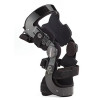
The OA Restore knee brace from Ottobock utilizes a rigid frame and unique hinging to help stabilize the knee, relieve symptoms, and delay more aggressive treatment for patients with mild to moderate medial or lateral knee osteoarthritis, ligament or cartilage damage…
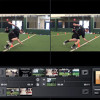
Spark Motion, maker of portable motion analysis software for use in authentic sports performance and rehabilitation environments, announces a rebranding (formerly Kinesio Capture). The company’s Spark Pro…
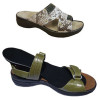
Earthwalk Orthotics introduces Sandalwalk prescription foot orthoses designed to replace the removable footbed in Dr. Comfort’s Open Comfort Collection. The prescription orthoses are discreet…
The Sprained Ankle Orthosis (SAO) from G&W Heel Lift is designed to reduce the healing time of common ankle sprains and protect weak ankles from inversion sprains. The SAO is a firm heel cup…
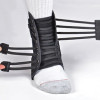
Hely & Weber offers the Rapid Zap figure-8 style ankle brace. Wide open spaces provide easy access for the foot to facilitate application. Tri-Lace-Pod straps are designed for a quick and accurate fit and security. The top strap aligner…
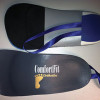
Brand new from ComfortFit Orthotic Labs is the Easy Out pull-out ribbon. The ribbon—a loop attached to the underside of an insole but accessible when the device is positioned inside a shoe—allows patients to quickly and easily remove foot orthoses from their shoes.
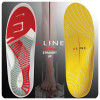
Aline Systems announces new RTS foot technology. RTS combines the patented technology from the company’s RT insole with a new memory foam and technical fabric top sheet. The Aline RTS includes a softer feel…
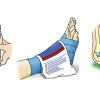
PhysioTools’ Sprained Ankle training module is an easy-to-use tool, with 120 illustrations and informative text on the management of a sprained ankle, including acute care, taping, and rehabilitation…