Cover Story
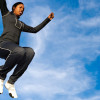
A diminished capability for energy dissipation at the knee after ground impact during landing in patients with chronic ankle instability may result in greater demands on the ankle joint. Modifying landing strategies could potentially reduce the risk of musculoskeletal injury.
By Masafumi Terada, MS, ATC, and Phillip A. Gribble, PhD, ATC, FNATA
Editor Message

You know that saying about how a man with a hammer sees everything as a nail? That’s something those who specialize in biomechanics might want to remember when considering patients with chronic pain.
By Jordana Bieze Foster, Editor
Departments

The third International Patellofemoral Pain Research Retreat picked up where previous retreats had left off in examining proximal and distal factors related to PFP and subgroups of patients who might respond to targeted interventions. But this retreat broke some new ground as well.
By Jordana Bieze Foster
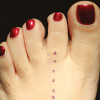
Plantar plate pathology in conjunction with metatarsalgia occurs more often than is commonly appreciated, but can be addressed using a combined procedure that involves a dorsal approach to anatomic plantar plate repair and metatarsal realignment.
By Lowell Weil Jr, DPM, FACFAS, and Erin E. Klein, DPM, MS
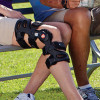
Research continues to suggest that bracing has the ability to improve pain and function in patients with knee osteoarthritis in a controlled setting, but researchers are now working to identify factors that affect bracing outcomes in the real world. Patient expectations are at the top of that list.
By Larry Hand

The literature suggests that women are less likely than men to experience an Achilles tendon rupture. This may be because women are less capable of generating the large eccentric contractions necessary for rupturing the tendon. Estrogen may also play a protective role.
By Joseph L. Laratta, MD, and J. Turner Vosseller, MD
Myofascial or joint-focused stretches can increase passive hip range of motion in young adult men with limited hip flexibility, but this will not necessarily result in more hip motion actually being utilized during functional activity unless old movement patterns can be unlearned.
By Janice Moreside, PhD

Collegiate athletes who participate in sports associated with sprinting have an increased risk of hamstring strain. Investigators have identified flexibility, strength, and fatigue as potential contributing factors that can be addressed through sport-specific training and rehabilitation.
By Kevin M. Cross, PhD, ATC, PT, Susan Saliba, PhD, ATC, PT, and Jay Hertel, PhD, ATC
News
In the Moment: Sports medicine
By Greg Gargiulo, Emily Delzell, and Jordana Bieze Foster
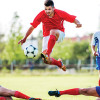
Bladed soccer cleats were associated with increased forefoot loading during a jump-landing task, which may lead to a higher risk of fifth metatarsal stress fractures, according to a study published in the September-October issue of the Journal of Athletic Training.
Investigators at the University of Tuebingen in Germany have identified alterations in lower leg mechanics and higher impacts caused by “fast” training conditions (e.g., interval training sessions, competitions) as potential risk factors for Achilles tendon pain in runners.
The media buzz over the apparent discovery of a new knee ligament announced in early November faded quickly as experts pointed out that the finding was not exactly new.
Market Mechanics
By Emily Delzell
Products
PressureGuardian, developed by Tillges Technologies, is a compact portable pressure sensor device with a compatible data-collecting app. The information can be used to adjust orthotic and prosthetic devices to offload pressure on a diabetic wound or inside a prosthetic socket.
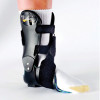
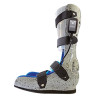
Hersco announces availability of the Arch Suspender from Richie Labs as an ankle foot orthosis modification to control the midtarsal joint and hindfoot. The Medial Arch Suspender is an adjustable lifting strap under the talonavicular joint to resist collapse of the medial arch as well as eversion of the ankle and hindfoot.
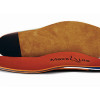
Footmaxx offers the MaxxLife premium custom-made foot orthosis for comfort and stability. The MaxxLife features a natural leather topcover, a low-profile Duramaxx semirigid orthotic module, a polyurethane mid-layer reinforced with a suede bottom, and a polyurethane heel cushion and cap.
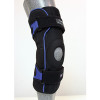
The New Option OA is a pull-up, buttressed, “soft” brace for patients with mild to moderate knee osteoarthritis. The buttressed sleeve aids in knee alignment, provides compression, and is easy to apply.
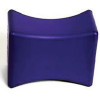
The bodyblock is a light, comfortable multipurpose support block that can be used to elevate a limb or as a spacer between the knees. Made of polyurethane, it weighs just 300 g and can be easily cleaned and disinfected between patients.
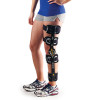
Corflex announces the release of its Contender Post-Operative Knee Brace. The ZipTrak, X-Flex, and QuikZip systems work together to ensure the Contender knee brace stays in place, which maximizes its ability to control range of motion to aid in healing and rehabilitation following an injury or a surgical procedure.
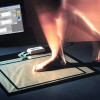
ModulaRx Orthotics Corp has introduced a new computer technology, MxXpress, to facilitate the accurate design and manufacture of customized foot orthoses based on plantar pressure measurements.
Topical Gear has released the ACL Tube. Inventor Bill Bue and his team developed the light- weight (2 oz) brace that applies topical pressure on the medial quadriceps and hamstring muscles.