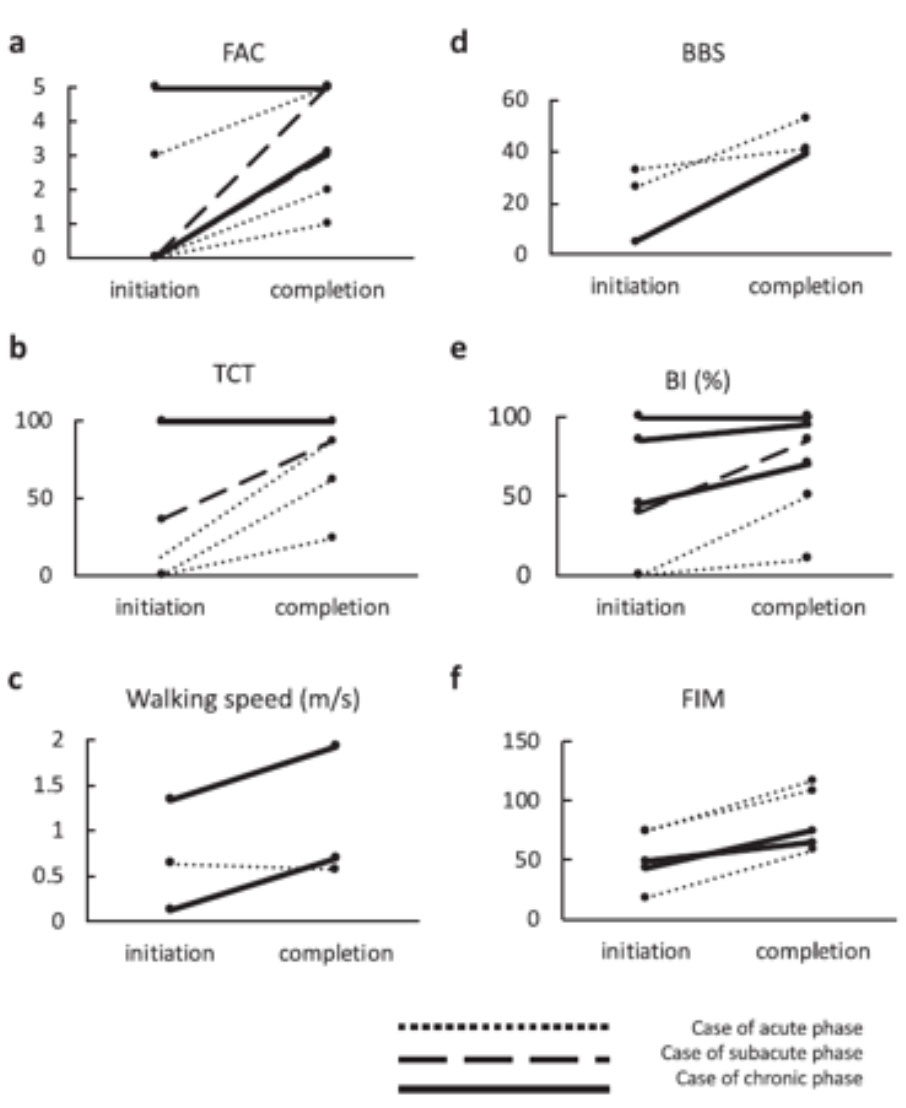
Fig. 2. (a-1). Changes in outcome measures on functional mobility and actrities of daily living in each case due to knee-ankle-foot orthosis theraoy.
*Abbreviations: FAC – Functional Ambulatery Category, CT – Trunk Control Test, BBS – Berg balance Scale, BI – Barthel Index, FIM Functional Independent Measure
In response to recent published case reports claiming the efficacy of KAFO therapy, these authors sought to synthesize the available evidence for this therapeutic use. A systematic review was performed, which reviewed 14 case reports involving 15 patients. Improvements of functional mobility and ADL were shown in 10 and 9 of the 15 patients, respectively. However, the methodological quality of the reviewed case reports was low. These findings present the current evidence from case reports regarding KAFO therapy in patients with stroke; however, the findings are insufficient to draw clear conclusions about the efficacy of such therapy. Of value, the study revealed the optimal outcome measures for use in measuring the effect of KAFO therapy, which can be used to facilitate high-quality future studies. These include:
Focus on functional mobility: Functional mobility is important for patients, to enable participation in ADL in the real-life setting by addressing orthotic therapy.
Focus on phase of stroke:
The Functional Ambulatory Category (FAC), the most frequently reported outcome measuring functional mobility, would be applicable in all disease phases. The FAC is a simple and valid functional walking test that evaluates ambulation status with a 6-point scale by determining how much human support the patient requires when walking.
In contrast, the Trunk Control Test (TCT) would be applicable in the acute or subacute disease phase. The TCT is a reliable and valuable tool in assessing trunk movements in patients with strokes. KAFO therapy can be performed on patients in the acute or subacute phase with the expectation of improving trunk movement.
Focus on the efficacy of KAFO therapy in improving ADL by specifying which ADL items are affected by KAFO therapy.
Track patient adherence to KAFO therapy: Various reasons for non-adherence to orthotic therapy include: the patients found it unnecessary, usage difficulties, pressure sensation, not making life easier, and lack of a suitable environment. Clarifying the reasons for non-compliance with orthotic therapy may mean that the orthotic therapy plan could be modified based on patient perspectives so that the intervention would be more acceptable to patients or more effective overall.
Source: Kobayashi E, Hiratsuka K, Haruna H, Kojima N, Himuro N. Efficacy of Knee-Ankle-Foot Orthosis on Functional Mobility and Activities of Daily Living in Patients with Stroke: A Systematic Review of Case Reports. J Rehabil Med. 2022;54:jrm00290. doi: 10.2340/jrm.v54.87.