 Kennesaw State O&P Professor Wins Prestigious NIH Grant
Kennesaw State University has begun a program to recruit and educate members of a diverse new generation of innovators in the field of bioengineering, backed by a $1.3 million grant from the National Institutes of Health (NIH).
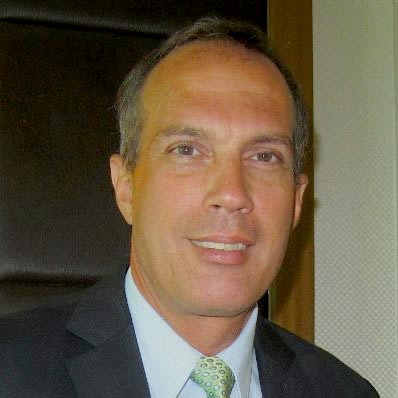
The new program was developed by associate professor of prosthetics and orthotics Géza Kogler, PhD, CO, who helped establish the Master of Science in Prosthetics and Orthotics program in the Wellstar College of Health and Human Services at Kennesaw State. Kogler, who serves on the LER Editorial Advisory Board, credited associate professor of mechanical engineering technology Turaj Ashuri and professor emeritus of electrical engineering Bill Diong for connecting the grant to the Southern Polytechnic College of Engineering and Engineering Technology.
Participants will be immersed in the clinical realm of orthotics, prosthetics, and rehabilitation. Students will work in clinical settings, receive faculty mentoring, complete a capstone project, and work on an interdisciplinary research team, as well as interact with people who use assistive technology.
According to Kogler, the program will recruit underrepresented minorities, persons with disabilities, women, and economically- and socially-disadvantaged students, and expose them to spheres of engineering and clinical discovery over 4 years. Eight students will be recruited for each of the 4 years of the grant, starting in the fall of 2023.
The Kennesaw State program connects with the NIH’s ESTEEMED (Enhancing Science, Technology, Engineering and Math Educational Diversity) program, which seeks to “support educational activities that enhance the diversity of the biomedical research workforce through early preparation for undergraduate students in STEM fields,” specifically bioengineering. Kogler has named the program the BRITE project (Bioengineering Research and Interdisciplinary Training—ESTEEMED).
Students involved in BRITE will have their tuition paid for their first two years, then will enter the KSU Journey Honors College for their final two years, where they will have access to other sources of funding. They’ll also receive stipends for summer work through the program.
The program addresses points of emphasis at Kennesaw State, most prominently interdisciplinary studies and pathways to graduate degree programs.
“Especially with bioengineering, you’re looking at a very interdisciplinary field that takes in math, physics, biology and engineering,” Kogler said. “A student might develop expertise in a certain aspect of engineering or science and they’re applying those skills in a space that could be clinically valuable, or it could be on the research side to solve a problem.”
“Normally a grant has a massive impact for a lab, but this one will affect the entire university on both campuses,” he said. “So the tentacles of this grant have an extended reach, and it’s not very often you get an opportunity to connect students and faculty in such a transformative way.”
 Diversifying O&P Will Only Improve Healthcare
By Robert Lin, CPO
Over the past several decades, technology has effectively changed how global communities interface with one another. Travel is more affordable and efficient, and immigration has made cultural diversity a constant in all aspects of life. The internet literally transformed how we acquire information across the entire spectrum of human experiences. Now, the impact of artificial intelligence is considered by many to be the next challenge that will profoundly impact societies across the world. Businesses have had to adapt and healthcare and educational delivery models have had to fundamentally change how knowledge and skills are disseminated to the student population. Online learning, virtual consultations and the new pedagogy of clinical training must reflect the world as it stands today. More specifically, the profession of orthotics and prosthetics (O&P) must adapt to not only how future clinicians are educated, but equally important is to whom this training is provided. Diversity is a key component of success in any industry. Having cultural, religious and ethnic representation not only helps us serve the O&P patient population better, it helps us unite medical specialties and solidify communities.
As a practicing orthotist/prosthetist for the past 4 decades, I have personally witnessed the ABC-certified practitioner base evolve from a predominantly male, Caucasian craftsman whose introduction to the field was from a personal or familial connection to today’s art and science of O&P. Today, in large part due to the Academy of Orthotics and Prosthetics’s overt effort to reach a broader audience of young aspiring healthcare professionals, the field is enriched with much more diversity than ever before. According to a recent article in our own professional publication, the Almanac, women now constitute nearly 50 % of the matriculating class in any given year. Minorities and those from underserved/underprivileged communities are beginning to enhance their representation as well, but we have just scratched the surface. This NIH grant that Dr. Kogler has just received is monumental in that it will give O&P education/training much greater reach and ultimately broaden the clinical resources of more communities that are in such dire need. Disease and poor health know no socioeconomic boundaries and it is well documented that many epidemic-level conditions like Type 2 Diabetes affect the adult populations of racial and ethnic minorities with great disproportionality. Research shows that healthcare professionals who identify with or emerge from these environments are more likely to return to them to serve their communities. It is obvious to this writer that this grant initiative by Dr. Kogler will serve to further the mission of today’s O&P leadership by not only increasing the breadth and scope of contemporary practice, but by changing the face of those who deliver the care.
Robert Lin, CPO, is managing partner at Biometrics INC., in Hartford, Connecticut. He also serves on the Lower Extremity Review Editorial Advisory Board.