







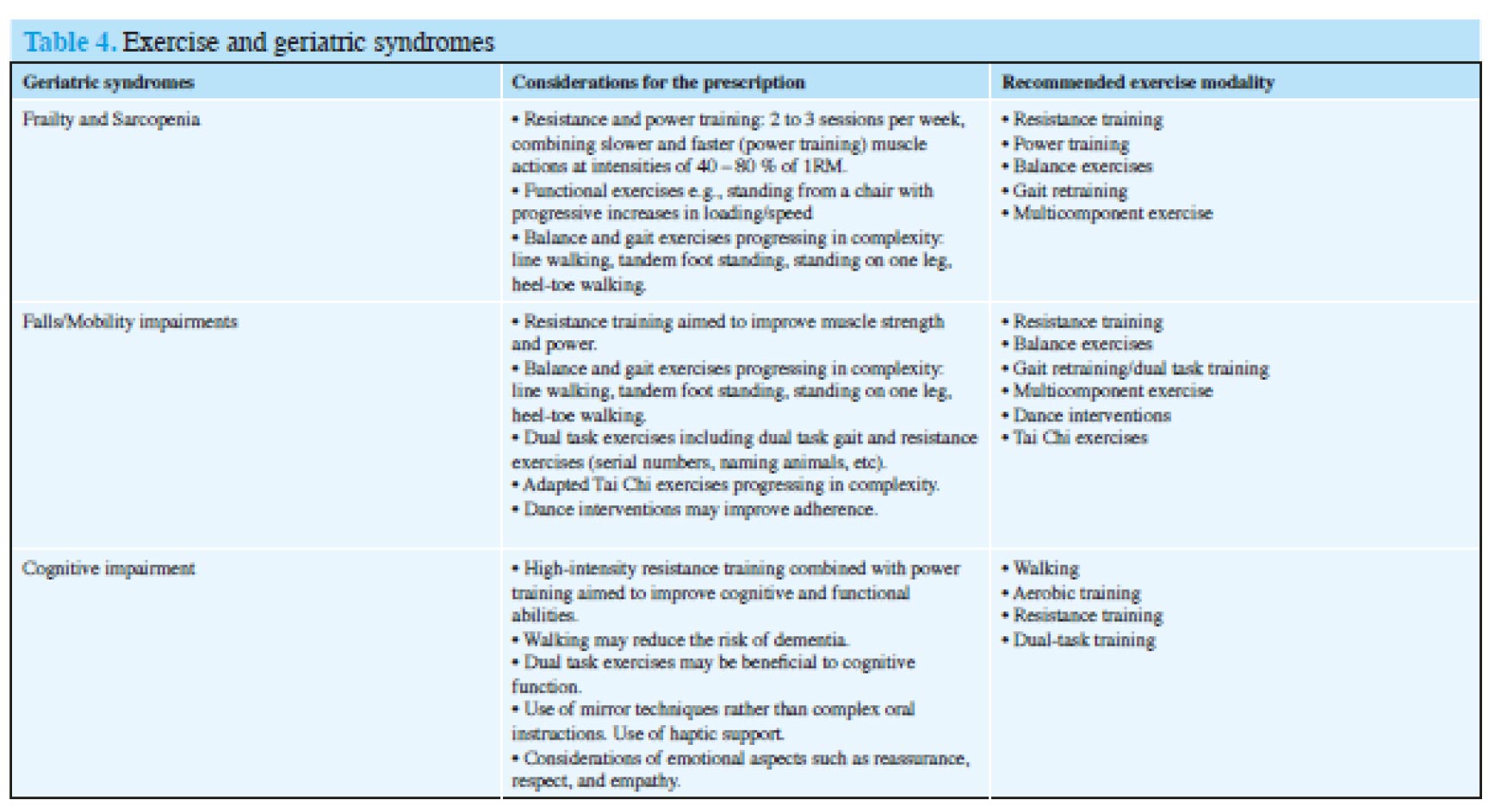
 Exercise to counteract the undesirable side effects of standard medical care is gaining increasing attention in the literature. For example, exercise would include resistance training for patients receiving corticosteroid treatment to counteract the associated proximal myopathy and osteopenia not fully addressed by bisphosphonates, or neutralizing the adverse effects of energy-restricted diets in obesity or protein-restricted diets in chronic renal failure. An excellent target group where both resistance and aerobic exercise can play a significant role would be older men with steroid-dependent chronic lung disease, in whom harmful combinations of pulmonary cachexia, malnutrition, tobacco use, steroid myopathy, and osteoporosis produce profound wasting, osteoporotic fractures, and impaired exercise tolerance. Aerobic training will improve functional status in this clinical cohort but is insufficient to address musculoskeletal wasting. The major geriatric syndromes for which exercise may be beneficial as a preventive or prevention strategy are listed in Table 1, along with the postulated mechanisms of exercise benefit and the specific modality of exercise most relevant for these outcomes.
For more on exercise recommendations in older adults, see “International Exercise Recommendations in Older Adults (ICFSR): Expert Consensus Guidelines” on page 41.
Source: Izquierdo M, Merchant RA, Morley JE, et al. International exercise recommendations in older adults (ICFSR): Expert Consensus Guidelines. J Nutr Health Aging. 2021;25(7):824-853.