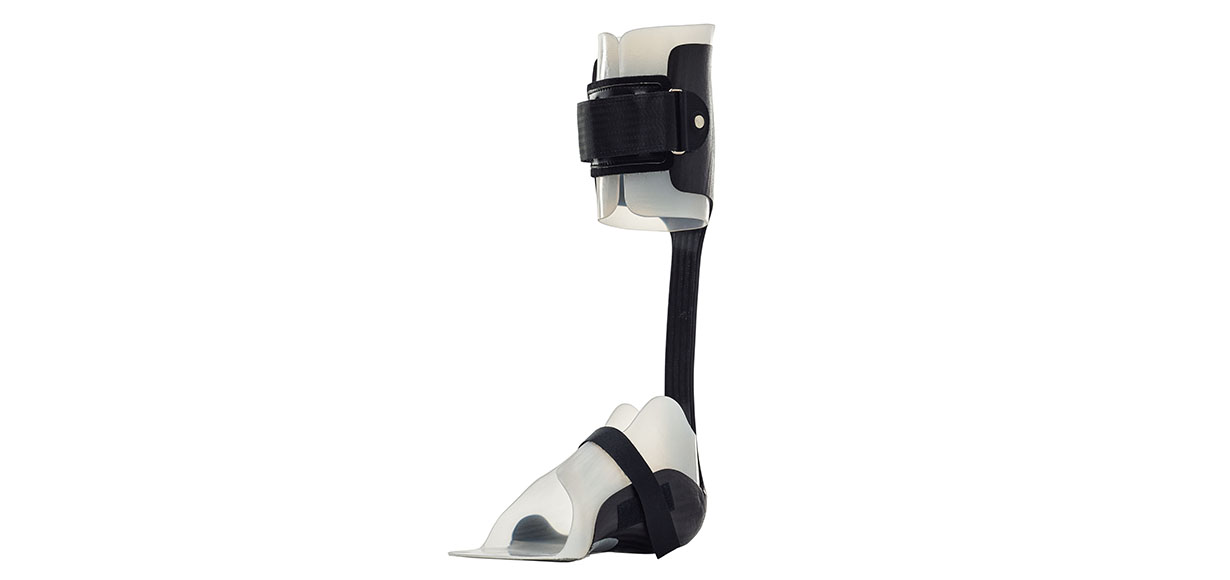








 Ankle-foot-orthoses (AFOs) play a significant role in gait biomechanics, but researchers from Italy identified a lack in evidence of the effects of AFOs on static balance. They conducted a study that looked at 24 patients (15 males, age 57±14 yrs, BMI 23.4±4.4kg/m2), with bilateral (3) or unilateral foot drop syndrome (12 right foot). Static balance assessment was performed using ProKin platform (v. 252 Tecnobody, Dalmine (BG) – Italy). The experimental trial consisted of a static acquisition, repeated with open and closed eyes, in which the subject maintains the standing position for 30s, looking straight forward to a reference point with the feet in extra-rotation. Two-way ANOVA was used to analyze 2 main effects (open or closed eyes and the influence of the orthosis) and the interaction factor. Statistical analyses were performed using R version 4.0.3.
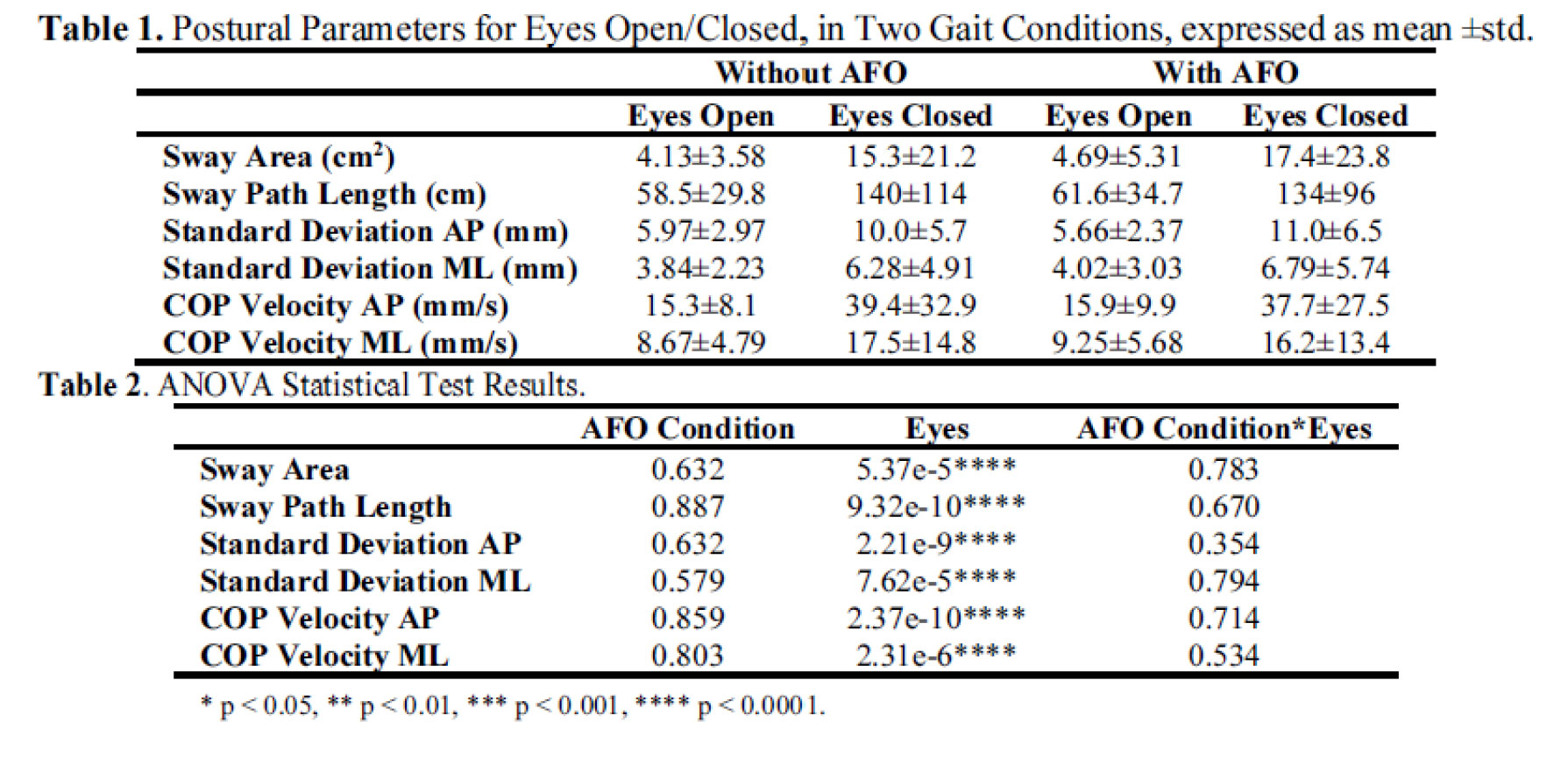
Their results appear in Tables 1 and 2. Their findings show that use of the intervention AFO did not produce improvements in the static balance of patients with foot drop. They theorize that AFO impact principally improves gait and dynamic balance rather than static functions. They further note that different AFO designs have different impacts on postural responses, thus being more appropriate for a specific group of patients. One key limitation is their study population was small and the etiology of foot drop varied (ie, not all were stroke patients). They conclude with a call to investigate the impact of long-term use before progressing to general considerations about AFO effectiveness in static balance.
Source: Amitrano F, Coccia A, Pagano G, Biancardi A, Tombolini G, D’Addio G. Effects of Ankle-Foot Orthosis on Balance of Foot Drop Patients. Stud Health Technol Inform. 2023;302:1029-1030. doi: 10.3233/SHTI230338.