
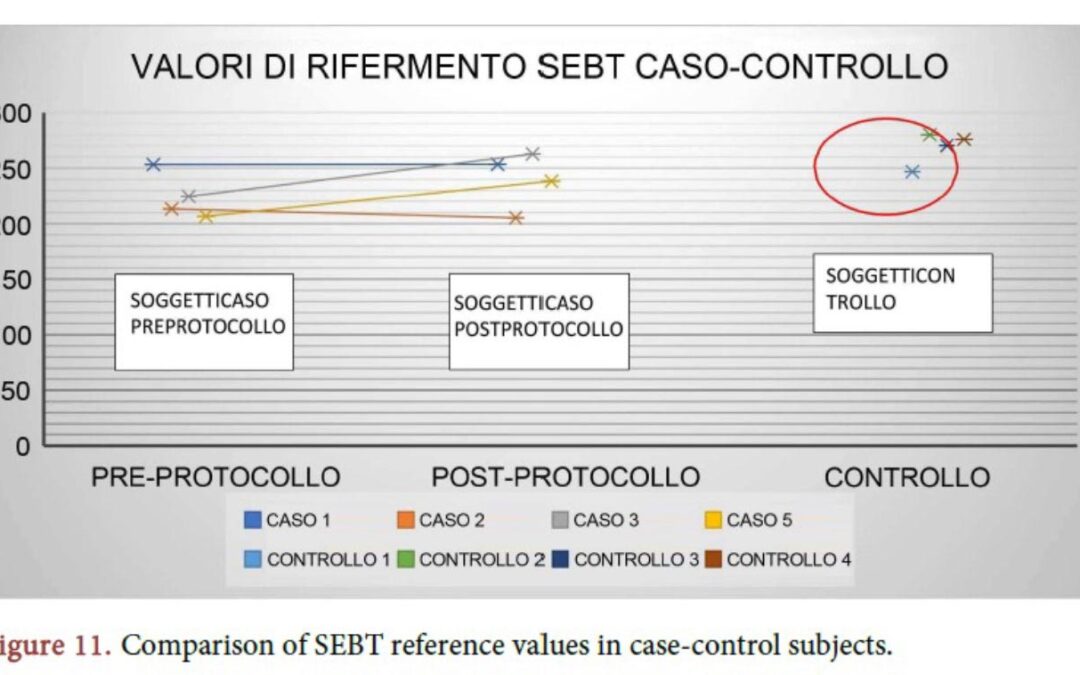








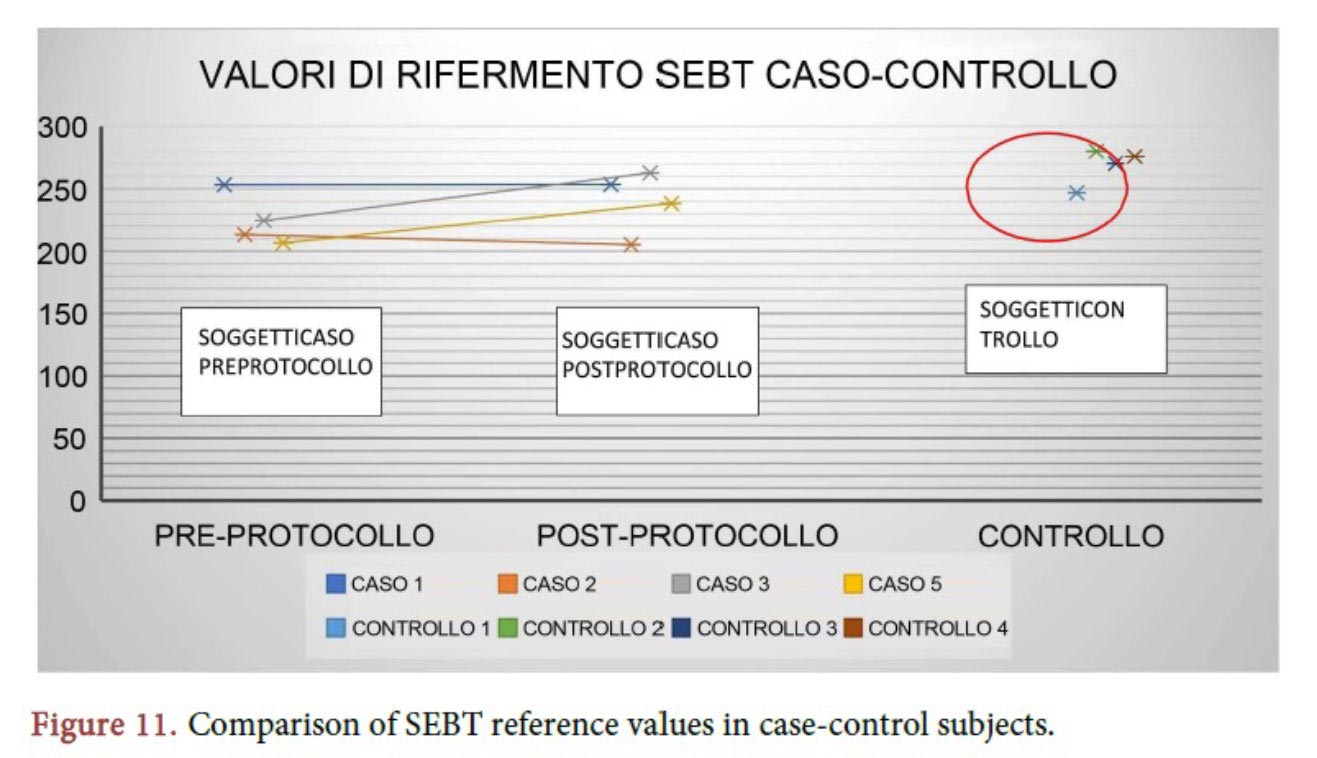
 A new study from Italy examines individuals with a previous history of acute inversion ankle sprain who have subsequently developed chronic ankle instability (CAI) by using 4 validated field tests: Star Excursion Balance Test (SEBT); Balance Error Scoring System (BESS); Time in Balance Test (TIBT); and Side Hop Test (SHT).
The participants were divided into 2 categories: those with CAI > 1 year and those with CAI ≤1 year and participated in a 6-week protocol focused on improving balance in single stance, improving static and dynamic stability, strengthening the gluteus medius and maximus (pelvis stabilizers) and strengthening of the foot’s intrinsic muscles. At the end of the protocol, participants were re-evaluated with the same field tests. used previously and the data obtained were compared both
Post-protocol results are extremely positive in participants with CAI ≤ 1 year; results for participants with CAI >1 year were null or even worse in the dynamic stability test (SEBT), except for static stability tests.
The authors concluded that those with CAI > 1 year need work protocols that are significantly longer than 6 weeks and focus on improving static stability and trying to reduce any muscular imbalances present in the upper structures, particularly the pelvis. For participants with CAI ≤ 1 year, the authors advise starting functional re-education as soon as stabilization is achieved to allow any relapses to be reduced to a minimum and, in particular, to avoid the onset of chronic ankle instability.
Source: Bellomo RG, Barletta G, Brunetti M, Barbato C. (2024) Chronic Ankle Instability: therapeutic exercise and data analysis. Open Journal of Orthopedics. 2024;14: 201-217. https://doi.org/10.4236/ojo.2024.145019. Use is per the International Creative Commons License CC BY 4.0.






HyProCure is a great device that helps with instability in the ankle. It is a MIS procedure done in over 70 countries. http://www.gramedica.com