







 By Matt Barber, MD
The article, “Mitigating the Post-operative Swelling Tsunami in Total Knee Arthroplasty: A Call to Action” by Andrew Wickline and colleagues brings light to a very important topic and is likely to become one of the seminal works in this area.
Obviously, post-operative swelling is something that has been acknowledged for almost as long as surgery itself. Historically, this swelling has been known about and discussed primarily as an annoyance or something affecting patient satisfaction or pain. Their article helps to define this familiar sequalae as a common cause for many issues, and not just something that is noted alongside other complications. Their call to action is particularly important because it addresses post-operative swelling in the context of total knee arthroplasty (TKA) which is now the most common elective surgery performed in the United States. Indeed, they write that “over 1.025 million TKAs were performed in 2020 with estimated volumes growing to 3.4 million yearly TKAs by 2040.”
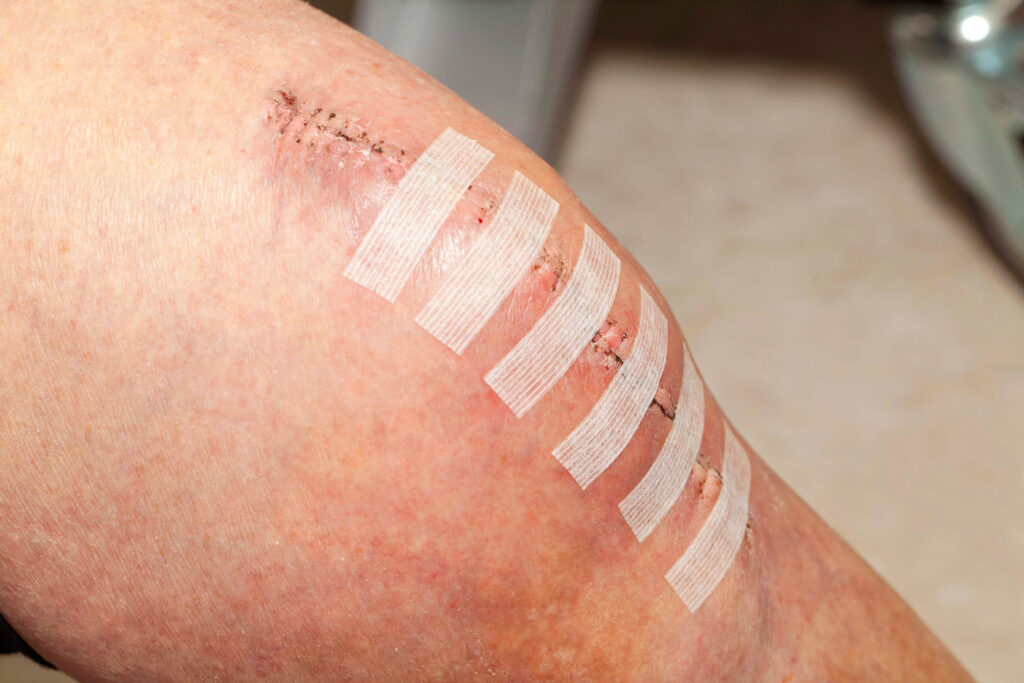
With all of the specialization in today’s healthcare/medicine sector, it is easy for us to think in silos. Difficulties and complications are considered to be in their own respective domains (especially if these issues tend to be treated by separate medical or surgical subspecialties) and as such, they are addressed and studied as separate entities. This article does much to break down those aforementioned silos and to identify the fact that swelling is not just seen in association with post-operative complications but may represent the underlying cause for many other complications. For example, failure to progress with therapy, deep vein thrombosis, dissatisfaction after surgery, chronic pain, and opioid use disorder may all have common roots in post-operative swelling.
Wickline et al do an excellent job of revisiting and explaining the basic science behind post-operative edema for those of us who may not have considered it in this level of detail in quite some time. They go on to further define how this condition can and should be quantified.
The authors present a proposed treatment/mitigation strategy. Their proposed strategies reference multiple other previously published works that deal with limiting swelling, inflammation, and bleeding. This algorithm may not end up being the definitive way that edema is addressed, but it proposes several strategies that are actionable for clinical practitioners. Ultimately, every listed strategy might not be practical in every practice or patient population, but they are very important in establishing a framework for further research and discussion.
Total knee arthroplasty is a tremendously important procedure. It relieves pain and restores mobility for millions of patients. Because of this, it has a massive impact on our country in terms of potentially lost work time, opioid consumption, repeat hospitalization for complications, and total healthcare spending. Limiting the complications of the TKA procedure, decreasing the complexity of the recovery, and returning patients to activity have enormous social and economic value. This article moves the field forward with 2 monumental steps: First, it defines—in a direct and comprehensive manner—a known, yet unaddressed, major challenge associated with the TKA surgical procedure. Second, it provides an array of evidence-based strategies for community clinicians to use to address the impending tsunami.
Matt Barber, MD, is an orthopedic surgeon who specializes in knee and hip replacement. He practices in Mobile, Alabama.