One of the most-talked-about images from the 2013 Orthotics Technology Forum (OTF) depicted 11 custom foot orthoses made by 11 experienced orthotists and podiatrists for a single patient. All 11 practitioners had been given the same information about the patient’s condition, yet all 11 orthoses were distinctly different.
Lower Extremity Review
3D printing: The shape of things to come
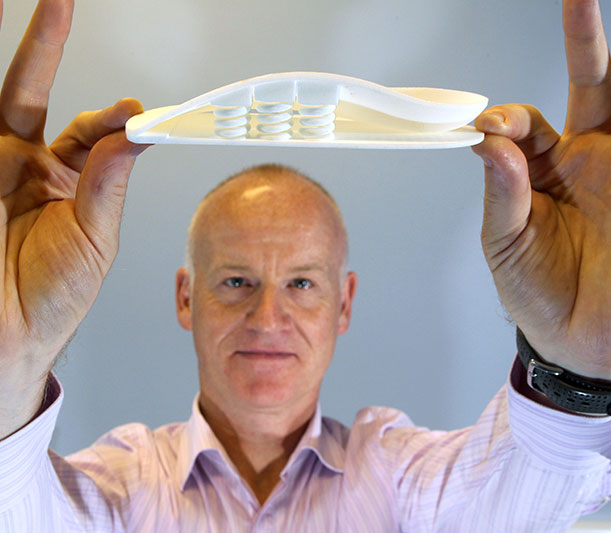
The Orthotics Technology Forum presentation given by Ben Boyer, CPed, was as much about what the speaker was wearing as what he was saying. Boyer, who is the lab manager at Kintec in Vancouver, Canada, wore a product he thinks may represent part of the future of orthotic design and manufacture—orthoses he’d printed with a hobbyist-level desktop 3D printer.
Lean manufacturing transforms orthotic fabrication
The need to replace entrenched processes and thinking with fluid, fast-moving orthotic design and manufacture that minimizes errors and maximizes resources was highlighted by several speakers at the Orthotics Technology Forum, including Jarret Eschenburg, CPed, director of operations at Coral Springs, FL-based SureFit, a subsidiary of Hanger.
Clinicians come to aid of marathon victims
Lower extremity practitioners were among the first responders after two explosions ravaged the Boston Marathon last month, and are continuing to help heal the hundreds of victims who lost limbs or experienced other traumatic lower extremity injuries.
By Emily Delzell
CEREBRAL PALSY: Dynamic devices facilitate compliance, outcomes in children with cerebral palsy
Brace wear time, not torque, is key – Dynamic orthoses offer an effective alternative to static devices for management of tip-toe gait and knee flexion contracture in children with cerebral palsy (CP), particularly because the dynamic devices are associated with greater compliance, according to separate studies from Sweden and France.
OSTEOARTHRITIS: Knee braces and wedged insoles both alter gait in patients with knee OA
A Taiwanese study offers more evidence that offloading knee braces and wedged foot orthoses are both associated with significant biomechanical improvements in patients with knee osteoarthritis (OA).
SPORTS MEDICINE: Proximal rocker bar on shoe can relieve tension on Achilles tendon in runners
A rocker bar proximally positioned on a running shoe can relieve tension on the Achilles tendon as well as reduce the force required of the calf muscles during walking and slow running, according to research from the Netherlands.
DIABETES: More results support use of foot orthoses to significantly decrease plantar pressures
Swedes also find low ulceration rate – Research from Sweden and Egypt provides more evidence that foot orthoses can significantly decrease plantar pressures in patients with diabetes, theoretically reducing the risk of foot ulcers and lower extremity amputation.
FLAT FOOT: Arch structure in children with talipes planovalgus improves with shoe inserts
Orthotic management of pediatric talipes planovalgus starting at an early age is associated with significant improvement in weightbearing arch structure, according to research from Saga University in Japan.
OFFLOADING: Walkers’ effect on proximal biomechanics varies depending on design characteristics
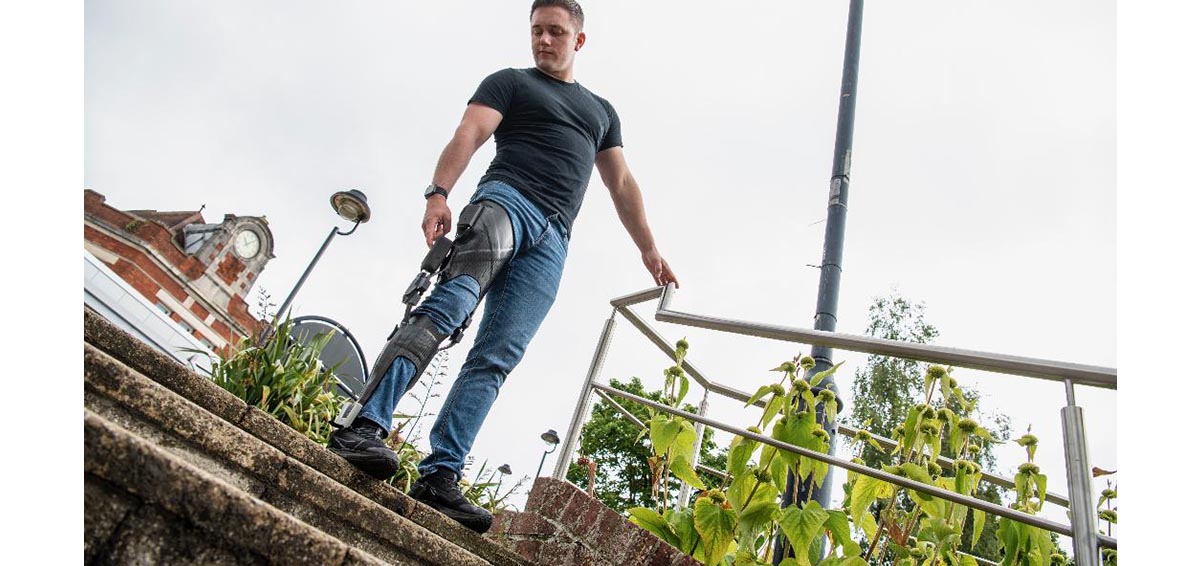
Tibial inclination appears significant – Orthotic walkers have significant effects on proximal joint mechanics during gait, the extent of which appear to depend on individual device design, according to research from the University of Central Lancashire in the UK.
PEDIATRICS: In hyperpronators, functional scoliosis responds to distal orthotic treatment
What appears to be idiopathic scoliosis may actually be functional scoliosis that can be effectively treated with foot orthoses in children who are hyperpronators, according to research from Chungnam National University in Daejeon, South Korea.
STROKE: Eight weeks of early AFO use significantly enhances benefits of stroke rehabilitation
Functional balance test scores rise – Use of an ankle foot orthosis (AFO) within six weeks of stroke results in better balance outcomes and earlier independent ambulation than if AFO use is delayed, according to research from the Netherlands.
CONFERENCE COVERAGE: International Clubfoot Symposium
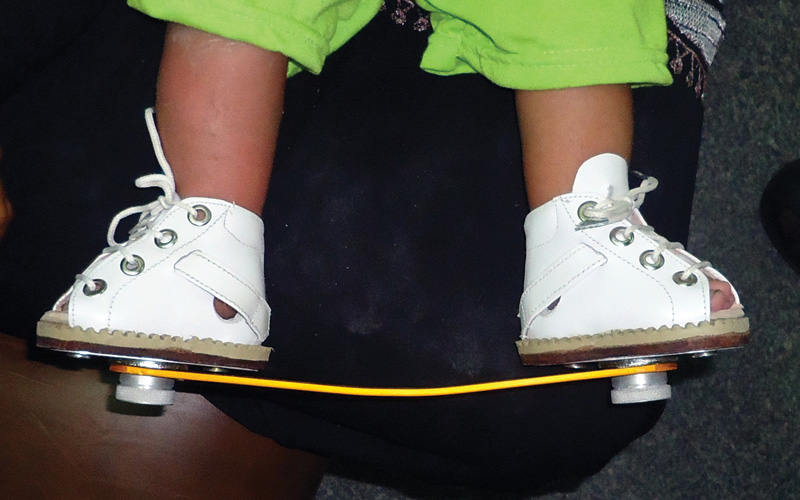
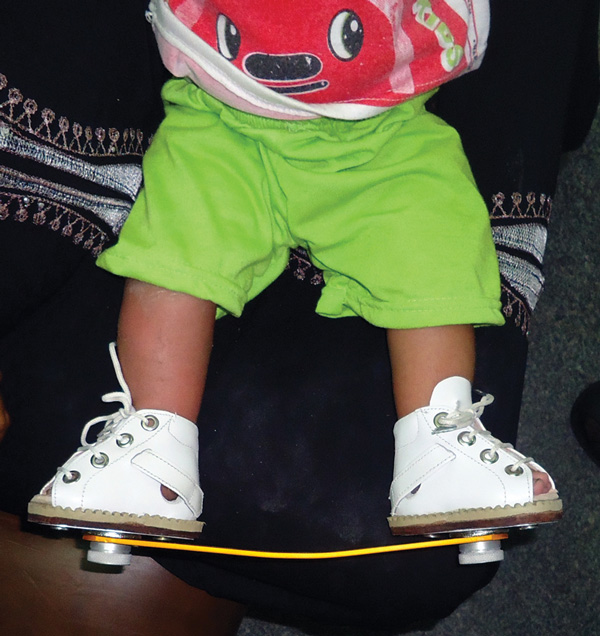
The Ponseti method of clubfoot management has achieved worldwide acceptance, but practitioners and researchers are still working to identify the best ways to optimize clinical outcomes while remaining sensitive to issues of cost effectiveness and cultural...
Resource-poor areas benefit from global outreach efforts
Treatment of children with clubfoot has evolved considerably in the five years that have elapsed since the inaugural International Clubfoot Symposium, and the benefits of this evolution are particularly evident in resource-poor nations—home to about 80% of the 200,000 children born each year with clubfoot. But practitioners who treat patients in these areas still face financial, cultural, and logistical challenges.
By Emily Delzell
Benefits of Ponseti method extend to older children
Clubfoot correction ideally should be performed during infancy, before children learn to walk, but experts agree that the Ponseti treatment method can also be effective in older children. Speakers at the International Clubfoot Symposium in October presented successful outcomes for Ponseti treatment of neglected clubfoot in patients aged up to 21 years.
By Jordana Bieze Foster
Join
Subscribe For Updates
Stay in the loop with the latest news and updates! Subscribe now to receive exclusive content, special offers, and important announcements straight to your inbox. Don’t miss out – join our community today for all the latest updates delivered directly to you.