The SureStep TLSO has redefined spinal management. The soft, flexible plastic serves well to create improved upright positioning, while still allowing for slight movement in all planes.

TLSO
read more

Lower Extremity Review
The SureStep TLSO has redefined spinal management. The soft, flexible plastic serves well to create improved upright positioning, while still allowing for slight movement in all planes.
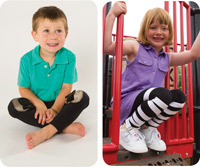
The first and only device developed to discourage w-sitting, Criss Crossers use a unique audio cue to remind children to change their position.

SureStep HEKO is the first and only pediatric hyper extension knee orthosis to incorporate a 4-axis knee hinge, for smooth, anatomically correct flexion and extension. This exceptional device provides localized control of the knee, preventing hyperextension, valgus and varus, while allowing full flexion and extension. With adjustable extension stops, the HEKO offers up to 30 degrees of adjustability.
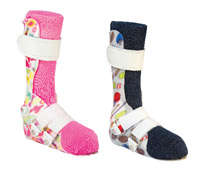
The SureStep PullOver is an amazing tool that not only facilitates improved stability of the foot and ankle complex using a SureStep SMO, but it is also the only SMO that incorporates a true dorsiflexion assist through the use of a removable proximal strut.

A uniquely designed orthosis developed to help children reach their potential. This exceptional “orthosis within an orthosis” allows for the SureStep SMO to be utilized independent of the AFO. Children can work through a variety of transitional skills without impeding normal muscle function.
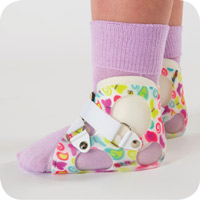
A growing child means eventually outgrowing the original SureStep SMO. The BigShot and BigShot Lite are the perfect solutions for older children who still need the stability of SureStep.

The SureStep SMO remains the most advanced method of controlling excessive pronation and providing stability to the hypotonic population. Suitable for patients up to 80 lbs.

When my wife Pam and I started this incredible journey, we did it with passion and faith. SureStep was founded with a passion for improving the lives of children with special needs. And we have always had faith that we will get what we give.

For this family, one tiny extra chromosome led to a journey of self discovery
When our son was born, we prayed for a healthy baby with 10 fingers and 10 toes. Our prayers were answered. Three years later, those same prayers were said for baby number two. And, once again, our prayers were answered.
By Suzi Klimek

For a parent, the only thing more frustrating than knowing something isn’t quite right with your young child is hearing that nothing can be done until the underlying cause of the symptoms is identified. Luckily, parents of children with hypotonia can be spared the latter frustration.
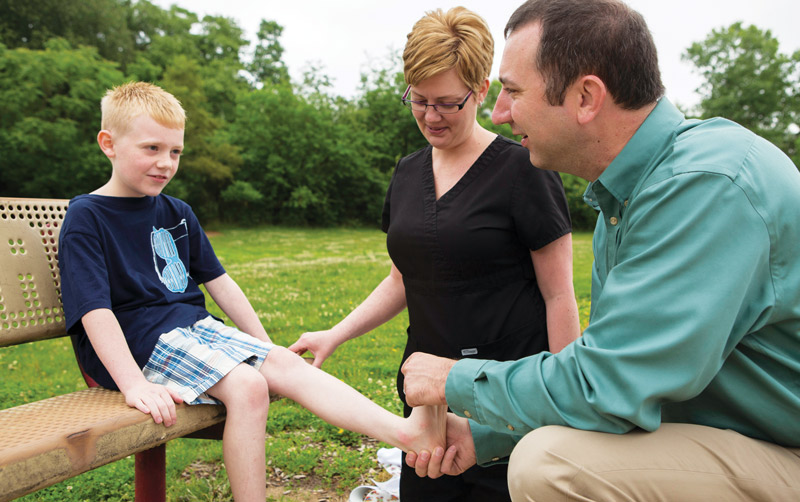
Diagnostic challenges should not delay clinical intervention
Hypotonia, or abnormally low muscle tone, is by itself not a disorder but a symptom of an enormous array of issues—many of which can be difficult to diagnose accurately. Even in the absence of a specific underlying diagnosis, however, children with hypotonia can benefit from clinical intervention.
By Christina Hall Nettles
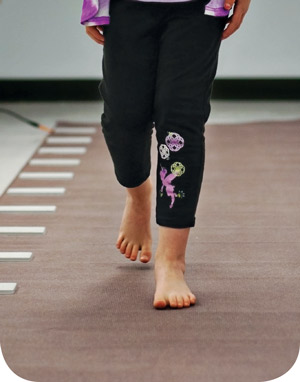
Quantifying the effects of hypotonia starts in the clinic
Effective management of children with hypotonia requires an understanding of how the condition affects gait. Clinicians typically rely on their professional experience when discussing the effects of hypotonia on gait in pediatric patients, partly because they trust that experience, but also because so little research has actually elucidated these effects.
By Cary Groner
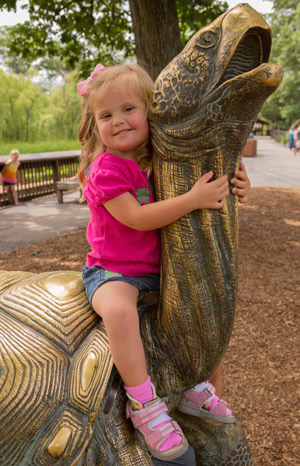
New research underscores years of positive clinical results
When it comes to orthotic management of pediatric patients with hypotonia, the medical literature is only beginning to document the effectiveness that clinicians have been reporting anecdotally for years.
By Cary Groner
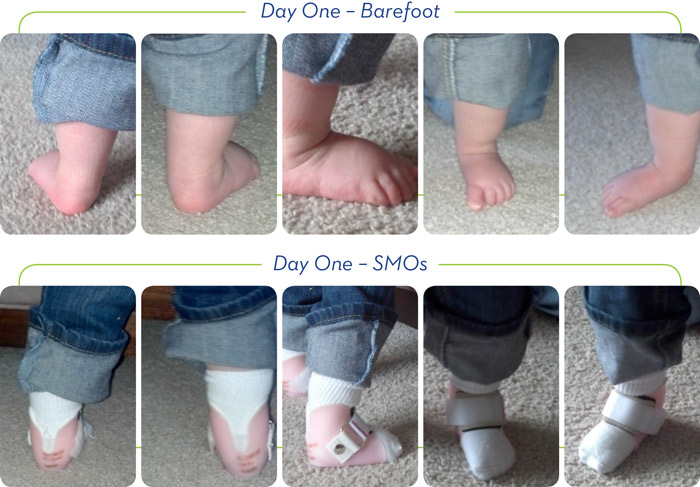
Each child in this case series was assessed every other week for 16 weeks to determine mastery of items 23, 26-28, 30-39, and 41 (ranging from “pull to stand” to “walk fast”) on the Peabody Developmental Motor Scale. Test instructions were modified as needed for children to understand them. Parents were included in each session and encouraged to play with the child in order to demonstrate the targeted skills. Graphs illustrate age of mastery for each item number for the hypotonic child compared to a “typical” child, with linear trend lines illustrating rate of change, and demonstrate the improved mastery of skills after prescription of supramalleolar orthoses (SMOs). The cases will be presented in September at the O&P World Congress in Orlando, FL.
By Megan Smith, CO
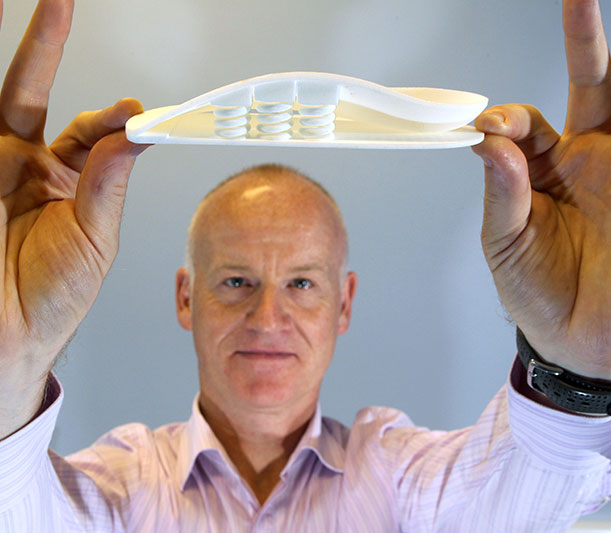
In late May lower extremity clinicians, orthotic lab owners and managers, and technology experts gathered at the Georgia Institute of Technology in Atlanta for a discussion of digital technology in orthotic application, design, and manufacture. By Emily...
Join
Stay in the loop with the latest news and updates! Subscribe now to receive exclusive content, special offers, and important announcements straight to your inbox. Don’t miss out – join our community today for all the latest updates delivered directly to you.