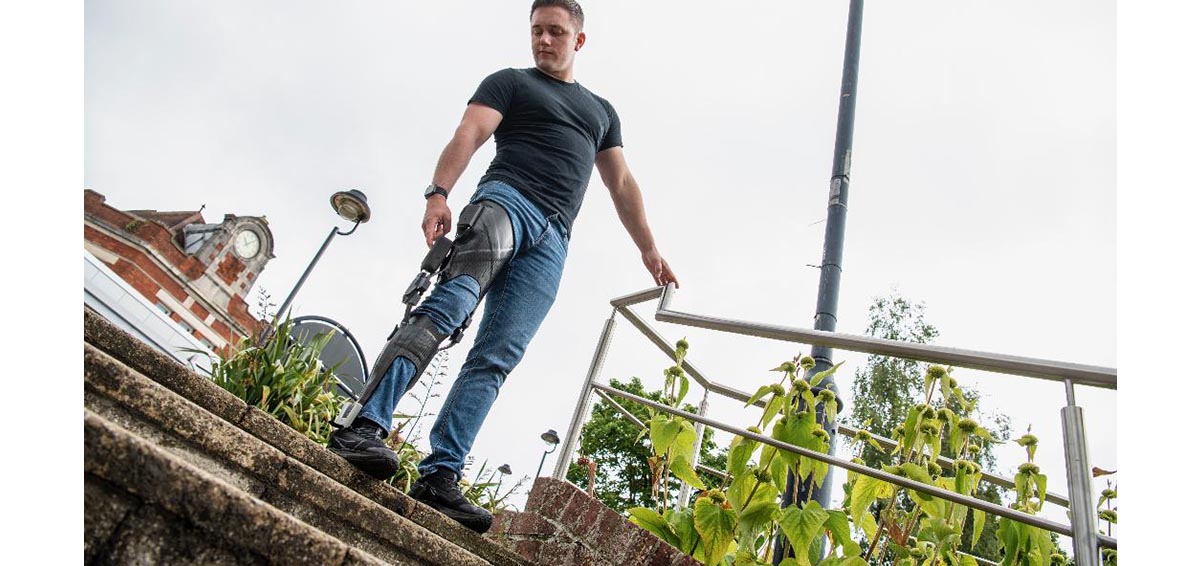
Otto Bock HealthCare introduces its 1C60 Triton prosthetic foot. Developed with input from amputees and with an emphasis on full mobility and natural anatomy, the Triton is suitable for everyday use and helps wearers live an active lifestyle. Its flexible carbon...
Lower Extremity Review
Cartigel Joint Supplement
Nutra-C M&D’s Cartigel, a dry powder food supplement that promotes joint pain relief and joint cartilage, is designed for patients wishing to alleviate chronic joint pain and pursue a more active lifestyle. Cartigel is available over the counter, mixes with...
Star Nutrition Incrediwear
Star Nutrition announces four new products in their Incrediwear line of apparel for the lower extremity, which now includes cycling socks, snowboarding, and skiing socks and shorts. All products are woven with ingredients that release negatively charged anions that...
Stratiform Foot Orthosis
Earthwalk Orthotics introduces the Stratiform multilayered orthotic device, designed for patients with diabetes and other at-risk patients requiring passive support. Construction of the orthosis begins with a high-density EVA (ethylene vinyl acetate) formable. A...
Pro-Tec Pre-Cut Tape
Pro-Tec Athletics’ new Pre-Cut Kinesiology Tape is intended to help relieve muscle tightness, knee pain, iliotibial band syndrome, shin splints, hamstring tears, plantar fasciitis, epicondylitis, wrist pain, and most soft tissue injuries. The tape is designed to...
Tekscan Datalogger
Tekscan has released the F-Scan Datalogger for use with its F-Scan System, which captures dynamic in-shoe pressure and force information. The Datalogger collects and stores sensor data in its internal memory for uploading to a computer at a later time, which...
Bauerfeind Professional Heel
Bauerfeind USA has introduced a heel-focused over-the-counter foot orthosis for the management of plantar fasciitis and heel pain. The Bauerfeind professional heel is an anatomically designed device configured with moderate arch support to provide pain relief and...
Pretty pathways to pain: Muscle activation in high-heeled shoes
Researchers from New York University have found that wearing high heels increases muscle activation, which can have painful ramifications throughout the kinetic chain. Some individuals, however, seem to adapt to high heels more effectively than others.
By Smita Rao, PT, PhD, and Renata Ripa, MA
Out on a limb: High on heels
A week after this magazine goes to press, I’ll be in Puerto Rico with my in-laws for a beach wedding. I’m sure the scenery will be spectacular. But I also know that once the ceremony is over, I’ll be counting the minutes until I can put my heels back on.
Jordana Bieze Foster, Editor
Evidence-based orthotic management of PTTD
The medical literature supports the use of orthotic devices in patients with posterior tibial tendon dysfunction, especially those in the early stages. Demonstrated benefits include improvements in foot and ankle alignment, clinical symptoms, and functional outcomes.
By Holly Olszewski, CPO
Experts stress selectivity in advanced ulcer care
Despite the expense associated with advanced wound care technologies, evidence suggests that switching from standard care makes both clinical and economic sense if a diabetic foot ulcer has not experienced a 50 percent reduction in wound area after four weeks.
By Emily Delzell
Role of physical therapy in patients with hip OA
Some studies support the effectiveness of physical therapy for reducing pain and improving function in patients with hip osteoarthritis, but evidence on the topic is limited and contradictory—suggesting that perhaps PT is most effective in a specific subgroup of patients.
By Alexis A. Wright, PT, PhD, DPT, and Garrett S. Naze, PT, DPT
Bracing and rotation, part 2: ACL injuries
This two-part series explores the role of rotational forces in athletic injuries and the extent to which bracing can help control those forces and, in turn, prevent those injuries. This second installment examines rotation as a contributor to anterior cruciate ligament injury.
By Cary Groner
Preventing wrong-site foot and ankle surgery
Wrong-site surgery can have significant financial and professional consequences, which is why surgeons’ organizations are promoting protocols specifically designed to reduce such errors. A recent survey of foot and ankle surgeons suggests those efforts are paying off.
By Donald E. Fowler III, MD; Karl M. Schweitzer Jr, MD; Olubusola Brimmo, MD; Ryan May, BS; and Selene G. Parekh, MD, MBA
Chronic ankle instability affects postural control
Research suggests that individuals with chronic ankle instability use different movement strategies to maintain postural control than individuals with healthy ankles. These changes may be related to alterations in movement variability associated with ankle instability.
By Lisa Chinn, MS, ATC, and C. Collin Herb, MEd, ATC
Join
Subscribe For Updates
Stay in the loop with the latest news and updates! Subscribe now to receive exclusive content, special offers, and important announcements straight to your inbox. Don’t miss out – join our community today for all the latest updates delivered directly to you.